
Otay Water District’s WaterSmart Landscape Contest Deadline is Approaching
The Otay Water District’s deadline of May 9, 2025, is approaching for its annual WaterSmart Landscape Contest for residential customers. The program highlights the importance of outdoor water-use efficiency and awards customers for their dedication to making conservation a way of life. The winner will receive the title of “Best in District” and a $250 gift card to a local plant nursery of their choice, along with a recognition certificate and a yard sign. Additional prizes include a goodie bag, and a feature in the District’s newsletter, website, social media, and other promotional materials.
Entries are judged based on design, overall attractiveness, efficient irrigation methods, and appropriate plant selection and maintenance.
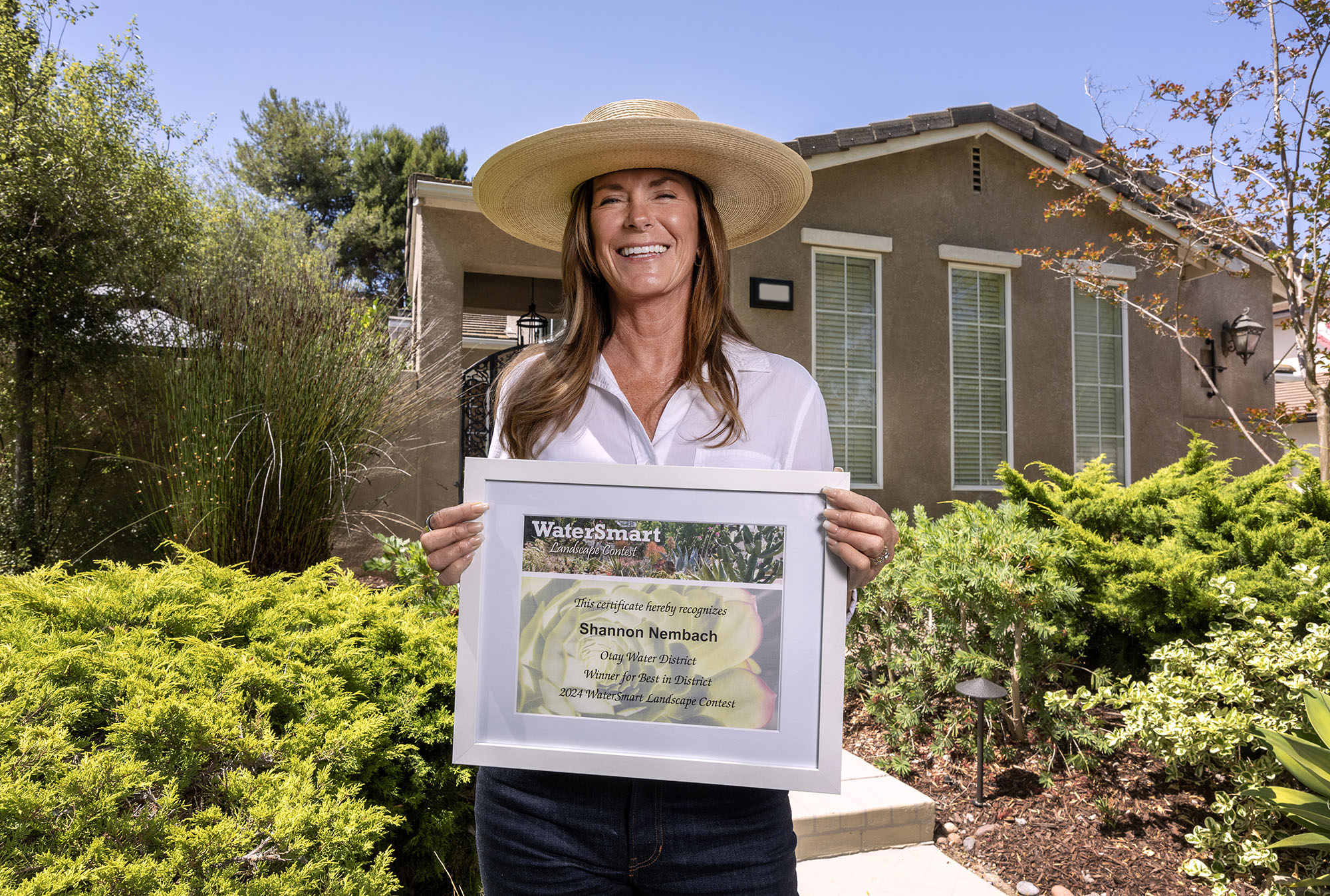 Otay is one of 10 agencies throughout San Diego County hosting the contest. For full contest details, application tips, and inspiration from past winners, visit landscapecontest.com/otay.
May 2025 Priority Issues Update Now Available
The May 2025 Priority Issues Update is now available online to members.
The update is a summary of the latest developments on issues of interest to ACWA members. This issue contains information on PFAS, wastewater discharge, WOTUS and more.
The new and previous Priority Issues Updates can be found here.
Family Farm Alliance’s Keppen to Deliver Keynote
Dan Keppen, Executive Director of the Family Farm Alliance and a respected voice in Western agriculture and water, will deliver the Thursday keynote address at the ACWA 2025 Spring Conference & Expo, May 13-15 in Monterey.
Keppen is preparing to retire after 20 years of advocating on behalf of farmers and ranchers in the West. He will share his perspective on the future of irrigated agriculture, as well as reflect on challenges and opportunities facing the agricultural sector while emphasizing the critical role of water professionals in shaping state and federal policy.
Keppen joins National Water Supply Alliance President Katherine Zitsch as a prominent water leader speaking during the conference. Zitsch will deliver the Wednesday opening keynote and outline her perspectives on water supply challenges shared in common by California and the U.S. Southeast.
ACWA Federal Advocacy Encouraging WOTUS Regulatory Continuity
WASHINGTON, D.C. — ACWA recently submitted a comment letter to the U.S. Environmental Protection Agency and U.S. Army Corps of Engineers encouraging regulatory continuity within any revised definition of the waters of the United States, or WOTUS, regulation.
The letter is the latest in a years-long federal advocacy effort by ACWA to help shape the WOTUS regulatory environment in ways that do not unduly burden member agencies financially or by unnecessarily delay critical infrastructure projects.
At stake is whether types of bodies of water — beyond streams, rivers, lakes or oceans — fall under WOTUS and are subject to the Clean Water Act (CWA). ACWA is requesting that exemptions be made for irrigation ditches, stormwater channels, groundwater recharge facilities, wastewater infrastructure, artificial conveyance, constructed wetlands, and water reuse and recycling facilities.
What WOTUS covers has yo-yoed between Republican and Democratic presidential administrations for a decade, in addition to changes in WOTUS rulemaking.
“For years, WOTUS has been at the forefront of the federal regulatory landscape for water providers,” the letter reads. “Over the last decade water providers have had to work to develop infrastructure solutions for our nation under five different CWA regulatory regimes … The lack of certainty surrounding what bodies of water should be governed by the CWA and a lack of a clear WOTUS definition have significantly impacted public water agencies like ACWA members.”
The U.S. Supreme Court’s unanimous 2023 decision against the EPA, in Sackett v. EPA, introduced further uncertainty into the scope of WOTUS, which can affect urban and agricultural water providers alike. ACWA’s comment letter highlights the importance of regulatory certainty for water managers and invites both the EPA and Army Corps to work with water providers in California and the West to ensure the appropriate scope of waters covered under WOTUS.
“Water providers need continuity within the WOTUS regulatory landscape for effective planning that can ensure the delivery of safe, reliable supplies of water,” said ACWA Director of Federal Relations Ian Lyle. “We know our colleagues within the federal government share that overall aim, and we look forward to continued collaboration with the EPA and Army Corps to find solutions that benefit water managers and the environment.”
Bureau and DWR Boost Allocations
SACRAMENTO – The Department of Water Resources and Bureau of Reclamation this week increased allocations from 40% to 50% for the State Water Project and Central Valley Project, respectively.
The Bureau’s boost to CVP allocations applies to south-of-Delta agricultural contractors, with north-of-Delta contractors already at 100% of their supplies, according to a Bureau news release.
“Today’s increase in allocations reinforces our commitment to achieving the objectives outlined in Executive Order 14181, which seeks to maximize water supplies within the Central Valley Project,” stated Acting California-Great Basin Regional Director Adam Nickels in the news release. “We are pleased that today’s optimization of available water supplies will continue to support California farmers and the communities we serve.”
The further increase on top of those announced in March came as welcome news to Westlands Water District, which issued a statement from General Manager Allison Febbo.
“While we are grateful for the improved hydrology and the Bureau’s dedication to maximizing water supply, this year again reinforces the critical and urgent need to fix California’s broken water system and restore balance,” Febbo stated in a news release. “We must do a better job of securing, storing, and managing water during relatively wet periods like these so that it’s available in dry years.”
DWR tied the timing of its increased allocation to the seasonal snowmelt flowing into California reservoirs in its news release.
Lake Oroville, the State Water Project’s largest reservoir, is 120% of average for this date and 95% full. DWR anticipates that Lake Oroville could reach capacity this spring, which would mark the third straight year the reservoir has filled.
“This winter, water managers were able to navigate extreme swings between wet and dry conditions thanks in part to new operating permits that allow increased flexibility in operations to move water into storage while protecting endangered species,” stated DWR Director Karla Nemeth in DWR’s news release. “Our full reservoirs will allow us to help meet the needs of the State Water Project contractors and their customers this year as well as provide some water supply next year in the event that dry conditions return.”
The State Water Contractors distributed a news release highlighting that California’s reservoirs are nearing capacity, to the point that Lake Oroville is planned to spill, and DWR’s most recent snow survey measured statewide snowpack at 90% of average.
“Despite that, Delta exports have been running at less than half capacity while the State Water Contractors continue to pay for 100% of the system’s operation and maintenance,” stated State Water Contractors General Manager Jennifer Pierre in the news release. “This mismatch in hydrology and supplies requires immediate attention and science-based action to retain environmental protections while also increasing stored supplies when reservoirs are spilling and there is significant sustained runoff through the Delta.”
Members Urged to Support Federal Bill Protecting Against PFAS Liability
WASHINGTON, D.C. — ACWA is encouraging member agencies to contact their elected officials in the U.S. House of Representatives and urge them to co-sponsor H.R. 1267, the Water Systems PFAS Liability Protection Act.
If enacted into law, the bill would exempt water systems from liability under the Comprehensive Environmental Response, Compensation, and Liability (CERCLA) Act, also known as the Superfund Law. This narrowly tailored exemption would align with the historical objective of the CERCLA statute to hold polluters responsible, not the passive receivers such as drinking water and wastewater systems.
Agencies can support this bill by contacting their elected officials and urging them to co-sponsor H.R. 1267. Find representatives and their contact information by visiting the U.S. House of Representatives’ website.
An April 28 ACWA Legislative Alert contains more information and a customizable template letter agencies can mail to their representative. Member login is required.
Zone 7 Celebrates Water Awareness Month with a New Open House & Tours
LIVERMORE – – Zone 7 Water Agency is opening the upgraded Patterson Pass Water Treatment Plant for a day of fun, learning and all things water at the agency’s first ever water awareness month open house on Saturday, May 3rd at 10 am. The public is encouraged to explore water treatment with our annual behind-the-scenes tours of the plan throughout the day, and new this year will be a full day of water activities at this celebration of water.
“Education is a vital part of how we deliver on our mission of providing safe, reliable, and sustainable water service,” said Valerie Pryor, General Manager of Zone 7 Water Agency. “Our Water Awareness Open House will give community members a hands-on opportunity to see the full journey of water—from source to tap. By engaging even our youngest residents directly, we’re building a stronger understanding of the value of water and how each of us plays a role in protecting our community partnerships and support a more resilient future for the Tri-Valley region.”
Kids age 10+ are encouraged to join the tour with an adult. Come curious, leave water-wise!
● Family-friendly activities and interactive stations
● Giveaways and water-themed freebies
● Snacks, drinks and sweet treats
● Tips to use water wisely
● A chance to talk with Zone 7 water experts
● Learn about water conservation, rebates and more!
The event offers an up-close look at the Tri-Valley water’s incredible journey from the Northern Sierra Nevada Mountains to your taps. Guided walking tours led by expert water operators and engineers showcased the state-of-the-art ozone treatment process that ensures safe, clean drinking water.
In March of 2019, the facility began construction to upgrade the facility completely. In total, the project cost $110 million for planning, design, and construction and was funded by water rates, new connection fees, and bonds. In June of 2022, the facility completed construction and now offers ozonation as a water treatment. The upgrades to the facility also include replacement of equipment and increased water storage capacity. Previously the amount of treated water the plant could produce was 12 million gallons a day. The project doubled the amount of treated water production capacity to 24 million gallons daily and also added a 5-million-gallon clearwell for operational storage.
This is the third consecutive year Zone 7 has offered behind-the-scenes tours of the upgraded facility during Water Awareness Month, but the first year for the Open House festivities. The upgrades to Patterson Pass, along with the opportunity to tour the facility, showcase Zone 7’s ongoing commitment to providing safe and clean drinking water, as well as its commitment to public transparency.
###
About Zone 7 Water
Zone 7 Water Agency is one of the 10 active zones of the Alameda County Flood Control and Water Conservation District. The District was established by the State Legislature in October 1949 to solve problems of flooding, drainage, channel erosion and water supply and conservation in Alameda County. In 1957, by popular vote, Zone 7 became a special district governed by a seven-member board of directors. Along with flood protection, Zone 7 supplies water to all of eastern Alameda County and a population of over a quarter million residents. Treated water is sold wholesale to local retailers, including the cities of Livermore and Pleasanton, the Dublin San Ramon Services District, and the California Water Service Company. Zone 7 also distributes untreated water to local agriculture operations and golf courses.
Celebrating 30 Years of Recycled Water Innovation
West Basin Municipal Water District (West Basin or District) is proud to celebrate the 30th anniversary of its recycled water program expertise and industry leadership. These three decades (1995-2025) of demonstrated water treatment ingenuity and financial investment into this highly sustainable resource expands our local water supply and reduces the demand for imported drinking water. Since its inception, the District has produced more than 265 billion gallons of recycled water, enough to fill more than 400,000 Olympic-sized swimming pools.
The extreme drought of the late 1980s and early 1990s compelled West Basin to establish a world-class recycled water treatment system to supplement limited drinking water supplies. In 1995 West Basin received state and federal funding to build a world-class water recycling facility, now known as the Edward C. Little Water Recycling Facility (ECLWRF) in El Segundo. Today, West Basin operates five facilities including ECLWRF, the Hyperion Pump Station in Playa del Rey, and three satellite treatment plants in Carson, Torrance and El Segundo. Collectively, these facilities produce approximately 40 million gallons per day and more than 11 billion gallons annually, distributing water through a network of more than 100 miles of recycled water pipelines to nearly 600 connections. This system stands as the largest of its kind in the United States and is the only water recycling system in the world that produces five distinct types of recycled water tailored to municipal, commercial and industrial customer needs.
“Recycled water has a profound and far-reaching impact on communities in ways many people may not recognize,” said West Basin Board President and Division II Director Gloria Gray. “It serves as a drought mitigation resource, supports agriculture and industrial production, decreases wastewater discharge into the ocean, and can reduce water costs for cities and businesses, which can also impart economic savings for residents. Every drop of recycled water produced is a drop of imported drinking water saved.”
Hundreds of South Bay businesses rely on West Basin’s recycled water for landscape irrigation, toilet flushing, boiler feed water and more including SoFi Stadium, Intuit Dome, Chevron in El Segundo and Los Angeles International Airport. By using recycled water instead of potable water for industrial and commercial applications, West Basin conserves drinking water for local communities. In the past 30 years, the program has conserved enough drinking water to supply 9.8 million people for an entire year.
In addition to decreasing the region’s carbon footprint by reducing demand on imported water, West Basin’s recycled water production contributes to other regional environmental sustainability efforts. Producing recycled water significantly reduces the amount of treated wastewater entering Santa Monica Bay from the City of Los Angeles’ Hyperion Water Reclamation Plant. West Basin’s advanced treated and disinfected recycled water is also injected into the groundwater basin to create a barrier against seawater intrusion and protects local underground drinking water supplies.
“The 30th anniversary of the West Basin recycled water program reaffirms the District’s commitment to water resiliency and recognizes its customers’ dedication to collectively shaping a sustainable water future for Southern California,” says Gray. “Looking ahead, West Basin remains committed to advancing water recycling and continuing to secure a strong foundation for green jobs for the next 30 years and beyond.”
The District will be hosting 30th anniversary public tours at the ECLWRF throughout the rest of the year. For more information about the tours and West Basin’s acclaimed recycled water program, visit www.westbasin.org/30-years.
New Public Member Director Appointed to PRWA Board
PALMDALE – The Palmdale Recycled Water Authority (PRWA) has named Palmdale resident Joe Pallon as its new public member director. After the Palmdale City Council and the Palmdale Water District (PWD) Board of Directors voted unanimously in separate meetings to appoint him to the role, Director Pallon took the oath of office at a recent PRWA meeting. “I am very honored to receive this important appointment,” Director Pallon said. “I want to bring to the Board my experience in policy work. I can provide insight with the knowledge I have through experience. My work on this Board will be constructive.” The PRWA Board, which manages the use of recycled water in central and east Palmdale, is made up of two members of the City Council, two members of the PWD Board and a public member. The public member position is for one year, and incumbents need to reapply. Director Pallon replaces Zakeya Anson, who served as PRWA’s public member director starting in 2021. She did not seek to renew her term. “We are pleased to welcome Joe Pallon as our new public member director,” said PRWA Board Chair Austin Bishop. “As a long-time resident of Palmdale, Joe is passionate about water recycling and conservation. We look forward to the positive impact he will have on our community’s water resources.” In 2012, PRWA was formed jointly by the City and PWD to study, promote, develop, distribute, install, finance, use, and manage recycled resources created by the Los Angeles County Sanitation Districts Nos. 14 and 20 for various uses, including irrigation and recharge, and to finance the acquisition and construction or installation of recycled water facilities, recharge projects and irrigation systems. Its first project was irrigating McAdam Park with recycled water. “I believe using recycled water is becoming more than a necessity,” Director Pallon said. “Using it in concert with conservation is the responsible thing to do. We are going to see droughts that are longer and more evident. If we want to continue having the life we have in the AV, we must rely on recycled water.” Recalling his preschool years when he watched PWD’s headquarters being built across the street from his school, Director Pallon describes himself as a “policy and water wonk.” He also remembers attending PWD’s annual water fairs and its slogan “Don’t be a water hog, be an Aquadog.” He is a research assistant for Heart of Los Angeles, a nonprofit organization that gives underserved youth the opportunity to succeed through comprehensive, afterschool academic, arts, athletics and wellness programs. Director Pallon was a double major at the University of California Santa Cruz where he received his Bachelor of Arts in Community Studies and Politics. He earned his master’s degree in public policy from the University of Chicago. He took classes in water law policy and hydro-politics, and was an AmeriCorps restoration member with Walker Basin Conservancy in Nevada helping restore water rights, building drip irrigation and restoring farmland to native conditions.###
Bureau Boosts CVP South of Delta Allocations to 50%
SACRAMENTO – Continuing to focus on maximizing California’s water supplies, the Bureau of Reclamation has announced another increase in water supply allocations for the Central Valley Project for south-of-Delta agricultural contractors. While all north-of-Delta Central Valley Project contractors are currently at 100% of their supplies, south-of-Delta irrigation water service and repayment contractors are today being increased from 40% to 50%.
All other Central Valley Project contract allocations remain the same per the March 27 water supply update. Initial Central Valley Project contract allocations were announced on Feb. 25.
“Today’s increase in allocations reinforces our commitment to achieving the objectives outlined in Executive Order 14181, which seeks to maximize water supplies within the Central Valley Project,” stated Acting California-Great Basin Regional Director Adam Nickels in a Bureau news release. “We are pleased that today’s optimization of available water supplies will continue to support California farmers and the communities we serve.”
The further increase on top of those announced in March came as welcome news to Westlands Water District, which issued a statement from General Manager Allison Febbo.
“While we are grateful for the improved hydrology and the Bureau’s dedication to maximizing water supply, this year again reinforces the critical and urgent need to fix California’s broken water system and restore balance,” Febbo stated in a news release. “We must do a better job of securing, storing, and managing water during relatively wet periods like these so that it’s available in dry years.”