
Statewide Safe Drinking Water Funding Solution
On July 24, 2019, Gov. Gavin Newsom signed SB 200 (Monning) into law, creating the Safe and Affordable Drinking Water Fund, which provides the legal structure and process for funding safe drinking water solutions for disadvantaged communities in California that currently do not have that access.
The California Legislature had previously passed the bill in early July 2019.
The governor’s signing of SB 200 follows the June 27 enactment of the 2019-’20 State Budget, which sets forth the first part of the funding solution. The State Budget provides $130 million for Fiscal Year 2019-’20 for safe drinking water solutions in disadvantaged communities that do not have access to safe drinking water.
In the first year, Fiscal Year 2019-’20, the safe drinking water funding solution will be funded with $100 million from the Greenhouse Gas Reduction Fund (GGRF) and $30 million from the General Fund.
After the first year, the funding will be 5% of the GGRF continuously appropriated – capped at $130 million per year. The agreement includes General Fund funding as a backstop if 5% of the GGRF is less than $130 million in any year. The funding will sunset in 2030.
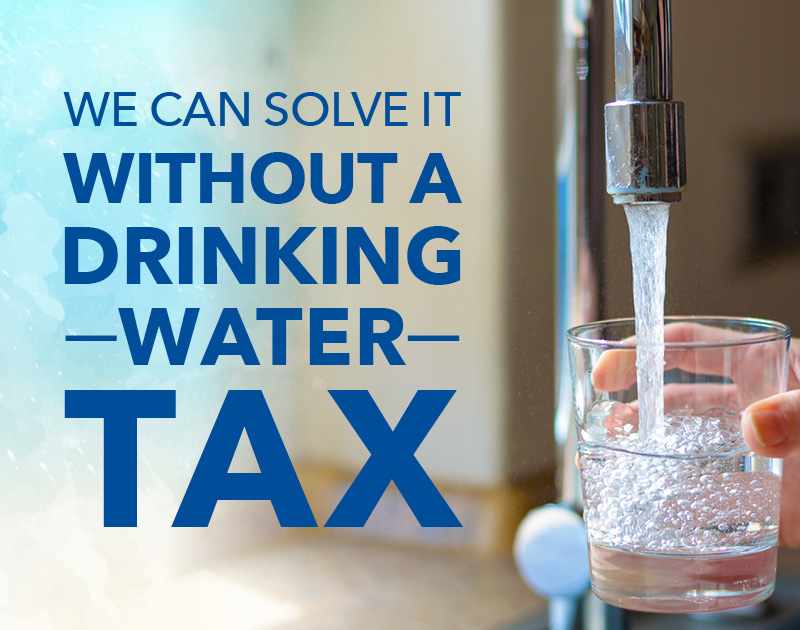
The solution does not include a water tax.
In addition to Gov. Newsom, many legislators on both sides of the aisle played key roles in making this agreement possible. To name just a few of those, Senator Monning (D-Carmel) has championed this issue from the beginning. Assembly Water, Parks and Wildlife Committee Chair Eduardo Garcia (D-Coachella) encouraged stakeholders to come forward with ideas for how to solve the problem. Senator Anna Caballero (D-Salinas) authored the ACWA and California Municipal Utilities Association co-sponsored SB 669, which proposed a Safe Drinking Water Trust. Discussions on that bill helped inform the broader discussion regarding solutions.
ACWA staff appreciate the guidance on this critical issue from the ACWA Board of Directors, the ACWA DAC Drinking Water Initiative Task Force, and the State Legislative Committee and its Safe Drinking Water Funding Working Group. ACWA also appreciates the tireless legislative outreach support from member agencies.
Why is there a need for safe drinking water funding in California?
- Most Californians have access to safe drinking water, but some disadvantaged communities do not
- Lack of access to safe drinking water is a public health issue the state must address
- A funding gap exists for operations & maintenance (O&M) costs for community water systems that treat water
- In general, O&M costs cannot be financed using existing state and federal drinking water funding sources
- In some situations, consolidation of a community water system may be the most effective solution
- A financial solution is needed for O&M and consolidation costs in disadvantaged communities that can complement existing federal and state funding sources for capital costs.
Why is a statewide water tax not the right approach?
- It isn’t sound policy to tax a resource that is essential to life
- A regressive statewide tax on local water bills is in conflict with keeping water affordable for all Californians
- It would be highly inefficient to require more than 3,000 local water agencies to serve as tax collectors for the state
- The combined local administrative costs would exceed the combined statewide water tax revenue collected with local water bills
Californians Oppose a Drinking Water Tax
Tulchin Research conducted a statewide poll in early 2018 based on a previous drinking water tax proposal. That poll showed that 73% of likely voters oppose a new tax on drinking water, both initially and even after hearing more information.
Additionally, 74% would prefer using existing funding sources rather than establishing a new tax on drinking water.
For more on the polling, please read the polling results memo or see our news release.
Tools & Resources
- Safe Drinking Water Trust Toolkit (Feb. 2019, ACWA member login required)
- Safe Drinking Water Fund Legislative Proposal Fact Sheet (Feb. 2019)
- FAQs on Proposal to Tax Californians’ Drinking Water (Aug. 2018)
- Fact Sheet on Proposal to Tax Californians’ Drinking Water (Aug. 2018)
- Solve It Without a Drinking Water tax graphic
- WaterTaxFacts.org
- Water Tax Facts graphic
2019 ACWA & Coalition Letters
- ACWA Letter to Assembly Environmental Safety & Toxic Materials: Support SB 200 (Monning, E. Garcia and Bloom): Safe Drinking Water Funding Solution – June 28, 2019
- Coalition Assembly Floor Alert: Support AB 100 – June 26, 2019
- Coalition Senate Floor Alert: Oppose SB 101 – June 25, 2019
- Coalition Assembly Floor Alert: Oppose-Unless-Amended on AB 217 (E. Garcia): Safe Drinking Water for All Act/Water Tax – May 21, 2019
- Coalition Letter to Assembly Appropriations Committee: Oppose Unless Amended on AB 217 (E. Garcia): Safe Drinking Water Funding/Water Tax – May 3, 2019
- ACWA Letter to Assembly Environmental Safety & Toxic Materials: Oppose Unless Amended on AB 217 (E. Garcia): Safe Drinking Water Funding/Water Tax – March 25, 2019
- Coalition Letter to Senate Budget Subcommittee No. 2 and Assembly Budget Subcommittee No. 3: Oppose Water Tax Budget Trailer Bill Language – March 13, 2019
2019 Media Coverage
- A Civil Rights Hero Focuses on a New Fight at the Capitol: Clean Drinking Water – Sacramento Bee – June 10, 2019
- Gov. Gavin Newsom Abandons Water Tax, Rejects Some New Spending in California Budget Deal – LA Times – June 9, 2019
- It’s Unacceptable that Many Californians Lack Clean, Safe Water – Sacramento Bee – 6/4/19
- A New Water Tax? California has a $21 Billion Surplus, Use that Instead – OC Register – 5/18/19
- What’s All This About a Water Tax? – New York Times – 5/13/19
- Editorial: Gov. Newsom: Don’t Tax Life Essentials. But Tax Water. Huh? – San Diego Union Tribune – 5/8/19
- Ignoring $30B from Water Bonds and State Surplus, Gov. Gavin Newsom Wants New Water Tax – California Globe – 3/21/19
- Gov. Newsom Wants to Charge You $10 a Month to Help Clean Up Contaminated Water – ABC 7 – 3/21/19
- California’s Proposed Affordable Drinking Water Fund Could Cost Residents up to $120 a year – yourcentralvalley.com – 3/21/19
- Details of Newsom’s Plan for Drinking Water Tax Revealed – SF Gate – 3/21/19
- Governor Newsom Proposing a Tax to Clean Up Drinking Water – KCBS – 3/22/19
- Drinking Water Tax Proposed in California – CBS Sacramento – 3/20/19
- Newsom Water Tax Offers a Phony Fix to a Moral Outrage – OC Register – 2/21/19
- Inland Agencies Respond to Claims of Unsafe Tap Water: Clean Water for All Through Sound Planning and Investments – Press Enterprise – 2/10/19
2018 Coalition Letters
- Associations SB 845 Opposition Letter – Members of California Legislature – Aug. 23, 2018
- ACWA’s SB 845 Coalition Memo – Members of California Legislature – Aug. 20, 2018
- ACWA’s SB 623 Coalition Letter – Assembly Appropriations Committee – Updated Feb. 6, 2018
- ACWA’s No Drinking Water Tax Oppose-Unless-Amended Coalition Letter – Budget Subcommittees – Updated June 19, 2018
Questions
For questions about the agreement or Conference Committee action, please contact ACWA Deputy Executive Director for Government Relations Cindy Tuck at (916) 441-4545.
For media inquiries, please contact ACWA Director of Communications Heather Engel at (916) 441-4545.