
Helix Water District Builds Model EV Charging Hub
Helix Water District has transformed its operations center in San Diego’s east county suburbs into one of California’s most advanced electric fleet charging hubs. The $11 million project, funded almost entirely by grants, features 87 high‑capacity chargers and nearly six megawatts of power. Designed to meet state vehicle emission mandates and maintain 24/7 emergency readiness, the project is a model for public‑sector fleet electrification across California.
The project positions Helix as one of the first public agencies in California to fully build out charging infrastructure in response to the California Air Resources Board’s Advanced Clean Fleets Regulation. The regulation requires local and state public agencies to replace medium- and heavy-duty trucks and equipment with zero emissions models. By 2030, all new vehicle purchases must be zero emissions.
Twenty-eight counties, cities, water districts and other public agencies came to Helix’s Nat L. Eggert Operations Center on March 27 to see what compliance with the Advanced Clean Fleets Regulation looks like. The trade show following the ribbon cutting offered the opportunity to tour the facility and charging infrastructure, talk with the Helix project team and each of the companies involved in construction, and check out the electric, medium- and heavy-duty trucks and equipment manufacturers now have available.
According to the California Air Resources Board, trucks make up just 6% of vehicles on California roads but generate more than 35% of nitrogen oxide emissions and 25% of on‑road greenhouse gas emissions.[AW1.1]
While the regulation mandates fleet conversion, it does not provide funding for the necessary charging infrastructure.
“When we evaluated the regulation, we discovered that finding available vehicles wasn’t the only challenge—the infrastructure was, too,” said Helix Water District Board President Kathleen Coates Hedberg. “We had to protect our water rates and the 279,000 people we serve while figuring out how to comply.”
Collaboration Reduced Costs
Helix decided its best option was to be the first local agency in California to build charging infrastructure and reach out to stakeholders – the government agencies responsible for clean air in California and the companies with the expertise to build charging infrastructure.
The San Diego County Air Pollution Control District, San Diego Gas and Electric and the California Energy Commission provided more than $10.2 million in grants and rebates, ensuring the project would have minimal impact on water rates.
The grant funding enabled Helix to build the full charging system upfront, which is less expensive than a phased approach. Additional savings will come from shared use of the charging system by neighboring cities and public agencies, with software automatically tracking, allocating and recovering costs.
Helix also expects to see continued cost savings from a zero emissions fleet.
“The data from our current fleet show that fuel costs for an electric vehicle are one-fifth the fuel costs of a gas or diesel vehicle,” said Helix Water District Operations Director Kevin Miller.
The Charging Infrastructure is Designed for 24/7 Operations
Helix operates a fleet of 100 light-, medium- and heavy-duty vehicles, from Toyota Prius to
Ford F-150 to F-750 pickups and platforms, International crew cabs, 3-axle dump trucks, backhoes and skip loaders.
The charging infrastructure is designed and engineered around four core operational requirements common to many public agencies:
• 24/7 emergency response – Helix responds 24/7 to water main breaks, natural disasters and mutual aid requests. Every class of vehicle must be charged and ready at all hours.
• Power take-offs – Charging and batteries must support power take-offs, which convert a truck engine’s power to drive external tools like pumps, winches and pneumatic tools.
• No additional vehicles – Helix stipulated that it would not add vehicles or staff to compensate for vehicle charging times.
• Limited charging during peak hours – Helix reduces operations costs by prioritizing [mc3.1]pumping water in off-peak hours when electricity rates are lower. It applied the same rule to vehicle charging.
The infrastructure includes 87 chargers, from 40 to 640 kilowatts, manufactured by Heliox and Autel. Most are installed overhead. This allowed crews to build the new infrastructure without interrupting daily operations. Overhead chargers and conduit also minimize trenching and construction costs and build flexibility into daily operations and parking.
The 5.9 megawatt system has the capacity to power3,000 to 5,000 homes. Autel’s 640 kilowatt MaxiCharger can recharge medium- and heavy-duty trucks in an hour. BetterFleet software recognizes each vehicle and optimizes charging.
“The software will prioritize which vehicle to charge first and when it is most cost effective to do so based on time-of-use electricity rates. It adapts to a dynamic schedule,” said Miller. [MU4.1]
A Blueprint for Statewide Adoption
The collaborative approach that worked well for Helix – seeking partners and outside funding, identifying construction strategies to minimize disruption of daily operations, and sharing charging infrastructure with neighboring agencies– are a roadmap for other public agencies planning their own compliance with the Advanced Clean Fleets Regulation. The design and construction of the district’s charging infrastructure also provide insights for reducing construction costs and building a user-friendly system employees will embrace.
“We’re not just meeting the mandate,” said Miller. “We’re helping define how public‑sector electrification can be done statewide.”
About Helix Water District
Helix provides water treatment for 500,000 people in San Diego’s east county suburbs and distributes drinking water to 279,000 people in the cities of La Mesa, El Cajon and Lemon Grove and the Spring Valley, Mt. Helix and Lakeside communities.
“At Helix, we like to say that fiscal responsibility and sustainability go hand in hand,” said Hedberg.
From 2009 to 2019, the district reduced its electricity use by 15% and its greenhouse gas emissions by 40%. The Climate Registry recognized Helix Water District as a Water-Energy Leader Gold organization in 2023 and the district was named a Certified Green Business by the Green Business Network in 2025.
Helix buys electricity from San Diego-based Calpine Energy Solutions. The district has seen double-digit cost savings as high as 18% on electricity commodity costs and has secured the renewable energy supply it needs through 2030.
IRWD Completes Syphon Reservoir Project Design Phase
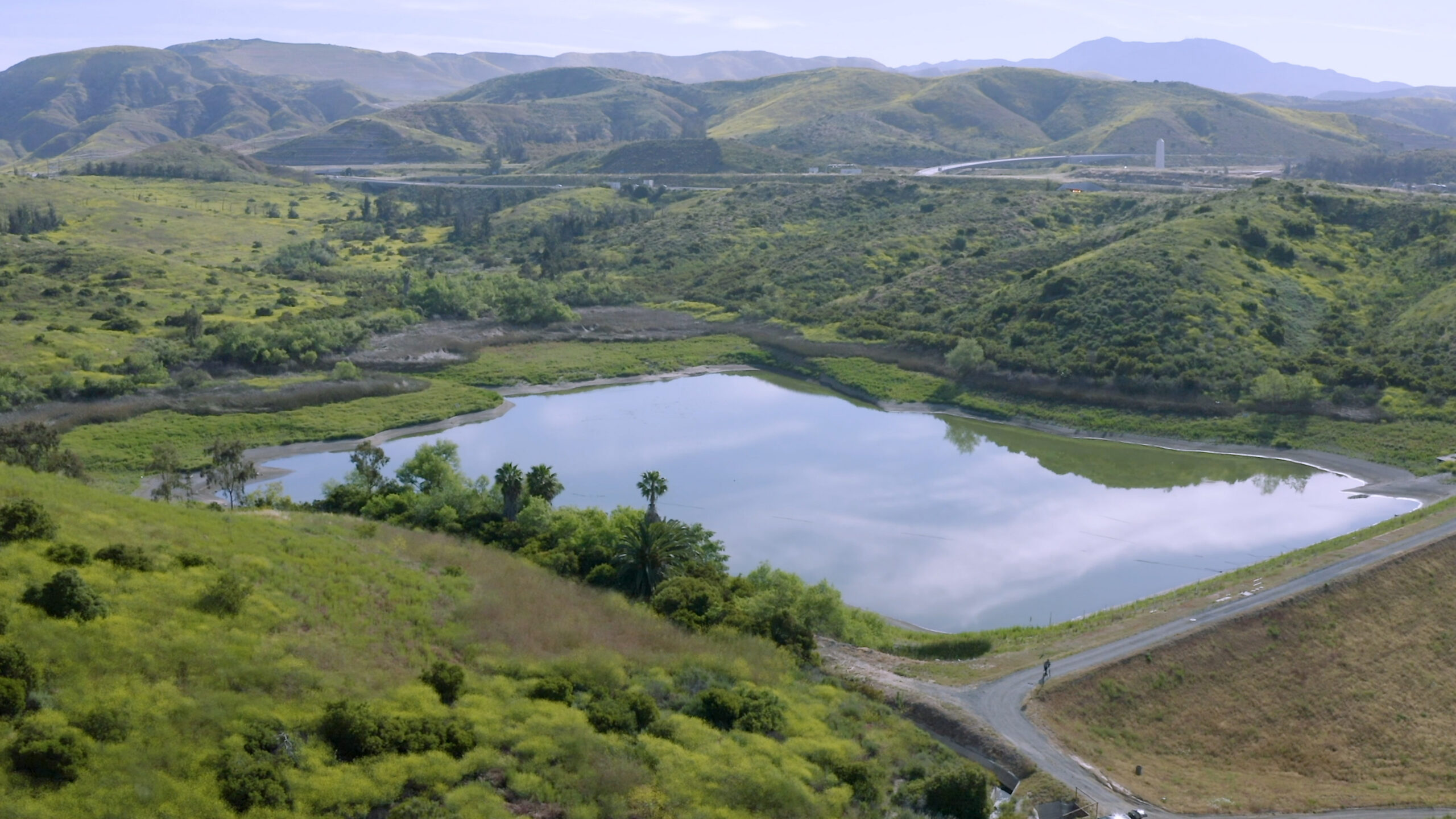 Innovation in capital improvements is not just about building stronger, more efficient, and safer systems — it’s about reshaping the way water agencies approach transparency, accountability, and long-term resilience in their projects.
Irvine Ranch Water District went above and beyond when it launched the design phase of its Syphon Reservoir Improvement Project: establishing an Independent Design and Safety Review Panel that would ensure the best and safest design while bringing transparency and accountability to the project.
This independent and unbiased panel of five internationally recognized dam industry experts contributed more than 150 years of experience in geotechnical and seismic engineering, geology, risk assessment, dam design and construction to the project. Together, they rigorously challenged assumptions, validated solutions and identified opportunities for advancement well beyond regulatory requirements.
Their findings provided an objective, evidence-based assessment that strengthened the accountability of the project, enhanced its transparency, and promoted public trust in the process — confirming the integrity and viability of the project design.
Objectives
- Ensure the optimum design for the Syphon Reservoir Improvement Project through unbiased, expert review.
- Demonstrate accountability with full transparency throughout the design process.
- Build public confidence in the veracity of the project, with safety as the overarching goal.
- Value in additional geotechnical investigations and design enhancements to further characterize the site geology and enhance confidence in the design.
- Opportunities to bluster the design criteria (e.g., considering more conservative settlement criteria or deformation criteria).
- Adding design features (e.g. location and configuration of the dam filter drain).
- Additional consideration for risk analysis (e.g., frequency of events) and mitigation measures.
Groundwater Replenishment System Hits Major Milestone
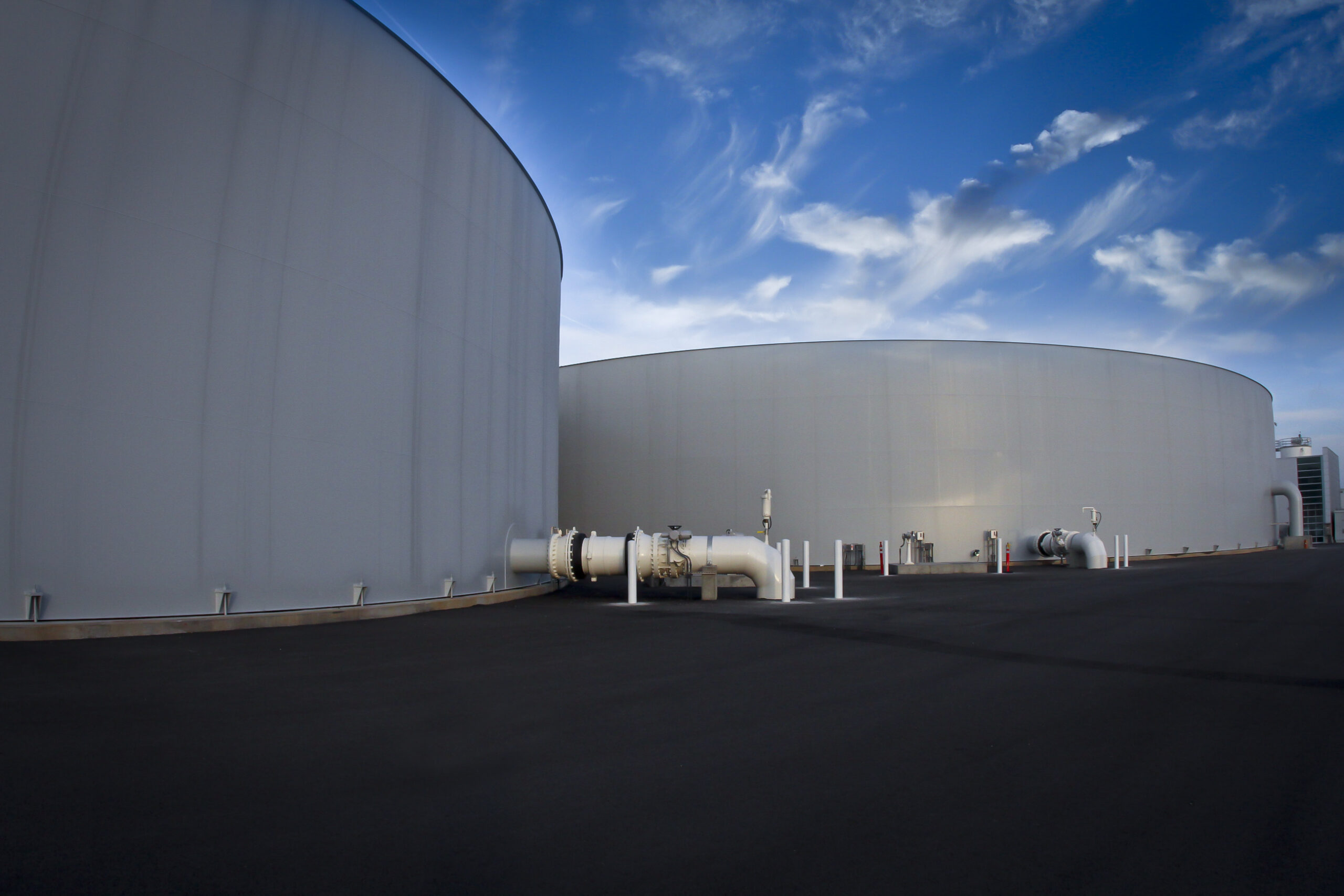 The Groundwater Replenishment System (GWRS) has reached a major production milestone of half a trillion gallons of purified water as it marks 18 years of service this month. A joint project of the Orange County Water District (OCWD) and the Orange County Sanitation District (OC San), the GWRS is the world’s largest advanced water purification system for indirect potable reuse, reducing dependence on imported supplies and strengthening water reliability for Orange County.
“OCWD and OC San invested early in critical water reuse and recharge infrastructure, and Orange County has reaped the benefits for 18 years,” said OCWD President Denis R. Bilodeau, P.E. “Surpassing half a trillion gallons is an achievement that underscores the role of the GWRS in turning a once-wasted resource into a reliable, locally controlled drinking water supply for the communities we serve.”
 The GWRS purifies highly treated wastewater using a three-step treatment process of microfiltration, reverse osmosis and ultraviolet light with hydrogen peroxide. The result is high-quality water that is pumped to recharge basins in Anaheim where it naturally percolates into the Orange County Groundwater Basin, managed by OCWD, and becomes part of the drinking water supply for 2.5 million people in north and central Orange County. GWRS water is also pumped into injection wells located along the Orange County coastline to create a seawater intrusion barrier that protects groundwater supplies.
Operational since 2008, the GWRS completed its initial expansion in 2015, increasing production from 70 million gallons per day (MGD) to 100 MGD. With its final expansion in 2023, the system now recycles 100% of OC San’s reclaimable wastewater flows and produces up to 130 MGD — enough to serve 1 million people.
“Reaching half a trillion gallons is a powerful reminder of what long-term vision and operational excellence can achieve,” said OC San Board Chairman Ryan Gallagher. “By investing in advanced treatment and infrastructure, OC San ensures every drop of reclaimable water is put to its highest and best use. This milestone reflects our commitment to protecting public health, strengthening water resilience, and delivering sustainable solutions for Orange County today and for generations to come.”
Over the years, GWRS water has become a primary source for replenishing the groundwater basin and has enabled OCWD’s 19 cities and local water retailers to pump more water from the basin. The GWRS also decreases the need to purchase costly imported water from northern California and the Colorado River, contributing to a more cost-effective and drought-resilient water supply for the region.
As part of OCWD and OC San’s public education efforts to build understanding and acceptance of potable reuse, the agencies have distributed thousands of bottles of GWRS water. California Assembly Bill 2022 allows advanced purified water to be bottled and distributed at no cost for educational purposes, and OCWD and OC San were the first in the Western Hemisphere to do so. The agencies will introduce newly labeled GWRS bottled water at tours and other outreach events to support their continued commitment to water education.
For more information, OCWD invites the public to book a facility tour, watch an on-demand general or technical tour video, or visit the GWRS website at www.ocwd.com/gwrs.
Nation’s First Public Hydrogen Utility Welcomes Inaugural Member
LANCASTER – First Public Hydrogen (FPH2) is pleased to welcome Rowland Water District (RWD) as its first member, marking a key milestone in the development of the United States’ first public hydrogen utility. The decisive move underscores RWD’s commitment to sustainable operations and sets the pace for other local agencies pursuing innovative, zero-emission energy solutions.
Based in southeast Los Angeles County, Rowland Water District serves more than 55,000 residents across five cities and unincorporated communities. With a strong track record in balancing environmental stewardship with exceptional customer value, RWD continues to explore forward-thinking partnerships that benefit its ratepayers and the region.
“Joining First Public Hydrogen reflects our commitment to innovation and resource stewardship,” said RWD General Manager Tom Coleman. “As a public agency, we have a responsibility to explore solutions that protect our environment while maintaining reliable service for our customers. This partnership allows us to play a meaningful role in shaping California’s clean energy future—while continuing to put the needs of our community first.”
“Rowland Water District’s decision to join as our first member validates the vision behind First Public Hydrogen – a joint public utility built on accessibility, transparency and regional collaboration,” said R. Rex Parris, First Public Hydrogen Chairman. “Their leadership demonstrates how public agencies can take bold, practical steps to accelerate hydrogen adoption and build a more sustainable energy future for California.”
As a member of FPH2, RWD will gain access to shared procurement tools, technical expertise, and a transparent platform that connects public agencies with green hydrogen producers. The District will also help pilot early-stage hydrogen applications suited for public sector systems, from vehicle fleets to energy backup systems.
FPH2 encourages other public agencies to explore membership and join a growing network committed to accelerating California’s clean hydrogen transition. With no cost, liability, or purchase obligation, the FPH2 model is designed to lower barriers for participation while offering access to infrastructure support, statewide collaborations, and future funding opportunities. As momentum builds, FPH2 continues to invite local governments, water agencies, transit systems, and public institutions to help shape a transparent, scalable hydrogen economy that benefits all Californians.
About First Public Hydrogen
First Public Hydrogen (FPH2) is the nation’s first public hydrogen utility—a Joint Powers Authority (JPA) that connects hydrogen producers with public and private end users through a transparent, cost-effective platform. FPH2 is building a shared hydrogen ecosystem that enables municipalities, water and transit agencies, and businesses to access clean hydrogen for fuel and operations. Through centralized procurement and planning, FPH2 lowers barriers to entry and helps scale hydrogen adoption statewide and beyond.
Learn more or explore membership opportunities at FPH2.org.
About Rowland Water District
Rowland Water District was formed 72 years ago to provide water service to 200 ranchers and farmers in a rural, agricultural community. Over the years, the District has evolved to meet the changing needs of a dynamic and rapidly growing customer base. Rowland Water currently delivers 14 million gallons of safe drinking water to about 55,000 people every day. The District maintains 150 miles of potable water pipeline and 25 miles of recycled water pipeline to serve 14,000 customer connections across 17.2 square miles in southeast Los Angeles County, including portions of Rowland Heights, Hacienda Heights, La Puente, and the cities of Industry and West Covina.
Visit RWD.org for more information.
San Juan Water District’s Hinkle Reservoir Floating Cover and Liner
San Juan Water District’s goal was to replace the world’s oldest floating cover and liner in continuous operation for one of the nation’s largest earthen drinking water storage reservoirs. Hinkle Reservoir occupies an area of approximately 12.5 acres and is considered one of largest earthen drinking water storage reservoirs in the United States. The reservoir provides operational and emergency storage for the District and serves as the main storage for all District wholesale agencies, which include Citrus Heights Water District, Fair Oaks Water District, Orange Vale Water Company, a section of the City of Folsom north of the American River, and the District’s own retail service area. Because the Reservoir is essential to the District’s operations, and provides drinking water to more than 265,000 customers in the greater Sacramento region, the project had to be completed during a short wintertime window.
Originally built in 1916, Hinkle Reservoir was located in what is now Folsom Lake before being moved to its current site in the 1950s. To meet new environmental regulations and protect water supplies from contamination, the District installed a Hypalon geomembrane liner and floating cover in 1980. Although the cover and liner were originally guaranteed for 25 years, the District significantly extended the system’s lifespan through regular maintenance and testing to ensure its integrity. In 2022, with the system now more than 40 years old, the District determined a replacement was necessary.
Hinkle Reservoir was taken offline from November 2022 to April 2023, and storage was switched to two temporary one-million-gallon storage tanks located on the District’s water treatment plant site. A continuous, high-quality water supply was provided to customers during this time, without any interruptions, which attested to the excellent design and team collaboration to ensure that no issues occurred during construction. In addition, there were no recordable lost-time injuries for the 26,000 man hours worked on this project. This excellent safety record can be attributed to the contractor’s implementation of the injury prevention and safety programs followed by all employees and subcontractors.
Throughout the construction process, the District kept the public and its customers clearly informed about the status of the project. The District updated customers through its website, social media, and mailed newsletters. Additionally, the District’s monthly Board meetings provided an opportunity for the community to ask questions about the project.
The project team, which included the District, design engineer, construction manager, and contractor, met before construction started to develop a plan to ensure on-time project completion, which included discussing any potential risks to the project during construction and how to mitigate those. Existing structures were reused to the greatest extent possible, which included the batten bars, anchors, anchor bolts, curb, and horizontal beam. An underwater condition assessment enabled the team to evaluate the conditions of these structures and determine what could be reused. The vertical guide was also refurbished, which provided additional cost savings. Because of the successful application of construction management techniques, the liner and cover replacement were completed one week ahead of schedule.
Hinkle Reservoir is very unique, due to its massive size and irregular shape. There is no other reservoir like it in the nation. As a result, very few people are qualified to manage the operational challenges involved in this replacement project. The design engineer team for the project included Dennis Gerber, who is one of the few floating cover and liner specialists in the nation. He also happens to be the person who designed the original reservoir liner and cover in 1980. At nearly 90 years old, Dennis was instrumental in guiding the team through the potentially significant operational challenges that needed to be resolved to take the Hinkle Reservoir offline for the cover and liner replacement.
Despite the project complexity and fast-tracked schedule, the cover and liner replacement project was completed on time, under budget, and without service interruptions. Hinkle Reservoir was placed back into service in April of 2023.
Innovative Project Enhances Regional Water Quality and Safety
BEAUMONT — In June 2024, San Gorgonio Pass Water Agency (SGPWA) launched an advanced algae abatement project in collaboration with EarthTec to address harmful algal blooms (HABs) within the State Water Project (SWP) conveyance system. This initiative aims to safeguard clean, quality water for the community. Close monitoring of the conveyance system over multiple months revealed increased HABs of concern, believed to be exacerbated by high nutrient concentrations, intense sunlight, warm water, and prolonged droughts. These conditions create an ideal environment for harmful blue-green algae that produce cyanotoxins and pose significant health risks to humans and animals. SGPWA worked with Beaumont Cherry Valley Water District (BCVWD) to install more than $19,000 worth of equipment at the Mountain View Turnout. This included a custom Conex box for $6,600, a 275-gallon EarthTec tote for $5,225, Carson manhole covers for $5,043, new electrical conduits and wiring for $1,480, and safety supplies and signage totaling $688. Through this strategic partnership, SGPWA was able to significantly reduce the overall cost of the project by utilizing external support. BCVWD staff provided labor hours, assisted in operating heavy equipment, and helped cover other incidental expenses, ultimately saving SGPWA’s ratepayers thousands of dollars in additional expenses. “When we identify a challenge, we take action immediately. By leveraging state-of-the-art solutions like EarthTec, we are protecting and enhancing water quality, protecting public health, and paving the way for long-term ecological resilience,” said SGPWA Board President Mickey Valdivia. “This project demonstrates our dedication to forward thinking and securing a sustainable water future for our community.” The active ingredient in EarthTec, cupric ion (Cu2+), is a highly effective form of copper that controls algae and bacteria and significantly enhances overall water quality. Following the EarthTec system installation, SGPWA will actively collect data and monitor this project to keep the community informed and involved in its development. SGPWA is proud to have the support and techniques needed for a swift and efficient response to HABs. This project is one of several initiatives that SGPWA is actively involved in to protect our water supply and best serve the community. Through proactive stewardship and inventive solutions, the Agency continues to prioritize the well-being and sustainability of our region. Residents are encouraged to stay informed and participate in community discussions. For more information, visit www.sgpwa.com.###
About San Gorgonio Pass Water Agency Formed in 1961, SGPWA is a State Water Contractor that serves a 225-square-mile area of western Riverside County. The service area includes the cities of Calimesa, Beaumont, and Banning, and the communities of Cherry Valley, Cabazon, and the Banning Bench. In addition to importing State Water Project (SWP) water from Northern California to augment local groundwater sources, the Agency builds local system infrastructure, participates in water transfers, partners in statewide water projects and collaborates on regional water reliability and conservation efforts.Moulton Niguel Signs Knowledge-Sharing Partnership with Denmark
LAGUNA HILLS – Moulton Niguel Water District has signed a knowledge-sharing partnership with industry-leading experts from the Danish Water Technology Alliance and Aarhus Vand A/S, a municipal-owned utility serving Aarhus, the second largest city in Denmark. The unprecedented agreement paves the way for the agencies to share information on system operations, collaborate on sustainability initiatives, and identify new strategies to reduce water loss. “From smart metering to direct potable reuse, Moulton Niguel is committed to implementing the most innovative technology to offer our customers the best service at the lowest cost,” said Moulton Niguel President Duane D. Cave, who has more than four decades of experience in the utility industry. He added, “We are excited to learn from our innovative partners at Aarhus Vand and the Danish Water Technology Alliance on how they reduce costs and advance sustainable water solutions.” Under the Memorandum of Understanding, the utilities will collaborate on key areas of water and wastewater service, including system optimization strategies, innovations in wastewater treatment, data-sharing approaches, opportunities for potable reuse, and alternative water supplies. “Both Aarhus Vand and Moulton Niguel Water District are global innovators in sustainable water and wastewater practices,” said Karina Topp, Chief Executive Officer of Aarhus Vand. “We are confident that this partnership will represent a win-win for water customers in Denmark and South Orange County.” The partnership builds on a 2016 agreement between the country of Denmark and the state of California to collaborate on the latest water technology, research, and management techniques. Since then, the Danish Water Technology Alliance has facilitated international delegations and fact-finding trips, as well as numerous networking and collaborative events and opportunities for Danish and California water professionals. “Aarhus Vand and MNWD share a desire to create a more climate-resilient and efficient water sector. Both utilities demonstrate that strengthening global collaborations and knowledge-sharing is the best way to achieve this. The WTA is very excited to support and contribute to the continued strong relationship between MNWD and Aarhus Vand.” “Orange County is recognized around the world for our innovative leadership in sustainability and water conservation,” said Joone Kim-Lopez, Moulton Niguel’s CEO and General Manager. “This shared commitment to addressing the world’s most pressing water challenges creates a dynamic opportunity for our agency to share how we’re succeeding as well as study alternative strategies being implemented by our industry-leading counterparts in Europe.” The global knowledge-sharing agreement with Denmark builds on Moulton Niguel’s recent achievements as a global-leading water and wastewater utility. Last year, the agency was designated for the second time as a “Utility of the Future Today” by the National Association of Clean Water Agencies, Water Environment Federation, Water Research Foundation, WateReuse Association, and the U.S. Water Alliance. Additionally, the South Orange County water and wastewater provider has been honored for seven consecutive years as one of Orange County’s Top Workplaces by The Orange County Register and Energage, a human resources technology company.###
ABOUT MOULTON NIGUEL WATER DISTRICT: Moulton Niguel Water District delivers high-quality drinking water, recycled water, and wastewater services to more than 170,000 customers in Laguna Niguel, Aliso Viejo, Mission Viejo, Laguna Hills, Dana Point, and San Juan Capistrano. A leader in conservation and environmental protection, Moulton Niguel maintains the lowest average water bill in South Orange County. ABOUT AARHUS VAND: Aarhus Vand is a Danish limited company owned by Aarhus Municipality. Operating throughout the entire water cycle, they specialize in rainwater management, climate adaptation projects, drinking water production and distribution, wastewater purification, and safeguarding a balanced and healthy water cycle. ABOUT WATER TECHNOLOGY ALLIANCE: The Water Technology Alliance is a Danish national outreach program with the goal of building a bridge between the North American and the Danish water sector with the aim of sharing know-how on sustainable water management, seeking inspiration from the latest innovation, and foster partnerships.Santa Ana Watershed Project Authority Begins First Year of Cloud Seeding Pilot Program
RIVERSIDE – The Santa Ana Watershed Project Authority (SAWPA) conducted the first cloud seeding events of the Santa Ana River Watershed Weather Modification Pilot Program during recent storms in late December and early January. The Pilot Program, launched in November 2023, is intended to evaluate the effectiveness of enhancing local water supplies through cloud seeding in the region. If shown to be effective, cloud seeding can enhance the watershed resilience of the Santa Ana River Watershed by increasing snow and rainfall from storms by 5-15 percent in targeted areas.
The Santa Ana River Watershed, spanning portions of Riverside, San Bernardino, and Orange Counties, plays a vital role in supporting diverse ecosystems, providing water resources, and offering recreational opportunities to millions of residents. Recognizing the importance of enhancing and preserving this valuable natural resource, SAWPA initiated the Pilot Program to provide an additional source of water supply to adapt to the impacts of climate change risks and help sustain the health of the watershed.
SAWPA collaborated closely with local water agencies, government agencies, and community stakeholders on planning and implementing the 4-year Pilot Program targeting areas across the watershed. The cloud seeding program involves the release of silver iodide particles from ground-based units during storm events to increase ice and snow formation in clouds resulting in additional precipitation. Cloud seeding was performed during three storms during the last week of December and first week of January.
Over a 4-year period, cloud seeding will be validated as a tool in advancing water supply reliability for the region by enhancing our local supplies. The additional water produced through cloud seeding would support natural habitat and be captured by existing stormwater infrastructure that is critical to recharging local groundwater aquifers used for water supply.
“These initial cloud seeding events represent a milestone for the Santa Ana River Watershed Weather Modification Pilot Program,” said Jeff Mosher, General Manager for SAWPA. “The program underscores the commitment of SAWPA to evaluate new local water supplies. If proven viable through this pilot study, cloud seeding could help support a more sustainable future for the environment and communities in the Santa Ana River Watershed.”
The Pilot Program is a 4-year evaluation and validation effort that will allow SAWPA to investigate the increase in water supply from cloud seeding and the potential benefits for the region. SAWPA will monitor and evaluate the program’s implementation, ensuring that the efforts align with the project’s objectives and the needs of the region.
SAWPA encourages the community to stay engaged and informed about efforts under the Pilot Program. Regular updates and outreach efforts will be provided through various sources, including the SAWPA website, social media, and public presentations.
For more information about the Pilot Program and SAWPA’s ongoing initiatives, please visit https://sawpa.gov or contact us at weathermodification@sawpa.gov.
###
About SAWPA
The Santa Ana Watershed Project Authority (SAWPA), a public water agency was formed as a joint powers authority and is located in Riverside, California. SAWPA focuses on a broad range of water resource issues including water supply reliability, water quality improvement, recycled water, wastewater treatment, groundwater management, brine management, and integrated regional planning. SAWPA’s mission is to manage the Inland Empire Brine Line and to develop and maintain regional plans, programs, and projects that will protect the Santa Ana River basin water resources to maximize beneficial uses within the watershed in an economically and environmentally responsible manner. To learn more, please visit https://sawpa.gov.