
Bureau Reaches Milestone on Proposed Operation of CVP, SWP
SACRAMENTO – The Bureau of Reclamation on Nov. 15 released the final Environmental Impact Statement for the Long-Term Operation of the Central Valley Project and State Water Project, a significant document that analyzes revised operating rules for one of California’s major water storage and conveyance systems.
“This document establishes a solid, balanced and credible basis for the next version of the Long-Term Operation of the Central Valley Project and State Water Project,” said California-Great Basin Regional Director Karl Stock. “It is the product of robust consultation and outreach that will allow us to meet our water supply and environmental objectives.”
Prepared in accordance with the National Environmental Policy Act, the Environmental Impact Statement analyzes five alternatives reflecting a reasonable range of options for the operation of dams, powerplants, and related facilities of the Central Valley Project and Delta facilities of the State Water Project. The preferred alternative includes a new framework for Shasta Reservoir operations to benefit winter-run Chinook salmon; revised operational criteria for Delta exports that supply water to cities, farms, and wildlife refuges; and supports implementation of the Healthy Rivers and Landscapes Program to provide more Delta outflow and habitat restoration in the Sacramento-San Joaquin Bay-Delta.
The draft Environmental Impact Statement was distributed in July 2024 followed by six public meetings. More than 1,000 comments were received and responded to as part of the final Environmental Impact Statement. Reclamation expects to finalize the new operating plan with a record of decision in mid-December.
The final environmental impact statement is available at https://www.usbr.gov/mp/nepa/nepa_project_details.php?Project_ID=54661
EMWD Awarded Top Honors for Community Outreach Efforts
PERRIS — Eastern Municipal Water District (EMWD) has been recognized with one of the region’s highest honors for public outreach by the Public Relations Society of America’s Inland Empire (PRSA-IE) Chapter.
EMWD was presented with the Aaron Norris “Spirit of Public Relations” award during the PRSA-IE Polaris Awards Gala on November 8, 2024. The award recognizes an organization’s commitment to creativity, adaptability, and excellence, and is named after Norris, who was a past president of the PRSA-IE chapter before his passing in 2022.
The award highlights the work of EMWD’s Public and Governmental Affairs staff. The department is responsible for community outreach to a service area comprising nearly 1 million customers and supports a wide range of organizational initiatives. This includes:
-
Proactive outreach in support of EMWD’s five-year, $785 million Capital Improvement Plan. The department proactively informs its ratepayers about upcoming construction projects by explaining the scope, timing, and anticipated impacts, while also highlighting the need and benefits of the work being performed. This is done through community workshops, special mailings, and targeted outreach through social media.
-
Supporting EMWD’s grants and loans program, which has secured more than $700 million in state and federal funding over the past two decades to offset ratepayer investments in infrastructure. The department creates collateral materials, hosts briefings and tours, and is instrumental in advancing legislative support for funding programs to return customer tax dollars back to the community.
-
Modernizing EMWD’s education program by engaging students through Career Technical Education programs and expanded outreach programs with area schools. From elementary school through graduation, outreach is conducted using curriculum that meets Common Core standards and provides a pathway toward water industry careers.
-
A wide range of other outreach initiatives, including community events, regular customer communication materials, and social media efforts that engage and inform the community.
EMWD also was honored with a Capella Award in the Environmental Sustainability Communications category for its Strategic Priorities Progress Report. That report highlights EMWD’s ongoing environmental, social and governance initiatives and how those efforts support EMWD’s triennial Strategic Plan.
“EMWD is committed to being an industry leader in customer engagement,” EMWD Board President Phil Paule said. “We wish to thank PRSA-IE for recognizing the high-quality work that our organization has achieved, and we look forward to continuing to find new and creative ways to engage and inform those we serve.”
# # #
Eastern Municipal Water District is the water, wastewater service and recycled water provider to nearly one million people living and working within a 601-square mile service area in western Riverside County and northern San Diego County. It is California’s sixth-largest retail water agency, and its mission is “To deliver value to our diverse customers and the communities we serve by providing safe, reliable, economical and environmentally sustainable water, wastewater and recycled water services.” More information can be found at www.emwd.org.November 15, 2024 ACWA News Available
Read the Novem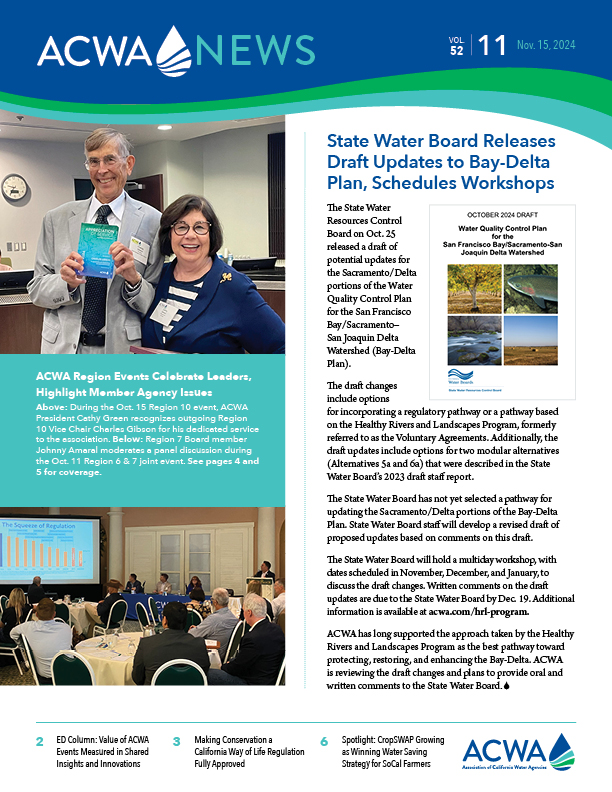 ber 15 edition of ACWA News for informative articles about the association and water industry.
Articles include:
- State Water Board Releases Draft Updates to Bay-Delta Plan, Schedules Workshops
- Articles, Photos and Executive Director Column Highlight ACWA Region Events
- Rancho Water’s CropSWAP Program Growing and Succeeding in Southern California
- Steps Outlined for Voting During Fall Conference Membership Meeting
Value of ACWA Events Measured in Shared Insights and Innovations
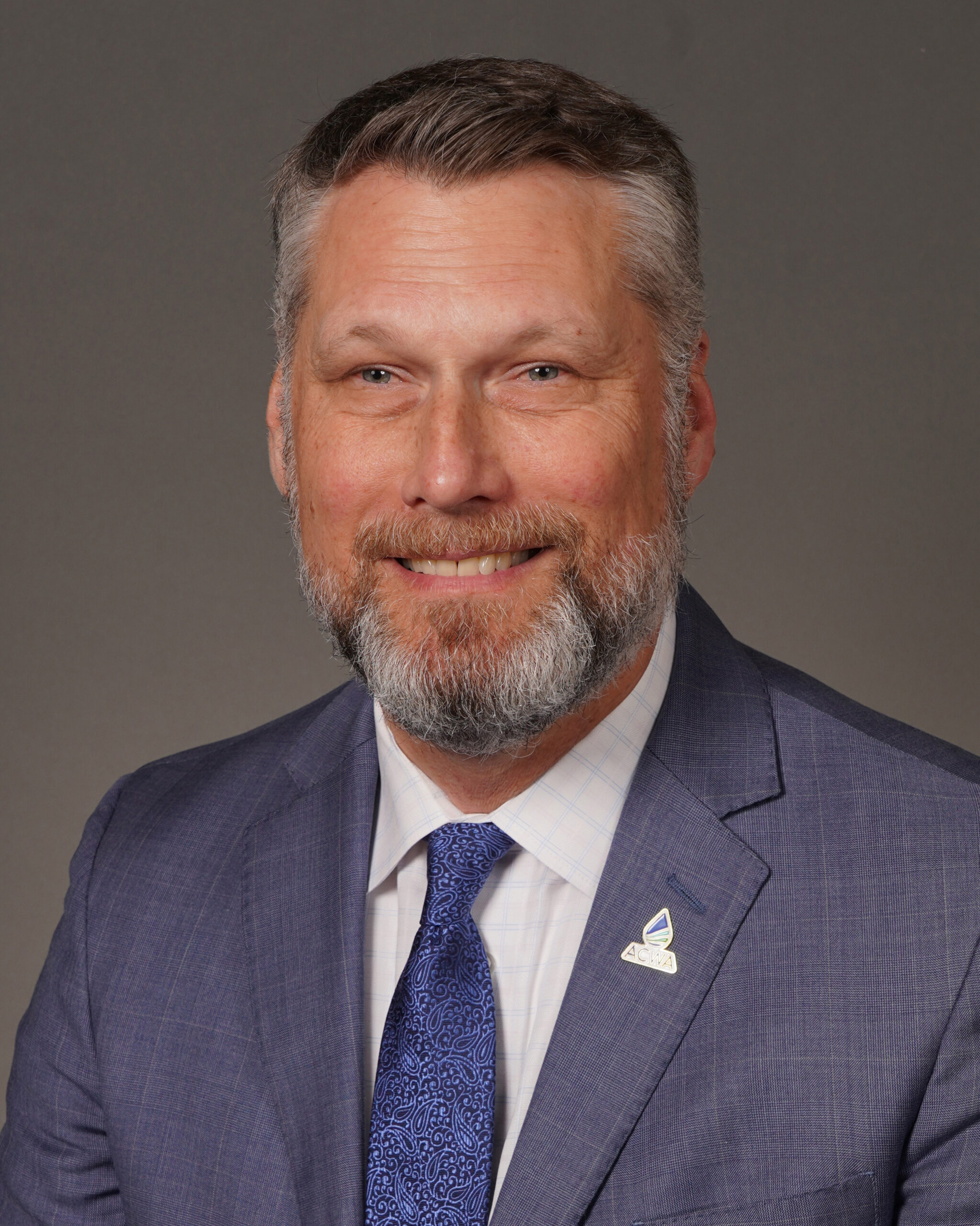 With only weeks to go before we gather at the ACWA Fall Conference & Expo in Palm Desert, our team is working hard to put the finishing touches on what promises to be an exceptional event. I am looking forward to hearing from insightful speakers and dynamic panels, as well as the invaluable networking opportunities.
But ahead of conference, let’s take a moment to reflect on the impactful programs and tours we have offered this year throughout the regions. Through eight regional events with more than 700 attendees, ACWA members have engaged in critical discussions, explored innovative water management practices, and brought back meaningful insights to their agencies.
Region programs kicked off in June, with a Region 2 program and tour in Paradise focused on the coordinated wildfire recovery efforts made by the Town of Paradise and Paradise Irrigation District (PID). It was truly impressive to see how PID and the community have recovered from the devastation brought on by the 2018 Camp Fire. Witnessing their progress and preparation was a powerful reminder of the importance of crisis planning, providing valuable lessons for attendees.
Regions 3 and 4 came together in July to showcase how ACWA members can partner to create regional water reliability for both people and the environment. Conjunctive use and strategic water management across the mountain agencies and agencies serving Sacramento and surrounding areas were the main topics, but the commitment to a reliable water supply for future generations is something important to all of us.
In October, Region 10 offered a program and tour that focused on the impacts of PFAS in both groundwater and surface water — a timely issue impacting water management nationwide. This event provided another great learning opportunity for attendees to see how agencies have proactively responded to address the issue and learn about the delicate balance of regulatory compliance and affordability.
These events would not be possible without the dedication and support of our event sponsors, the member agencies who host our events, the region boards, and of course the tireless work of the ACWA Member Outreach and Engagement staff.
If you were unable to attend the great programs the regions offered this year, I encourage you to make it a priority for 2025. There is so much more we can learn from each other.
Of course, the insightful and innovative programing that we offer will continue during our upcoming Fall Conference. There will be something for everyone with programs on communications, finance, workforce development, water trends, policy, regional issues, innovation and more. I look forward to seeing you there and learning more about the amazing work of ACWA member agencies.
CropSWAP Growing as Winning Water Saving Strategy for Southern California Agricultural Community
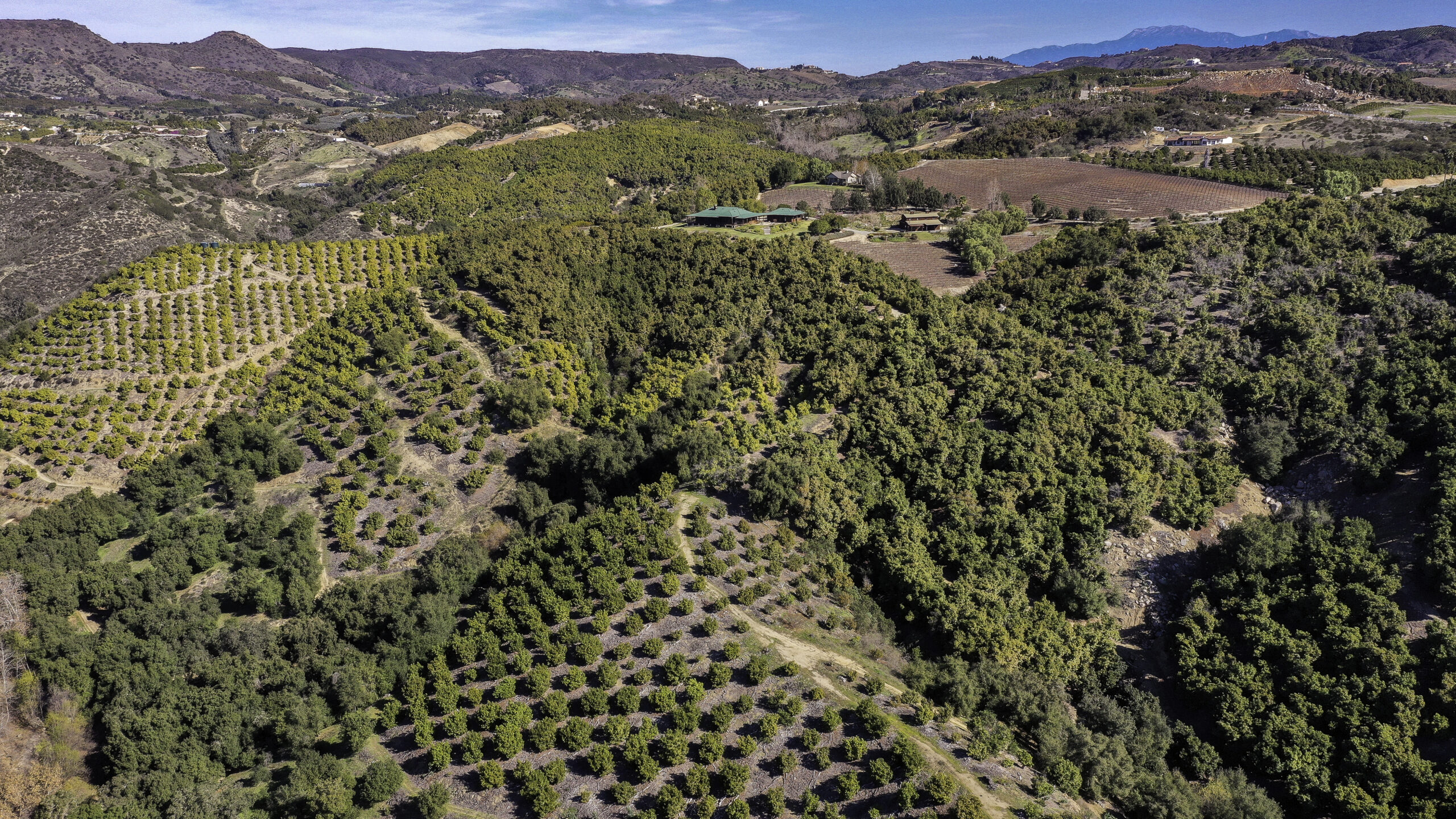
Growers served by Rancho Water and five neighboring ACWA member agencies can receive incentives through the CropSWAP program to switch from crops such as avocados, shown in this grove from a 2020 photo, to lower-water using crops like grapes. Photo courtesy of Rancho Water
Drought Inspired
Rancho Water’s CropSWAP program is a classic example of adversity being the mother of invention. In this case, Temecula area growers were being heavily impacted by a series of hardships all at once during 2016. As with farmers throughout the state, they struggled to raise profitable crops that year as severe drought constantly threatened water supply reliability. Many of them were growing avocado trees and keeping them productive depended on increasingly expensive imported water. Even then, when they raised a successful crop, increasing foreign competition cut into profits while factors such as high salinity levels in the water supply made the future even more uncertain. The result for many was a cost to produce crops that outweighed the profit. Rancho Water Board members Bill Wilson and Danny Martin (Martin passed away in 2020) owned vineyards and were aware of other growers’ mounting challenges. They were also aware of grants aimed at strengthening water efficiency and local drought resiliency. “These guys were really struggling,” Wilson recalled. “What if we can incentivize them with grants to rip out the avocados and other higher water using crops, and we’d help them pay for the replanting? They would lose a year or so of production, but they wouldn’t go so far in the negative that they’d never be able to catch back up. And people did it. We got the grant, and we fulfilled the grant.” CropSWAP began in 2016 after Rancho Water was awarded $3 million in grant funding from the Department of Water Resources and the U.S. Bureau of Reclamation. Rancho Water contributed another $1 million and started actively promoting the CropSWAP program through digital advertising, a brochure sent to all new agricultural customers, and presentations about the program to growers during an annual meeting of farm managers and at local agricultural group meetings. Word spread, growers signed up and today Rancho Water’s CropSWAP program is expanding through the Fallbrook Public Utility District, Rainbow and Valley Center municipal water districts and the cities of Escondido and Oceanside — all ACWA member agencies.Bigger Program, More Covered
Avocado rootstock replacement is by far the most popular among CropSWAP program applicants, accounting for a third of project types, according to Giovanni Rodriguez, the Water Use Efficiency Specialist at Rancho Water. However, the program now goes beyond comprehensive crop replacements to save water and also incentivizes irrigation efficiency upgrades and a variety of sustainable agriculture upgrades, such as using soil moisture sensors, nutrient management, mulching and utilizing cover crops. Incentives can range from up to $100 an acre for using cover crops, to $4,500 an acre for crop rejuvenation and up to the $22,500 an acre incentive cited earlier for switching from avocados to wine grapes. “We not only incentivize switching crops, but we incentivize using best practices for water efficient irrigation,” said Justin Haessly, Water Use Efficiency and Grants Manager for Rancho Water, adding that Rancho Water hosted an international delegation interested in CropSWAP. Wilson describes CropSWAP as a kind of agricultural equivalent to turf replacement, and like turf replacement, state, federal and regional agencies such as the Metropolitan Water District of Southern California, which supplies imported water to Rancho Water, are themselves incentivized to make grants available — especially if results in water savings can be proved. “The more ROI that you can prove and show, the more you qualify for more grant money. And that’s what keeps the program moving forward in terms of being able to fund incentives,” Wilson said. There is currently $1.7 million that’s been reserved for regional CropSWAP projects, Rodriguez said. “There are currently no concrete plans for further expansion at this time,” Rodriguez said. “However, the program has been a hit and word has spread about the benefits of CropSWAP throughout the agricultural world. We are hoping that this can lead to further expansion and growth.” For more information about the Regional CropSWAP program, visit RegionalCropSWAP.com.
CVWD Director of Finance Karla Romero Elected President-Elect of CSMFO
Karla Romero’s election as president-elect of the statewide California Society of Municipal Finance Officers (CSMFO) marks a historic moment as the position has not been held in the Coachella Valley in over 45 years. Romero will serve as president-elect in 2025, president in 2026, and past president in 2027, completing a three-year leadership term. Romero brings 17 years of dedicated service in government finance to CSMFO. Before joining the Coachella Valley Water District (CVWD) as a controller in 2023—and later rising to finance director at the start of 2024—she served as finance director and city treasurer for the City of Brawley and City of La Quinta. Romero began her government finance journey as a temporary employee at the City of Indio, ultimately progressing to senior accountant. She holds a Bachelor of Science in International Business and a Master of Business Administration. Her education, experience, and involvement with CSMFO have been instrumental in her journey to leadership. Beyond her professional accomplishments, Romero’s heart for service shines through her 16 years as a dedicated volunteer at CSMFO. Her commitment to paying it forward has been a driving force in her career. As president-elect, Romero aims to create more opportunities for leadership and volunteering, celebrate the diversity within CSMFO, and foster a culture of innovation and continuous learning for all members.###
Coachella Valley Water District is a public agency governed by a five-member board of directors. The district serves the community with domestic water, agricultural irrigation, and drainage, wastewater collection and treatment, nonpotable and recycled water, regional stormwater protection, groundwater management, and water conservation. It serves approximately 114,000 residential and business customers across 1,000 square miles, primarily in Riverside County and portions of Imperial and San Diego counties.Project WET Workshop Equips Educators with Essential Tools
The Project WET (Water Education Today) workshop held on November 2, co-hosted by the Municipal Water District of Orange County (MWDOC), the California Department of Water Resources, The Metropolitan Water District of Southern California, and California Project WET, brought together Southern California educators to learn how to actively engage students in climate, water, and resilience curriculum. Project WET is a global water education program founded on the belief that individuals are more likely to engage in decision-making and create positive change through their actions.
The event welcomed 24 middle and high school educators and representatives from various water agencies, offering them valuable STEAM resources, including guidebooks, activity kits, and career-focused tools for classrooms and events. Through practical, real-world scenarios, and hands-on activities like “Ocean Rising” and “Water for All Water Users,” participants explored water’s critical role in ecosystems, climate adaptation, and community resilience. These lessons empower students to think critically by focusing on “how” to create change, nurturing their journey from awareness to action on water issues. Additionally, attendees were provided with career connections for each activity and career brochures for jobs in the water industry provided by the Water Energy Education Alliance (led and administered by MWDOC). Educators left the workshop with the training and resources to successfully integrate these dynamic lessons into the classroom, continuing our shared mission to foster water stewardship in future generations.
For more information on Project WET, visit: www.watereducation.org/project-wet
For more information on WEEA, visit: www.mwdoc.com/WEEA
Rancho Water’s Danielle Coats Recieves the 2024 Kathy Cole Award
TEMECULA – The Rancho California Water District (Rancho Water/District) is proud to announce that Danielle Coats, Director of Government and Public Affairs, has been named the 2024 recipient of the Kathy Cole Award, a distinguished honor from the Southern California Water Coalition (SCWC) recognizing her exceptional dedication to water policy and community partnerships. This award celebrates Danielle’s more than two decades of leadership in public affairs, advancing initiatives ranging from water-saving programs to statewide campaigns on water affordability.
Danielle has served as Rancho Water’s Director of Government and Public Affairs since June 2022. In this pivotal role, she champions strategic initiatives that shape public policy and drive community engagement in responsible water management practices. Prior to her tenure at Rancho Water, Danielle held the role of Senior Policy and Government Affairs Manager at Eastern Municipal Water District, where her expertise and passion for water advocacy played an essential role in advancing legislation focused on accessibility, conservation, affordability, and governance. Her influence has extended across nearly 20 years in representing Western Riverside County in Sacramento, where she has served on several key legislative committees focused on water, wastewater, recycled water, and land use policy.
In addition to her statewide impact, Danielle is deeply committed to local community engagement. She is an active participant on various boards and commissions, including the Southwest California Legislative Council and the Murrieta/Wildomar Chamber of Commerce Board of Directors, where her advocacy for regional issues continues to strengthen water policy and governance.
“Receiving the Kathy Cole Award is an incredible honor, and I am truly humbled to be recognized in this way. Kathy was a remarkable leader, and I am grateful to carry forward her legacy of integrity and collaboration in the water industry.” remarked Danielle. “I am passionate about building resilient water policies and partnerships that benefit our communities and future generations, and I look forward to continuing this important work.”
“Danielle’s leadership and dedication to our communities make her an exemplary recipient of the Kathy Cole Award,” said Jason Martin, Rancho Water’s General Manager. “Her work has had a profound impact on advancing water policy and community resilience not only in our District, but throughout California, and we are immensely proud of her achievements.”
Rancho Water congratulates Danielle Coats on this well-deserved honor and looks forward to her continued contributions to water policy, public engagement, and community advocacy.
TUD Receives $45.6 Million for Sierra Pines Region Water Treatment Facility
Tuolumne Utilities District (TUD) is excited to announce the receipt of a $45.6 million grant/loan award from the State Water Resources Control Board (SWRCB) Division of Financial Assistance. This significant funding will facilitate the construction of a state-of-the-art 3 million gallons per day (mgd) regional water treatment facility at Sierra Pines in Twain Harte.
The Sierra Pines Regional Water Treatment Facility (WTF) Consolidation Project presents an exceptional opportunity for TUD to consolidate up to six of its aging surface water treatment plants. This groundbreaking initiative will replace the Cedar Ridge, Crystal Falls, Lakewood, Phoenix Lake Park, Ponderosa Hills, and Scenic View Water Treatment Plants and each’s associated facilities and will utilize proven, advanced technology to ensure enhanced reliability and superior water quality for TUD customers. Additionally, the new WTF aims to streamline operations and enhance water treatment capabilities in the district’s service area by integrating various other TUD water facilities in the future.
TUD and its predecessors have consolidated several water systems in Tuolumne County over the years. The Sierra Pines Regional Water Treatment Facility aims to integrate many of these smaller, often outdated water treatment plants into a regional, modernized facility. This centralization will result in direct and indirect cost savings for both the district and its customers over time. Centralized facilities are inherently more efficient, leading to reduced operating expenses and improved maintenance capabilities. The Sierra Pines Regional WTF will incorporate advanced technologies and standardized procedures, ensuring superior treatment methods, consistent quality control, and significant environmental advantages which include a reduced environmental footprint and optimized use of resources.
“The approval of the $45.6 million funding is a monumental step forward for Tuolumne Utilities District,” stated Jeff Kerns, Board President. “This project not only exemplifies our commitment to providing high-quality water services but also reflects our strategic vision of consolidating and modernizing our water treatment infrastructure.”
The newly designed facility has an initial treatment capacity of 3 mgd and is built to accommodate future growth, allowing for expansion up to 5 mgd. This flexibility will support the eventual consolidation of additional water treatment plants, including the Monte Grande Water Treatment Plant and Tuolumne Water Treatment Plant.
The Sierra Pines Regional Water Treatment Facility will be constructed on 46 acres at the former Sierra Pines golf course site, which includes the creation of a 25-acre-foot raw water reservoir. This reservoir will provide additional water storage during ditch outages, periods of drought and emergencies.
The SWRCB funding award which includes $27.4 million grant, $10 million zero interest loan, and $8.1 million low-interest loan, is the culmination of many years of sustained effort and is consistent with the TUD Board’s adopted budgets, capital improvement plans, and Strategic Plan. The funding agreement is one of the largest grant awards issued by the State through the California Drinking Water State Revolving Fund and represents the State’s strong commitment to water system consolidation, affordability, and reliability.
Don Perkins, TUD General Manager, expressed his gratitude for the funding package, stating, “This funding represents a significant achievement in what has so far been a 16-year-long endeavor, positioning the district to fully implement its long-term water system consolidation vision. The Sierra Pines Regional Water Treatment Facility will be a cornerstone of our water infrastructure, and we are excited to begin this transformative project. Much work remains ahead, but we extend our deepest thanks to all who have contributed to reaching this milestone and to those who will help make this pivotal project a reality.”
“Consolidation of multiple systems is a proven strategy to instill resiliency in California’s drinking water systems,” said Joe Karkoski, SWRCB Deputy Director, and head of the Division of Financial Assistance. “TUD’s customers have benefited for decades from having their disparate water systems under a unified management and governance structure. With the Sierra Pines plant, TUD continues its laudable efforts to physically tie together these systems, significantly improving their ability to address current and future water supply challenges.”
The district extends its heartfelt appreciation to the diverse group of stakeholders who have generously supported the Sierra Pines Regional WTF project and extends special thanks to the Tuolumne Band of Me-Wuk Indians, Congressman Tom McClintock, the Tuolumne County Board of Supervisors, former acting Forest Supervisor Elizabeth Martinez, former California State Senator Andreas Borgeas, and former California State Assemblyman Frank Bigelow.
Construction of the Sierra Pines Regional WTF is expected to commence to commence as early as 2026 and is slated for completion by 2029. Further updates and progress reports will be provided to the public as the project advances.
Modesto Irrigation District hires Paul Peschel as Assistant General Manager of Water Operations
Modesto Irrigation District (MID) has hired Paul Peschel to serve as Assistant General Manager of Water Operations. Peschel succeeds Gordon Enas who recently retired after more than 9 years of service at MID and more than 30 years in the water industry.
Peschel joins MID from Hi-Desert Water District in Yucca Valley where he served as the General Manager since 2021. He previously had a five-year tenure as General Manager at Kings River Conservation District and spent more than 28 years in various leadership positions at Imperial Irrigation District.
As MID’s Assistant General Manager of Water Operations, Peschel will plan, organize and direct division activities including civil engineering, water use, planning and conservation, irrigation services, construction management and Modesto Regional Water Treatment Plant operations.
“Paul’s leadership coupled with his vast technical experience will be an asset to upholding the District’s commitment of providing the highest level of service to our customers,” said MID General Manager Jimi Netniss.
Peschel received a bachelor’s degree in civil engineering from North Dakota State University. He is a California-licensed civil engineer.
About the Modesto Irrigation District (MID)
The Modesto Irrigation District, established in 1887, is a vertically integrated public utility located in California’s Central Valley. MID provides irrigation water to more than 2,300 agricultural accounts irrigating close to 60,000 acres and electricity to more than 131,000 residential, commercial, and agricultural accounts in Modesto, Empire, Salida, Waterford, and Mountain House as well as parts of Escalon, Oakdale, Ripon, and Riverbank. MID also treats, delivers, and wholesales up to approximately 67,000 acre-feet of drinking water per year to the City of Modesto. For more information about MID visit MID’s website or follow MID’s Facebook Page and MID’s X (Twitter).