
Moulton Niguel Board President Brian Probolsky Appointed to SOCEC
Moulton Niguel Water District Board President Brian S. Probolsky has been appointed to the Board of Directors of the South Orange County Economic Coalition. Probolsky was appointed during a July 9 ceremony alongside other South Orange County professionals representing healthcare, education, and the public and private sectors. The Coalition serves as South Orange County’s leading voice for business advocacy and economic development, working to build a stronger local business climate across the region and within its member communities. “I am honored to join this distinguished group of leaders working to strengthen South Orange County’s business climate,” said Probolsky. “Strong communities are built on strong partnerships between public agencies, businesses, and schools. I look forward to working with the Coalition to support families and businesses in South Orange County.” Probolsky has served on the Moulton Niguel Board of Directors since 2008 and is now in his second term as Board President. He brings a record of public and private sector experience defined by fiscal responsibility, operational efficiency, and regional collaboration. His leadership has helped guide the District through major investments in infrastructure, financial planning, technology, environmental stewardship, and long-term resiliency. Moulton Niguel customers pay the lowest average bill in South Orange County. “Brian brings valuable experience and insight to our Executive Committee,” said Collin Powers, Executive Committee Chair of the South Orange County Economic Coalition. “His background in managing the infrastructure and financial operations that support our communities will be a great addition as we continue promoting policies that strengthen South Orange County’s business climate and regional economy.” During Probolsky’s tenure as Board President, the District has achieved key milestones including:- Fiscal Responsibility: Maintained the highest-possible AAA credit ratings from Fitch Ratings and S&P Global.
- Technological Innovation: Launched the Leak Alert program and completed full-scale smart meter system integration.
- Industry Recognition: Named the No. 1 Top Workplace in Orange County by the Orange County Register, received the Technology Innovation Award from Government Technology, and named to the Top Five Utilities of the World by Global Water Intelligence.
###
Bear Visits Member Agency
CRESTLINE — Working in water can get pretty wild sometimes, which recently landed an ACWA member agency in the national news after a young black bear paid a brief visit to its front lobby.
Around noon on July 22, a security video at the Crestline Village Water District (CVWD) captured the bear pushing open a glass door, peering over a counter and then showing itself out and loping back into the surrounding San Bernardino Mountains wilderness.
It took all of a couple minutes. No one was hurt, including the bear. And the video went viral, attracting the attention of Los Angeles news television stations, the New York Post and USA Today, to name a few media outlets.
“He was just a young bear who was moseying around. As soon as he didn’t see anything he wanted, he just moseyed back out into the woods,” said CVWD Office Manager Josselyn Bryan, who with a couple other employees in the lobby kept her distance during the visit.
Community members didn’t miss opportunities for dad jokes on social media.
“There have been tons of comments, like ‘looks like you’re bearly working!’,” Bryan said.
Kern County Water Agency Names Taryn Ravazzini Assistant General Manager – Strategic Initiatives
BAKERSFIELD — The Kern County Water Agency (Agency) today announced that Taryn Ravazzini has been named Assistant General Manager – Strategic Initiatives, effective August 16, 2026. Ravazzini will join the Agency’s Executive Management Team to lead the Agency’s strategic, regulatory, and legislative initiatives before the State Water Resources Control Board, the California Department of Water Resources, the California Legislature, and fellow State Water Project contractors.
Ravazzini’s new role, based in the Agency’s Sacramento office and reporting directly to General Manager Eric L. Averett, reflects the Agency’s continued focus on advancing its interests in statewide water policy, regulatory proceedings, and long-term water supply planning.
Ravazzini brings more than 20 years of executive leadership experience guiding California’s most significant water policy, regulatory, and infrastructure initiatives. Most recently, she served as Executive Director of the Los Vaqueros Reservoir Joint Powers Authority, where she led the executive, financial, and policy functions of an eight-agency joint powers authority overseeing a multi-billion-dollar reservoir expansion program. Previously, she served as Deputy Director at the California Department of Water Resources, where she led the statewide implementation of the Sustainable Groundwater Management Act (SGMA). She also served as Acting Executive Officer of the California Water Commission, where she led implementation of the State’s landmark $2.7 billion Water Storage Investment Program, and as a senior water policy advisor to both the Brown and Newsom Administrations.
“Taryn has led some of the most consequential water policy and infrastructure programs in the state by building trust across agencies and stakeholders with very diverse interests,” said Eric L. Averett, General Manager of the Kern County Water Agency. “Her experience will strengthen our ability to protect and advance the Agency’s water supply and regulatory interests at the state level.”
“I’m honored to join the Kern County Water Agency at such a pivotal time for California water policy,” said Ravazzini. “I look forward to working with the Board of Directors, General Manager Eric Averett, and the Executive Management Team to advance the Agency’s mission and help ensure a reliable water future for Kern County.”
Ravazzini is an attorney and member of the State Bar of California.
SSWD Purchases Groundwater Well Contractor to Secure Scarce Expertise
SACRAMENTO — Sacramento Suburban Water District (SSWD) today announced it has purchased Kirby’s Pump and Mechanical (KPM), a California Class A General Contractor that specializes in mechanical work on groundwater well pump systems.
Licensed groundwater well contractors are in short supply in California. Adding KPM’s expertise allows the District to maintain pumping capacity and respond quickly to repairs, both reactively and proactively.
SSWD entered into an exclusive agreement with KPM in 2023 to maintain and repair the District’s 70-plus groundwater wells for the next five years. SSWD relies on groundwater, and having exclusive access to their services was critical to avoiding prolonged well outages.
“During the three years that KPM worked exclusively with SSWD, they’ve made a significant difference in strengthening the reliability of our water system,” said Dan York, SSWD General Manager. “Their work has restored approximately 100,000 GPM of pumping capacity. They have also rehabilitated 19 wells, upgraded and repaired motor and electrical service, and made numerous other improvements that made our operations more efficient.”
SSWD staff evaluated KPM’s performance over the initial years of the contract. It was determined that KPM could not only undertake standard well maintenance and rehabilitation but also perform a wide range of additional tasks. They also found that SSWD has the facilities to house KPM staff and equipment.
A Board of Directors committee reviewed KPM’s performance and commissioned an independent cost-benefit analysis. The independent analysis found that SSWD would recoup the KPM purchase in under 3.5 years and achieve approximately $7 million in cost savings over a ten-year period compared with maintaining the current contract.
“Today’s purchase of KPM marks another important moment in SSWD’s commitment to water reliability and infrastructure improvement,” said Craig Locke, President, SSWD Board of Directors. “It’s a fiscally responsible decision that strengthens our water system for our ratepayers and the community at large.”
For more information, visit sswd.org.
July 2026 ACWA News Available
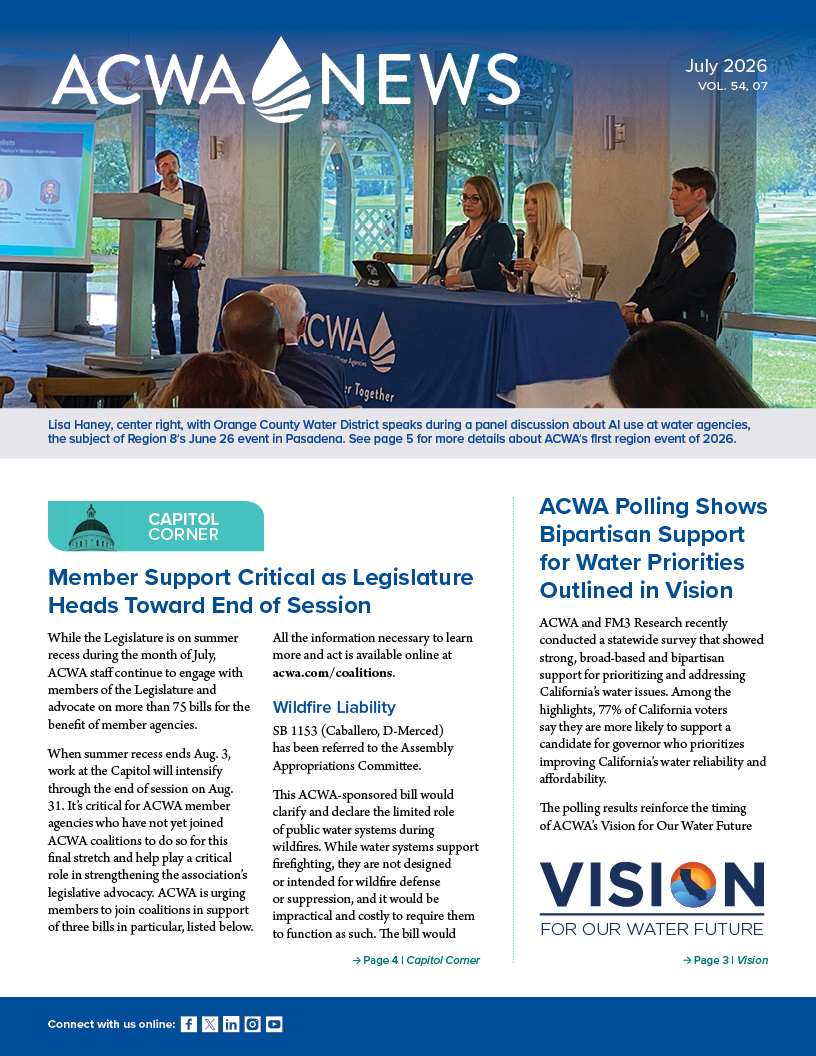 Read the July edition of ACWA News for informative articles about the association and water industry.
Articles include:
- Member Support Critical as Legislature Heads Toward End of Session
- ACWA Polling Shows Bipartisan Support for Water Priorities Outlined in Vision
- Leadership Column: ACWA East Enhancing Advocacy Opportunities for Members
- Contra Costa Water District Celebrates 90 Years
ACWA East Enhancing Advocacy Opportunities for Members
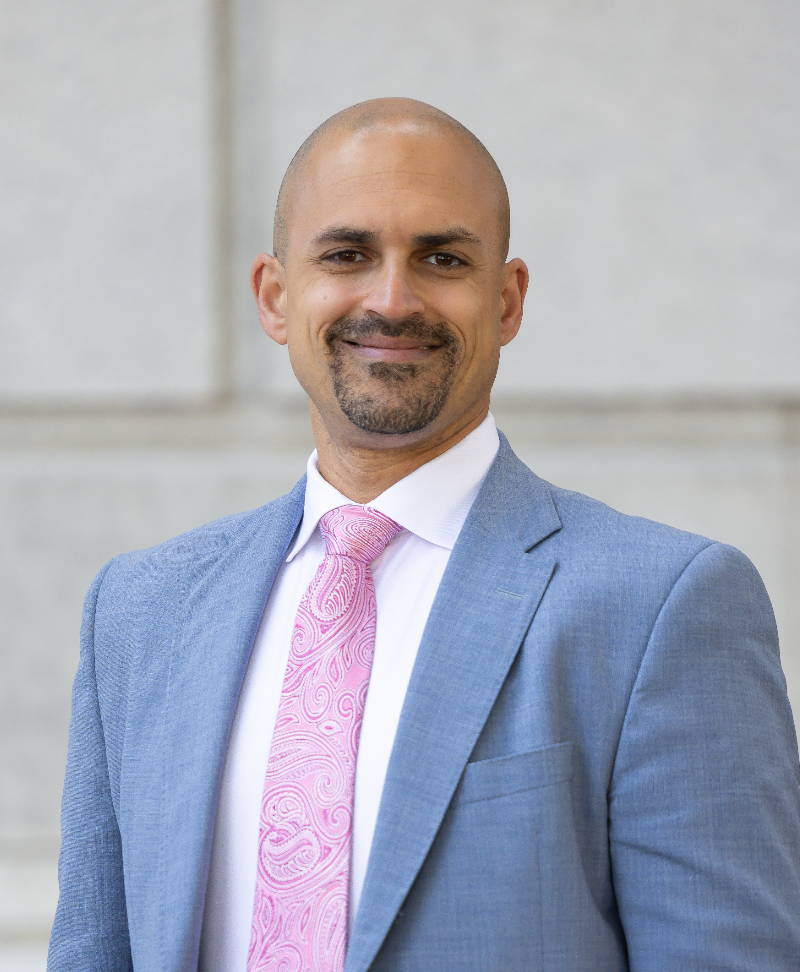 Among countless highlights during my time at ACWA, one that stands out took place not in Sacramento, or even California, but across the country in our nation’s capital.
Working alongside our ACWA East staff while advocating for members in Washington D.C. has been a privilege, as well as a once-in-a-lifetime opportunity. I’ve witnessed firsthand how navigating the federal process demands policy expertise, stellar communication skills and limitless patience. Our three-member federal team possesses these qualities in abundance and uses them to your benefit.
Led by Director of Federal Relations Ian Lyle and including Federal Relations Representatives Caleb Raspler and Libby Spekhardt, ACWA East’s work is guided by the association’s Federal Affairs Committee under the leadership of Chair Jolene Walsh and Vice Chair Scott Petersen.
The federal process poses many challenges, but I’m proud to report progress in several areas that answer our members’ concerns, especially in the area of federal funding, which member agencies consistently rank as a top concern.
On the legislative front, staff constantly engages with members of the California delegation and partners on Capitol Hill. This work focuses on federal water infrastructure appropriations and reauthorizations of multiple key federal programs, such as helping secure Clean and Drinking Water State Revolving Funds.
Additionally, ACWA is continuing to position key water measures for inclusion in the Water Resources Development Act (WRDA). WRDA includes various ACWA priorities for U.S. Army Corps of Engineers projects, such as water supply, drought resiliency, dam safety, forecast-informed reservoir operations and environmental infrastructure funding.
Currently, legislation moving in the Senate also includes ACWA-supported bills to reauthorize the Snow Water Supply Forecasting Program, expand large-scale water recycling and establish a Water Project Navigators program to help communities access federal water infrastructure funding. All three bills recently advanced out of the committee process and are now eligible for a vote in the full Senate.
On the regulatory front, ACWA is working on numerous fronts to support Safe Drinking Water Act procedures to regulate drinking water contaminants such as PFAS, by recommending stability and long-term infrastructure investments in federal financial policies and requirements, as well as consistent, efficient permitting for environmental reviews under the National Environmental Policy Act.
Recently, ACWA further strengthened its already robust federal advocacy by rejoining the National Water Resources Association (NWRA), a federation of state water associations that focuses on western water policy issues. Under NWRA’s membership model, all ACWA member agencies can access its membership benefits at no additional cost.
It has been the honor of a lifetime to lead ACWA as a world-class organization, with effective advocacy benefiting our members and the communities they serve. And while far away geographically, the ACWA East team plays a vital role in helping our members achieve their mission here in California. You can count on them to remain engaged, adaptable and effective as we navigate an evolving federal landscape together.
Spotlight July 2026: Contra Costa Water District Celebrates 90 Years
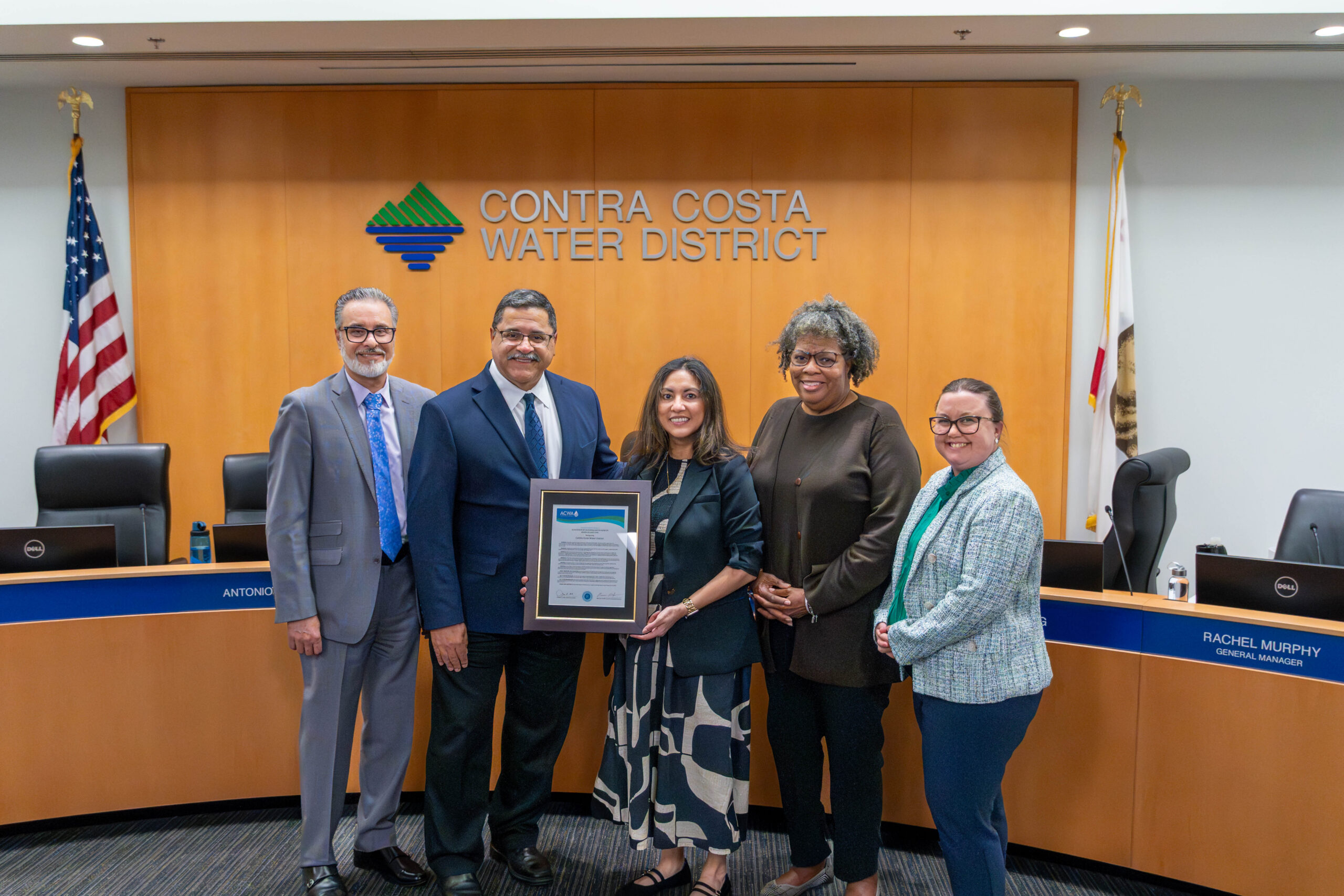
ACWA Senior Regional Affairs Representative Jennifer Rotz, center, presents an ACWA resolution to the CCWD Board honoring the district on its 90th anniversary. Board members receiving the resolution include (l-r) Vice President Antonio Martinez, President Ernie Avila, Rotz, Patt Young and Connstance Holdaway.
Contra Costa Water District (CCWD) is thriving as it celebrates 90 years of securing a reliable supply of high-quality water throughout central and eastern Contra Costa County.
CCWD operates within one of California’s most challenging environments for water professionals, the Sacramento-San Joaquin Bay-Delta. Changing salinity levels can heavily impact water quality, while periodic droughts can drastically affect supply. Add in a booming population, and you have what could be a difficult situation for even the most seasoned water manager. However, forward-thinking leadership stretching back to its 1936 creation has helped CCWD remain successful.
A Salty Start
Efforts to secure a reliable supply of water in Contra Costa County began in the early 1900s as farmers and community leaders worked to address declining water quality amid a prolonged drought and changing Bay-Delta conditions. By the 1920s, conditions worsened to the point where farmers were forced to halt irrigating, and factories resorted to bringing in fresh water by rail tank cars. While the drought ended in 1930, the experience underscored the vital need for a sustainable solution. That would come in the form of the Contra Costa Canal.
Richmond attorney Thomas Carlson was retained to explain the salty situation to the California Legislature and then the federal government. His advocacy contributed to a commitment by the federal government to launch the Central Valley Project.
Construction of the 48-mile Contra Costa Canal began in 1937, just one year after voters approved CCWD’s formation, and by 1940 the canal started delivering water from the Delta to the City of Pittsburg. The occasion was marked with a three-day celebration called the Water Fiesta, including the largest parade ever seen in Contra Costa County and the coronation of a Fiesta Queen.
The demands from World War II caused construction delays due to shortages of labor and materials, but the entire canal was completed in 1948. However, salinity and changing Bay-Delta conditions continued posing challenges to water quality and reliability. In response, CCWD leaders worked tirelessly to stay one step ahead.
Los Vaqueros Reservoir
Early investments in conveyance and treatment facilities laid the foundation for a system designed to grow and adapt alongside the rapidly growing communities served by CCWD. Over the decades, CCWD’s mission expanded beyond water delivery to include water quality protection, water treatment, watershed stewardship and collaboration with regional and state partners. By the 1980s, CCWD decided to embark on a decisive answer to further securing a reliable and higher-quality water supply — Los Vaqueros Reservoir.
In 1988, voters authorized funding for a 100,000-acre-foot off-stream reservoir that would improve water quality by storing fresh water from the Delta and provide an emergency supply. At the time, it was the first new dam built in California in more than 15 years and was built on time and under budget. It was the largest and most significant project undertaken by CCWD.
Aside from municipal water supply, Los Vaqueros provides recreation with fishing and more than 55 miles of trails. It also protects endangered species ranging from the red-legged frog to the Alameda whip snake and protected golden eagles.
In the early 2010s, CCWD expanded Los Vaqueros to increase storage by 60,000 acre-feet, strengthening drought resilience and making it one of the largest reservoirs in the Bay Area.
Continued Innovation
Today, CCWD continues to meet the needs of industry and a growing urban population. Operating as both a water retailer and wholesaler, the district relies on a team of 330 employees to serve approximately 550,000 people in central and eastern Contra Costa County.
More recently, CCWD has advanced critical initiatives such as its Canal Replacement Program, which will modernize infrastructure while enhancing climate resilience and safeguarding water quality through a fully enclosed, buried pipeline. Construction is scheduled to start in 2032.
“We have a responsibility to not only deliver reliable water today, but to undertake the thoughtful planning needed to advance the Canal Replacement Program to ensure reliable water for decades to come,” said CCWD General Manager Rachel Murphy.
At the same time, CCWD has remained an active ACWA member, including through its contributions to the association’s leadership. CCWD Board President and current ACWA President Ernie Avila, P.E., is the second CCWD Board member to lead ACWA. Bette Boatmun served as ACWA President during the 2002-’03 term and actively participated in the association until her passing in 2024.
Looking Ahead
CCWD’s legacy is also a roadmap for its future. Like numerous water agencies throughout California, CCWD has navigated cycles of drought, regulatory change and population growth. Meeting these challenges has required ongoing innovation – from advances in water treatment and monitoring to investments in system reliability and emergency preparedness. Avila summed up the secret to CCWD’s success in a single sentence.
“As we mark this milestone, we’re reminded that CCWD was built on innovation, collaboration and long‑term planning,” Avila said.

EMWD Recognized for Procuring Value for its Customers
PERRIS — Eastern Municipal Water District (EMWD) has been recognized for its industry-leading efforts to provide excellent value to its customers.
The National Procurement Institute presented EMWD with its Achievement of Excellence in Procurement Award, which is given to government agencies that showcase excellence in embracing innovation, professionalism, productivity, electronic procurement, and leadership in acquiring quality goods and services at the best value.
It is the 13th consecutive year – and 17th time overall – that EMWD has earned the award.
The award recognizes EMWD’s purchasing and contracts team, which seeks bids for goods and services, determines the quality of proposed services, and negotiates price points that are fair to all involved. The goal of the team is to secure the best value for EMWD’s customers.
In 2025, those efforts resulted in $3.3 million in costs savings or costs avoided.
“Our customers place a great deal of trust in us to provide them with a great value,” EMWD Board President Stephen Corona said. “Because of the work of our staff, we are able to provide highly reliable services at a fair price.”
EMWD is one of 30 special districts nationwide to receive the award.
# # #
Eastern Municipal Water District is the water, wastewater service and recycled water provider to more than one million people living and working within a 682-square mile service area in western Riverside County and northern San Diego County. It is California’s sixth-largest retail water agency, and its mission is “To deliver value to our diverse customers and the communities we serve by providing safe, reliable, economical and environmentally sustainable water, wastewater and recycled water services.” More information can be found at www.emwd.org.
San Bernardino Valley Municipal Water District Board Reduces Property Tax Rate
SAN BERNANDINO – The San Bernardino Valley Municipal Water District Board of Directors unanimously voted to lower the Agency’s annual property tax rate by nearly 64%, landing at $0.04 per $100 of assessed value. The regional water agency and State Water Contractor bring supplemental water supplies from Northern California into its 353 square mile service area, providing water to 15 retail agencies who serve homes and businesses. In most years, approximately 75% of water is sourced from existing local surface and groundwater supplies, while 25% is imported from Northern California through the state’s water conveyance network to meet local water needs, a system known as the State Water Project (SWP).
Each year, the Board sets the annual property tax rate after a thorough review of current State Water Project costs, debt, and long-range infrastructure needs. President T. Milford Harrison stated, “For more than 70 years, we have been careful stewards of taxpayer dollars and our region’s water future. This vote continues that legacy of making decisions that ensure reliable water for residents today and for future generations.”
San Bernardino Valley Municipal Water District is the fifth largest of the 29 State Water Contractors who fund the infrastructure and have an annual entitlement of up to 102,600 acre-feet of water per year, enough to supply over 300,000 households for a year. The property taxes collected each year by San Bernardino Valley were authorized by voters in the 1960’s to pay for costs of the SWP; infrastructure which includes Oroville Dam, San Luis Reservoir, the California Aqueduct, and nearby Lake Silverwood. San Bernardino Valley serves water to agencies spanning from Fontana to Calimesa. Property taxes are restricted to funding the Agency’s obligations associated with the State Water Contract.
“Following an extensive economic analysis of the current and forecasted State Water Project costs as well as our available financial resources, the Board was able to significantly lower the property tax rate this year,” said Director Susan Longville, the longest serving member of the Board and member of the Agency’s Cost of Service Study Committee. “I am proud that we are able to lower our portion of property tax costs, while remaining committed to ensuring the long-term water supply resiliency for this region.”
The Board approved a rate of $0.04 per $100 of assessed property valuation, down from the previous rate of $0.11, a reduction that reflects the Board’s continued commitment to easing costs for property owners by relying on other sources of funding to continue the Agency’s work; including funds received following the dissolution of Redevelopment Agencies and the Agency’s earned interest. Reducing the amount of property tax collected will leave nearly $60 million in the hands of taxpayers this year.
Director Jose Velasquez who made the motion to approve the new rate of $0.04, stated, “Due to prudent decisions by past Boards over many years, along with new sources of revenue and smart investments, the Agency is now in a position to provide significant savings to the taxpayers. Bringing our property tax rate as low as possible right now, while we continue to plan and permit large infrastructure projects is a strategic decision by this Board that directly benefits the people we serve.”
The Agency projects approximately $100 million in costs this year on the SWP. The Board considered the feasibility of using alternative sources of revenue while also ensuring that sufficient revenue would be generated to meet its obligations under its State Water Project contract with the Department of Water Resources. In his statements during the meeting, Director Paul Kielhold acknowledged that there are many factors in water supply planning and delivery that the Agency and Board cannot control. In fact, setting the tax rate is one of the only things that the Board directly controls and they try to find the right balance between ensuring there is enough funding for future projects while also keeping water affordable today. The investment pays for infrastructure built to serve the region for 50 to 100 years, providing a reliable, imported water supply for decades to come.
Vice President Gil Botello stated of the decision, “We know this work is hard and requires bold decisions providing benefits well into the future. But these decisions strengthen the foundation from which the Agency was formed by the voters in 1954. Our Board is independently elected by the voters in our service area to represent their interests. We accomplished that with our decision by recognizing our obligations to future water supply projects while also acknowledging the financial burdens our taxpayers experience.”
Workshop materials and the full Board action are available on the Agency’s website at www.sbvmwd.com.
About San Bernardino Valley
San Bernardino Valley Municipal Water District is a regional wholesale water agency serving approximately 734,000 people across 353 square miles in southwestern San Bernardino County and a small portion of Riverside County. Through regional partnerships, innovative projects, and a dedicated team of professionals, San Bernardino Valley is committed to building a resilient and sustainable water supply future for the communities it serves. Learn more at www.sbvmwd.com.
Recycled Water Conversion to Begin at Fair Oaks Park and Nearby City Medians
SCV Water will soon begin a conversion project to expand the use of recycled water in Santa Clarita to Fair Oaks Park (17468 Honey Maple Street, Santa Clarita, CA 91387) and nearby City of Santa Clarita street medians. The project, approved by the SCV Water Board of Directors at its meeting on July 21, 2026, is expected to result in 250,000 square-feet of landscaping converted, as well as 11.4 million gallons of potable water being available for residential and commercial use each year.
“The Fair Oaks Park and City Median projects represent a significant positive step for water use efficiency and long-term sustainability in the Santa Clarita Valley,” said SCV Water Sustainability Manager Matt Dickens. “Every drop of recycled water used means a larger supply of drinking water is available to our customers for important and critical daily activities like cooking, laundry and staying hydrated.”
In February 2024, SCV Water completed the Vista Canyon Recycled Water Main Extension (Phase 2B) project, expanding the infrastructure needed to deliver and use recycled water along Lost Canyon Road and the surrounding area, south of CA-14. The Fair Oaks Park and City medians conversion will convert existing irrigation systems from potable to recycled water, which will be served via the Vista Canyon Water Factory located within the Vista Canyon development.
The project represents the first customer conversion project implemented through SCV Water’s Purple PREP (Planning, Readiness & Effectuating Program) process, which was developed to assist customers with converting irrigation systems. Construction on the project is anticipated to be completed this winter.
Purple PREP is designed to reduce or eliminate customer conversion costs and remove barriers to recycled water adoption. More information about SCV Water’s Purple PREP initiative, as well as recycled water use in the Santa Clarita Valley, can be found on the Agency’s website at yourSCVwater.com/recycled-water.