
Mesa Water District Board Elects Marice H. Depasquale as Board President
COSTA MESA — Mesa Water District (Mesa Water®) is pleased to announce that the Mesa Water Board of Directors (Board) officially named Marice H. DePasquale to serve as Board President and Shawn Dewane to serve as Vice President for 2024-2026, at its Board meeting on December 6.
Subsequently, the Board swore in Directors James R. Fisler from Division II, Fred R. Bockmiller, P.E., from Division I, as well as Marice H. DePasquale from Division III, who were re-elected in the general election on November 5 to continue to serve a four-year term on the Board. Directors Bockmiller, DePasquale and Fisler all ran unopposed.
“One of the things I’m most proud of is that our water is safe to drink straight from the tap. We are dedicated to providing 100% local, high-quality water to our community,” said Marice H. DePasquale, Mesa Water Board President. “Mesa Water’s abundant water supply is one of the most valuable resources for our community. During my term as President, I will continue to champion exploration of new local water supply projects, like our current study on the potential for brackish groundwater desalination.”
President DePasquale represents Division III, the North Costa Mesa community, which includes landmarks such as South Coast Plaza and Segerstrom Center for the Arts. President DePasquale was appointed to the Mesa Water Board in 2017 and was first elected in 2018. She also serves as a Vice Chairwoman of CalDesal, sits on the board of Water UCI, and is a lifelong Girl Scout.
Vice President Dewane represents Division V, which includes Eastside Costa Mesa and parts of Newport Beach. He is actively involved with many water industry, government, finance, and community organizations, including serving on the Board of the Orange County Employees Retirement System. He also served on the Orange County Water District (OCWD) Board for eight years, as both a Director and Board President.
WVWD Enhances Communication with Leak and Payment Notifications
WALNUT – Walnut Valley Water District (WVWD) continues to enhance customer communication through automated text message alerts for water leaks and water turn-offs due to nonpayment. This initiative helps provide faster, more efficient communication, and WVWD is committed to continually expanding its efforts to better serve the community.
“Text message notifications are an essential tool for connecting with our customers,” said Lily Lopez, External Affairs and Sustainability Director at WVWD. “We want to keep them informed, and these timely updates are one of the ways we’re enhancing their customer service experience.”
Expanding Customer Communication with Payment Reminders
WVWD now uses text messages to notify customers of upcoming payment due dates before their water service turn-off date. This approach has resulted in a 50% increase of timely bill payments, helping to reduce the operational demands of turn-offs. By minimizing service disruptions, this initiative improves customer satisfaction while optimizing resource allocation.
Automated Leak Detection and Proactive Support
WVWD’s system has been notifying customers of potential leaks based on continuous water usage monitored over a 24-hour period. While this feature isn’t new, it’s now automated through the customer portal, providing quicker and more efficient alerts. Customers receive immediate notifications when potential leaks are detected, allowing them to resolve issues early, preventing high bills and waste. The alerts also link to helpful resources, including tips on leak management and the District’s leak repair program.
Setting a Standard for Utility Providers
WVWD’s use of automated text messages showcases how utility providers can leverage technology to strengthen customer relationships, streamline operations, and improve service delivery. This case study sets a positive example for other utilities looking to enhance customer engagement and reduce inefficiencies.
To learn more about WVWD’s leak detection services and other helpful resources, visit their website.
ACWA Responds to Gov. Newsom’s Executive Order on Flood Control, Groundwater Recharge
SACRAMENTO — The Association of California Water Agencies (ACWA) issued the following statement from ACWA President Cathy Green regarding Executive Order N-16-25 issued today by Gov. Gavin Newsom.
“ACWA applauds the governor for his swift action to empower California water managers to blunt the destructive impact of flooding while quickly diverting excess water to recharge groundwater supplies.
“This Executive Order highlights the critical need for modernizing our water infrastructure along with our permitting process to better reflect the state’s ability to remain flexible in the face of climate change.”
Desert Water Agency Announces 2025 Board Members and Positions
Paul Ortega and Kristin Bloomer have started new, four-year terms on the Desert Water Agency Board of Directors. Both were unopposed in the November 2024 election. This is Ortega’s second term on the board, and Bloomer’s third term. At its January 7, 2025, meeting, the Desert Water Agency Board of Directors conducted its vote of officers. Director Paul Ortega was reelected to serve as President and Director Jeff Bowman was reelected as Vice President. Director Kristin Bloomer was elected to serve as Secretary-Treasurer. The reorganization is as follows:- President: Paul Ortega, Division 4
- Vice President: Jeff Bowman, Division 3
- Secretary-Treasurer: Kristin Bloomer, Division 5
- Director: Gerald McKenna, Division 2
- Director: Steve Grasha, Division 1
Snowpack Dips Below Average in Second Snow Survey
SACRAMENTO – The Department of Water Resources (DWR) today conducted the second snow survey of the season at Phillips Station. The manual survey recorded 22.5 inches of snow depth and a snow water equivalent of 8 inches, which is 46 percent of average for this location. The snow water equivalent measures the amount of water contained in the snowpack and is a key component of DWR’s water supply forecast. Statewide, the snowpack is 65 percent of average for this date.
On January 1, the statewide snowpack was 108 percent of average after a series of large storms in November and December boosted snow totals in the Northern Sierra, but significant regional differences kept the Central Sierra just below average and the Southern Sierra well below average. An excessively dry January has pushed the Northern Sierra back to near average, the Central Sierra to 58 percent of average, and has led the Southern Sierra Nevada to fall to under 50 percent of average.
“Despite a good start to the snowpack in the Northern Sierra in November and December, we can look back as recently as 2013 and 2021 to show how quickly conditions can change for the drier,” said DWR Director Karla Nemeth. “California missed out on critical snow-building storms in January which has pushed the state down below average for this time of year. While we are excited to see some storm activity in the coming days, sustained periods of no precipitation can dry the state out very quickly. For each day it’s not snowing or raining, we are not keeping up with what we need.”
DWR’s electronic readings from 130 stations placed throughout the Sierra Nevada indicate that the statewide snowpack’s snow water equivalent is 10.5 inches, or 65 percent of average for this date. While forecasts show storm activity may pick up in February, California has seen several years in recent history with large early season snow totals, only for predominantly dry conditions to dominate the rest of the season.
California has effectively managed its reservoirs to keep storage above average for this time of year. Lake Oroville, the State Water Project’s largest reservoir, is currently at 126 percent of average for this time of year. San Luis Reservoir, which is jointly operated by the U.S. Bureau of Reclamation, is at 101 percent of average for this time of year. Reservoirs in Southern California are also near or above their historical averages.
Measuring California’s snowpack is a key component that guides how California’s water supplies are managed. The data and measurements collected help inform water supply and snowmelt runoff forecasts, known as Bulletin 120, that help water managers plan for how much water will eventually reach state reservoirs in the spring and summer. This information is also a key piece in calculating State Water Project allocation forecasts each month.
Despite some recent rain, Southern California is still well below average for yearly precipitation. To prepare for any weather the region may see the rest of the season, DWR has deployed over 30 Watershed Protection Specialists to assist with the Watershed and Debris Flow Task Force organized by the California Office of Emergency Services (CalOES). Members of this task force, including DWR, CalOES, CAL FIRE and over 400 members of the California Conservation Corps, have been working around the clock to protect watersheds around burn scars, place materials to mitigate the risk of debris flows and ensure regional infrastructure including debris flow basins are prepared for incoming storm activity.
On average, California’s snowpack supplies about 30 percent of California’s water needs. Its natural ability to store water is why California’s snowpack is often referred to as California’s “frozen reservoir.” Data from these snow surveys and forecasts produced by DWR’s Snow Surveys and Water Supply Forecasting Unit are important factors in determining how DWR manages the state’s water resources.
DWR conducts four or five media-oriented snow surveys at Phillips Station each winter near the first of each month, January through April and, if necessary, May. The next survey is tentatively scheduled for February 28.
For California’s current hydrological conditions, visit https://cww.water.ca.gov.
Western Water Board Confirms Leadership Team for 2025
On Jan. 22, 2025, Western Municipal Water District’s (Western Water) Board of Directors voted to appoint Director Laura Roughton as the board president for 2025. Director Fauzia Rizvi will serve as the board vice president, and Director Brenda Dennstedt will assume the role of secretary-treasurer. “We are excited to begin the year under the leadership of Directors Roughton, Rizvi, and Dennstedt,” said Craig Miller, Western Water’s General Manager. “Their leadership comes at a critical time as we focus on strengthening regional partnerships, engaging with state water policy, and ensuring long-term resiliency in our water systems. Together, we will continue delivering innovative solutions and value to the communities we serve.” Director Laura Roughton represents Division 4, which includes the communities of Eastvale, Jurupa Valley, and Norco. She serves on Western Water’s Finance Committee, the Community and Government Affairs Committee, and the Rancho California Water District joint committee. Before joining the Western Water Board, Director Roughton served on the Jurupa Valley City Council. “I am truly honored to serve as board president and grateful for the trust my colleagues have placed in me,” said Board President Laura Roughton. “I will focus on fostering collaboration, engaging meaningfully with federal, state and regional partners, and delivering solutions that 2 strengthen our communities’ resilience. Together, we have the opportunity to make a lasting impact, and I’m excited to lead during this pivotal time.” As vice president, Director Fauzia Rizvi brings her professional background in water management and consulting, along with her passion for community advocacy. Rizvi joined Western Water’s Board of Directors in December 2020 and represents Division 5, which includes the City of Corona, Home Gardens, El Cerrito, and a portion of Temescal Canyon. Director Rizvi serves on Western Water’s Engineering, Operations, and Water Resources Committee and the Elsinore Valley joint committee. She represents Western Water on the Western Riverside County Regional Wastewater Authority and the Santa Rosa Regional Resources Authority. “I’m grateful for the opportunity to serve as vice president and look forward to working with our board and community to address the evolving challenges of water management,” said Vice President Rizvi. “Collaboration and transparency will remain at the forefront of our efforts.” Director Brenda Dennstedt, now secretary-treasurer, has represented Division 3 on Western Water’s Board of Directors since 2007, which includes some areas of Lake Mathews, of Lake Elsinore, Temecula, Rainbow, and Murrieta. Dennstedt serves as Western Water’s representative on the Metropolitan Water District of Southern California Board and the chair of the Santa Ana Watershed Project Authority Board (SAWPA) and is a member of SAWPA’s One Water, One Watershed committee. “It is a privilege to take on the role of secretary-treasurer,” said Director Dennstedt. “Sound financial oversight and a commitment to transparency are cornerstones of Western Water’s operations, and I look forward to contributing to the continued success of our district and the people we serve.” The Board of Directors for Western Water meets at 9:30 a.m. on the first and third Wednesday of each month. We invite the public to join us through our livestream. Agendas are accessible online in advance of each meeting, and recordings are provided after each meeting. For agendas, livestream or recordings, visit WesternWaterCA.gov/BoardMeeting. To learn more about the Board of Directors, visit WesternWaterCA.gov/BoardofDirectors.###
Western Municipal Water District is one of the largest public agencies in Riverside County, providing water and wastewater (sewer) services to nearly 1 million people, both retail and wholesale customers who live, work, and play within 527-square miles in one of California’s most populous regions. Learn more: WesternWaterCA.gov
Regional Agencies Come Together to Commemorate Sustainability Milestone
BEAUMONT – San Gorgonio Pass Water Agency (SGPWA) supported its regional partner South Mesa Water Company’s (SMWC) advancement of clean, reliable water services at the Hillcrest Mobile Home Park (Hillcrest) during a ribbon-cutting celebration on January 17, 2025. SMWC concluded a successful park consolidation in January, made possible by a $10.2 million grant from the State Water Resources Control Board (SWRCB) and awarded under the Safe and Affordable Funding for Equity and Resilience (SAFER) program. Through its gap funding program, SGPWA proudly bolstered SMWC’s efforts to deliver safe, affordable water to a community classified as severely disadvantaged. SMWC’s consolidation at Hillcrest resolved ongoing challenges with contaminated groundwater wells. The predominantly senior community faced issues with nitrate levels linked to agricultural runoff. The consolidation also addressed Hillcrest’s need for essential fire protection, required now more than ever. The project delivers a dependable water supply for drinking water needs and fire safety at the same time. “When we work together to strengthen water resilience throughout the region, the results are powerful,” SGPWA Board President Mickey Valdivia said. “SGPWA will continue to collaborate closely with our project partners to provide our community with safe and stable water resources for years to come.” SGPWA provided gap funding to ensure the completion of this critical work. Gap funding, the Agency’s small system support program, enables water retailers to utilize state funding even when they lack the financial reserves to manage the up-front cash flow requirements. The funding acts as a bridge, making sure state funds are applied toward vital regional water reliability and conservation projects. Beyond the benefits at Hillcrest, SMWC’s work will impact the County Line Road Recharge Basin and Turnout Project. This crucial project is a multi-agency effort between SGPWA, San Bernardino Valley Municipal Water District (SBVMWD) and SMWC to stabilize water storage in the Yucaipa Subbasin, making reliable water accessible to 18,000 people. During the consolidation, SMWC upgraded 24,000 feet of mainline pipe to advance the County Line Road Recharge Basin and Turnout Project. SGPWA staff and Board members joined state leaders, local officials, regional agency representatives and community members at the ribbon-cutting event. SGPWA was grateful for the opportunity to commemorate this milestone and its far-reaching sustainability benefits for the Pass area and beyond.###
About San Gorgonio Pass Water Agency Formed in 1961, SGPWA is a State Water Contractor that serves a 225-square-mile area of western Riverside County. The service area includes the cities of Calimesa, Beaumont, and Banning, and the communities of Cherry Valley, Cabazon, and the Banning Bench. In addition to importing State Water Project (SWP) water from Northern California to augment local groundwater sources, the Agency builds local system infrastructure, participates in water transfers, partners in statewide water projects and collaborates on regional water reliability and conservation efforts.West Basin Municipal Water District Announces 2025 Board Positions
At the January meeting of the West Basin Municipal Water District (West Basin or District) Board of Directors, the board selected officers for 2025 with a unanimous vote. Division II Director Gloria Gray will serve as President; Division V Director Donald L. Dear as Vice President; Division IV Director Scott Houston as Treasurer; and Division III Director Desi Alvarez as Secretary.
The president facilitates committee appointments and the assignments of representatives to affiliated organizations. It is her primary responsibility to interpret the policies, programs and needs of the District to the public.
“As we navigate the pressing challenges of the state’s water supply, including extreme weather conditions due to climate change, I remain committed to upholding the values of innovation, sustainability, and community stewardship,” said Gray. “I am honored to serve as the Board President and look forward to leading the District in advancing our vital mission of securing water for tomorrow. Together with my fellow board members, we will continue to ensure our communities have access to safe and reliable water.”
Gray was first elected to the West Basin Board of Directors in 2006, and represents the Division II cities of Inglewood, portions of Gardena and Hawthorne and the unincorporated LA County areas of Ladera Heights, View Park-Windsor Hills, West Athens, and Westmont. She has served in many leadership capacities within the water industry, most recently as the immediate past chairwoman of the Metropolitan Water District of Southern California (MWD) Board of Directors. She was the first African American and first person of color to lead the MWD board, from January 1, 2019 – December 31, 2022, and the second woman to do so in MWD’s 90-year history. She also has served on the board of directors of the Association of California Water Agencies, among many other notable accomplishments and contributions to advancing water sustainability and resource management.
As vice president, Dear – who serves Gardena, Hawthorne, Lawndale and unincorporated Los Angeles County areas of El Camino Village – is responsible for performing all the duties of the president during the temporary or permanent absence of the president.
As treasurer, Houston – who represents Culver City, El Segundo, Malibu, West Hollywood, a portion of Hawthorne, and unincorporated Del Aire, Marina del Rey, Topanga and Wiseburn – is to review the board’s financial status and oversee project, reserve and cost of issuance funds.
As secretary, Alvarez – who represents the cities of Manhattan Beach, Hermosa Beach, Redondo Beach, Lomita, as well as West Torrance and West Carson – ensures the maintenance of district records and that public meetings are noticed in accordance with all laws.
For more information on the West Basin board and committees, visit: www.westbasin.org/board-of-directors.
WVWD and Supervisor Armendarez Enhance Community Fire Safety
RIALTO – West Valley Water District (WVWD), in collaboration with San Bernardino County Supervisor Jesse Armendarez, is taking proactive steps to install critical fire suppression infrastructure, ensuring their shared communities’ needs are met during emergencies. “Thanks to the generous funding from Supervisor Armendarez, we will be able to take proactive measures to ensure the safety and preparedness of our customers,” said WVWD Board President Greg Young. “These new hydrants will fill critical gaps to ensure that our communities’ families, homes and livelihoods are protected.” Supervisor Armendarez has committed up to $100,000 to the project to fund the installation of new fire hydrants throughout WVWD’s southern Fontana service area. “Given the devastating fires we’re witnessing in Los Angeles and the surrounding areas, it’s clear that we must invest in critical infrastructure that enhances the safety of our communities,” said Supervisor Armendarez. “By partnering with West Valley Water District and funding the installation of new fire hydrants, we are ensuring that homes in this neighborhood are within the recommended distance for fire protection, allowing our firefighters to respond more quickly and effectively.” WVWD crews will begin preparation immediately and installation is expected to be completed later this summer. Customers who may experience short-term impacts to their service during installation will be notified prior to the beginning of the project. “This proactive step is essential in supporting our first responders and providing them with the tools they need to protect our residents. Our community’s safety is a priority, and we are committed to taking the necessary actions to safeguard it.” said Armendarez. To learn more about how WVWD is investing in their communities, visit wvwd.org/projects.# # #
The West Valley Water District has proudly served the Southern California communities of Bloomington, Colton, Fontana, Rialto, San Bernardino, and Jurupa Valley since 1952. Through name changes and consolidation, the mission has always remained the same: to provide customers with safe, high quality, and reliable water service at a reasonable rate and in a sustainable manner. The District provides water for over 100,000 customers and is overseen by a five-member, publicly elected Board of Directors.Jose Lopez Re-Elected as Otay Water District Board President for 2025
SPRING VALLEY – At its January meeting, the Otay Water District board of directors elected Jose Lopez as president for 2025, marking his second consecutive term. Lopez represents division four. The board also elected board member Gary Croucher (division three) as vice president and Francisco Rivera (division one) as treasurer.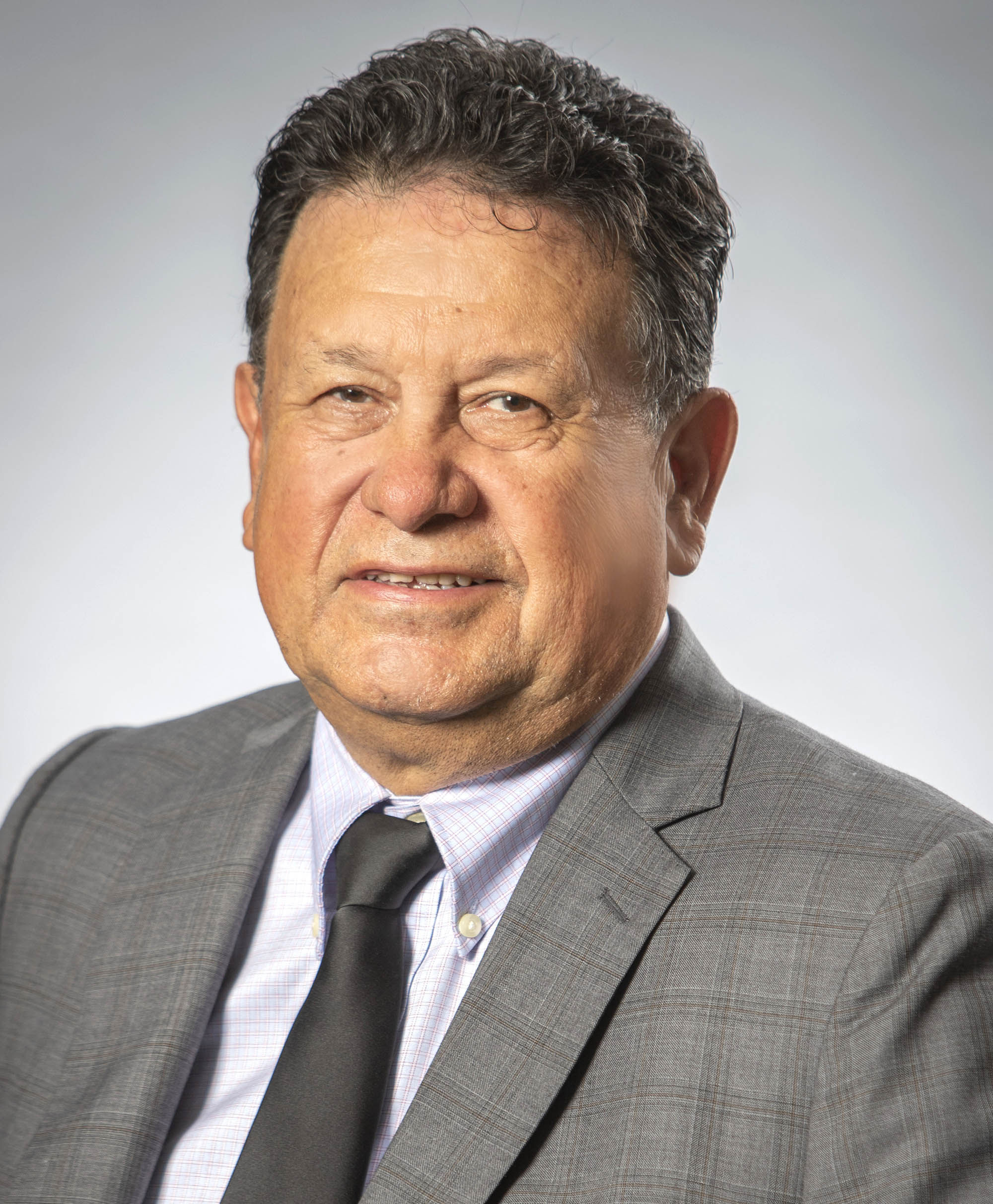 |
 |
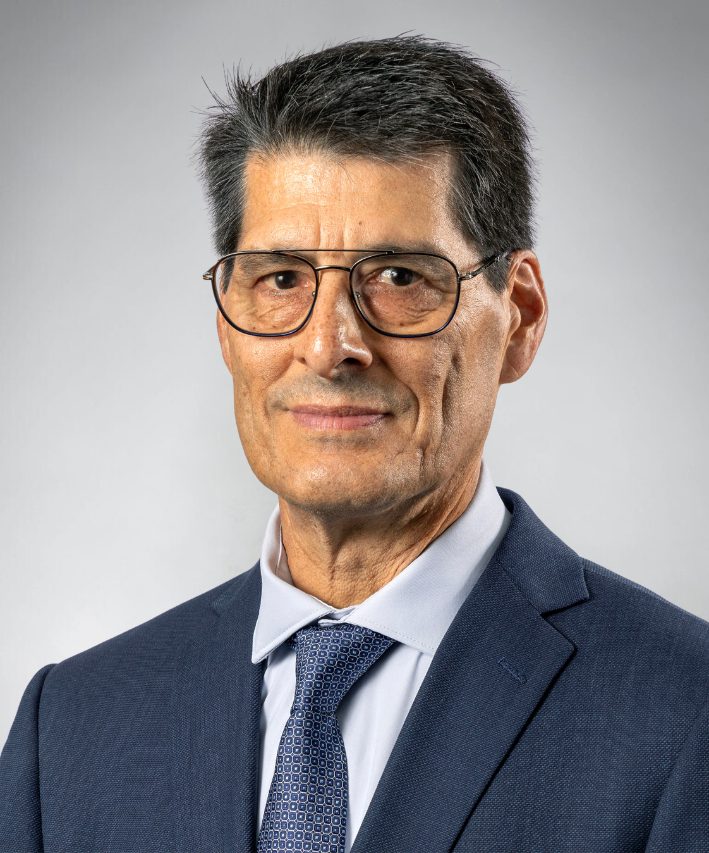 |
| Jose Lopez President Division 4 | Gary Croucher Vice President Division 3 | Francisco X. Rivera Treasurer Division 1 |