Coalition Urges California Court to Consider Wildfire Implications on Water Systems
SACRAMENTO — A coalition of organizations representing state and national water providers have filed a joint legal brief with the California Second District Court of Appeal in response to a lawsuit seeking to hold a water utility responsible for wildfire damage.
The lawsuit, Grigsby et al. v. City of Los Angeles et al., was filed in January 2025 following the Palisades wildfires. The joint brief emphasizes the unique operational and regulatory responsibilities of water agencies and the importance of preserving workable legal standards for agencies responsible for providing water service under extraordinary circumstances. A California Court of Appeal is on the verge of making a decision that will pose significant implications for water providers and customers.
Public water agencies provide the public with critical retail water service across the state. This includes delivering safe and reliable drinking water as well as an immediately available water service to aid in structural fire suppression. These domestic water systems were not designed to combat the expansive wildfires experienced today.
Public water systems have already taken actions to prepare for future wildfire events in recognition of the devastating impacts wildfires pose on communities. This includes investments to modernize aging infrastructure and develop emergency preparedness and response plans. If a water utility can be held liable whenever a wildfire outpaces the capacity of its system, then every public water agency in the State becomes a potential defendant after every major fire regardless of fault.
“While this wildfire devastated Southern California’s communities, public water systems can only aid firefighting activities and should not be held to an unrealistic standard of fully combating a wildfire,” said Caleb Raspler, Federal Relations Representative with the Association of California Water Agencies. “ACWA’s members remain committed to working with federal, state and local partners to implement methods and investments that deliver reliable water resources to communities throughout California, including in emergencies.”
“The Palisades Wildfire was a tragedy, but it would be misguided to penalize local water systems for being unable to supply the immense quantities of water necessary to effectively fight the massive blaze,” said Dan Hartnett, Interim Chief Executive Officer of the Association of Metropolitan Water Agencies. “Public water systems across California and the U.S. need funding support to solidify their infrastructure, not penalties for failing to achieve fire suppression objectives that are beyond their regulatory mandates and design capabilities.”
###
The Association of California Water Agencies (ACWA) is the largest statewide coalition of public water agencies in the United States, organized and existing under the laws of the State of California since 1910. ACWA represents approximately 470 member agencies that are responsible for delivering about 90 percent of the water to communities, farms, and businesses in California. ACWA and its members are dedicated to providing a high-quality, reliable water supply in an environmentally sustainable and fiscally responsible manner.
The Association of Metropolitan Water Agencies (AMWA) is an is an organization of the largest publicly owned drinking water systems in the United States. AMWA’s members provide more than 140 million people across the country with safe drinking water, including nearly 40 million Californians. AMWA was established in 1981 and today the association works with federal policymakers to ensure that the interests of large publicly owned drinking water systems are represented in Washington, D.C.
Sonoma Water Board Names Brad Sherwood Interim General Manager
SANTA ROSA — The Sonoma Water Board of Directors has named Assistant General Manager Brad Sherwood interim general manager, effective Sept. 15. Sherwood will succeed General Manager Grant Davis, who will retire Sept. 14 after 16 years leading the agency.
“Brad brings extensive knowledge of Sonoma Water, strong relationships throughout the region and a clear commitment to public service,” said Board Chair Rebecca Hermosillo. “The board is confident he will provide steady leadership while keeping the agency focused on serving our communities.”
Sherwood joined Sonoma Water in 2006 and currently oversees business services and external affairs, including administration, finance, government relations, community affairs, human resources and project management. He holds a master’s degree in political management from George Washington University and bachelor’s degrees in government and journalism from California State University, Sacramento.
“I’m honored to be asked by the Sonoma Water Board of Directors to serve as interim general manager of Sonoma Water,” Sherwood said. “This is an organization with an exceptional team and an important responsibility to our community. My focus will be on providing steady leadership, maintaining the high level of service our customers depend on, and continuing the important work already underway. I look forward to working closely with the Board, our employees, our water contractors and our community partners.”
The board provided direction on the interim appointment following a closed-session discussion on Aug. 18 and will launch a nationwide search for the permanent general manager position.
August 2026 ACWA News Available
Read the August edition of ACWA News for informative articles about the association and water industry.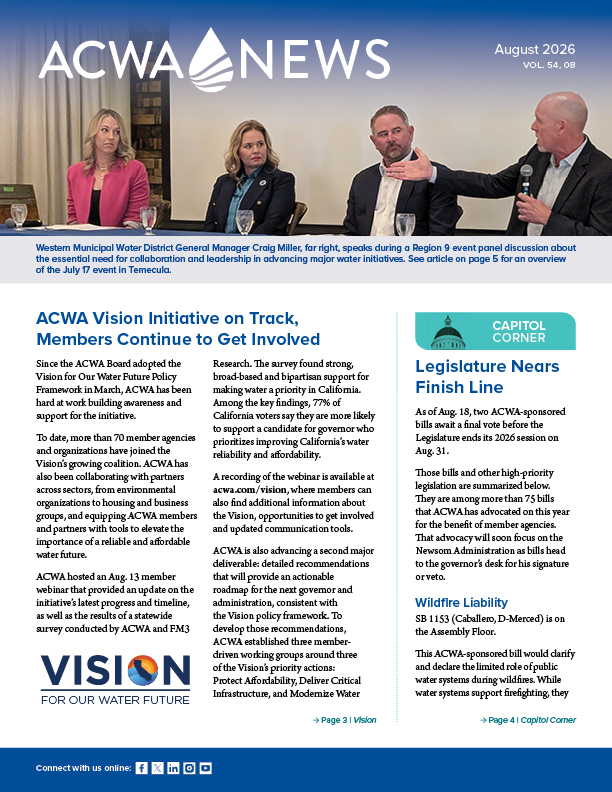 Articles include:
- ACWA Celebrates Membership Appreciation Month
- Learn More and Join ACWA’s Vision for Our Water Future Initiative
- Submit a Legislative Proposal to ACWA, Deadline Sept. 25
- ACWA-Sponsored Bills Benefiting Members Advance in Legislature
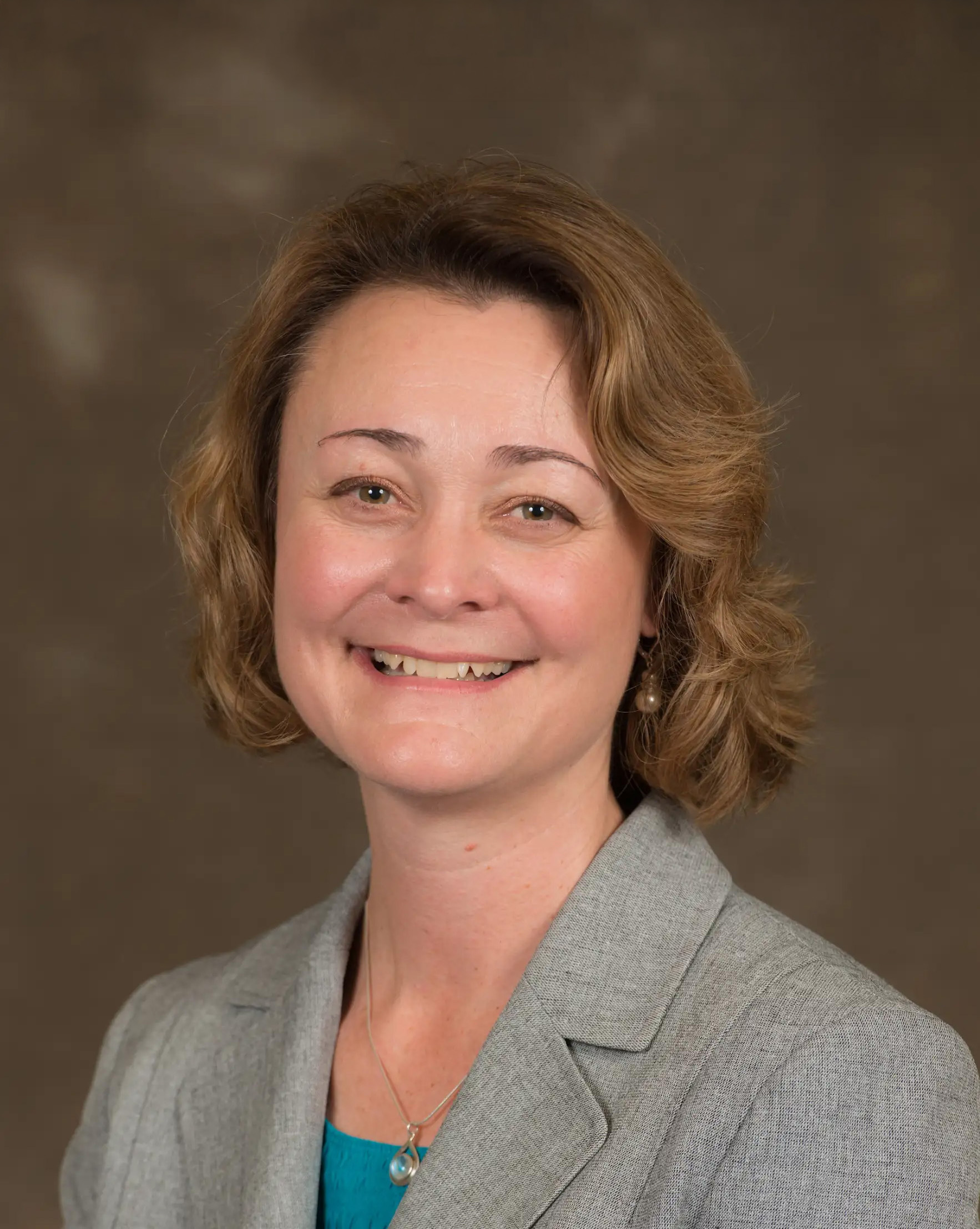
Planning for California’s Water Future Starts Now
The Department of Water Resources submitted this guest column to share information about the 2028 California Water Plan and encourage member agency participation. Learn more at CaliforniaWaterPlan.com.
____
 California has never had the luxury of taking water for granted. Every generation has faced its own water challenges and responded by building the infrastructure, partnerships and policies needed to keep our communities, economy, agriculture and environment thriving.
Now it’s our turn.
California’s water system is being tested in new ways. We’re experiencing rapid swings between floods and droughts, sometimes within the same season. Warmer winter storms are bringing more rain instead of snow, reducing mountain snowpack that has long served as one of California’s largest natural reservoirs while increasing the risk of devastating floods.
The infrastructure and planning frameworks that served California for decades were designed for a climate that no longer exists. Meeting today’s challenges will require more than responding to the next drought or flood emergency. It requires a forward-looking, comprehensive statewide strategy built on sound science, comprehensive data, and a shared commitment to ongoing collaboration and implementation.
Recognizing this need, the California Legislature, through Senate Bill 72, directed the Department of Water Resources (DWR) in 2025 to fundamentally modernize the California Water Plan. The goal is ambitious but clear: transform the Water Plan into an action-oriented roadmap to meet a statewide water supply target that will help improve reliability and climate resilience for decades to come.
That transformation is already underway.
DWR is rebuilding the California Water Plan from the ground up using the best available science, rigorous analysis and meaningful collaboration with water agencies, Tribes, local governments, communities, nongovernmental organizations and partners across California. Together, we’re identifying current and future water supply challenges, evaluating practical solutions to stem those gaps to help guide investments where they can deliver the greatest benefit. Starting this fall, DWR will host public, in-person forums across California to hear directly from local water managers and other community groups.
This robust planning process will produce three key outcomes: a shared statewide understanding of future water supplies and demands; strategies to help achieve California’s goal of adding 9 million acre-feet of water supply by 2040; and an evaluation of the key actions needed to close future water supply gaps.
This work will unfold over multiple planning cycles. The 2028 California Water Plan will establish the qualitative foundation while planning, technical analysis and engagement continue. The 2033 Water Plan will build on that work by evaluating regional portfolios of projects, strengthening partnerships, and providing information federal, state and local agencies need to make informed investment decisions.
Like ACWA’s Vision for Our Water Future, the modernized California Water Plan is an opportunity to bring Californians together around practical solutions that strengthen communities, support agriculture, protect the environment, and prepare our infrastructure for a changing climate. We look forward to partnering with ACWA as this work moves forward.
Whether you manage water, farm the land, steward California’s ecosystems, represent a community, or simply care about the future of our state, your voice matters. We encourage you to visit CaliforniaWaterPlan.com, learn more about this effort, and join us as we build a more resilient water future for California.
State Water Board Releases Final Bay-Delta Plan Update
SACRAMENTO — The State Water Resources Control Board on Aug. 19 released a final draft of its Bay-Delta Plan Update. Its release opens a 30-day comment period ending Sept. 18, with a public hearing scheduled for Oct. 28-29, when the State Water Board is scheduled to consider adopting the updated plan.
The final draft is being reviewed by ACWA staff and the association plans to provide oral and written comments to the State Water Board. ACWA will also continue to engage with its Bay-Delta Working Group to guide advocacy on the issue, particularly in support of including the Healthy Rivers and Landscapes (HRL) Program in the updated plan.
ACWA is a long-standing supporter of the HRL Program as the best approach to protecting, restoring, and enhancing the Bay-Delta. ACWA is also urging members to support the HRL Program during the public comment period.
“The Association of California Water Agencies strongly encourages the State Water Resources Control Board to adopt the Sacramento/Delta updates to the Bay-Delta Plan this year, with the inclusion of the Healthy Rivers and Landscapes Program, said ACWA State Relations Advocate Stephen Pang in a media statement. “ACWA strongly supports the Healthy Rivers and Landscapes Program as the superior approach to protecting, restoring and enhancing the Bay-Delta ecosystem — the hub of water management in California.”
The State Water Contractors, San Luis & Delta-Mendota Water Authority, Friant Water Authority and Northern California Water Association issued a joint statement supporting the HRL Program. The Metropolitan Water District of Southern California also issued a statement on the plan’s release expressing support of the HRL Program.
ACWA distributed an Aug. 19 Advisory that contains more details, links and background on the Bay-Delta Plan Update and the HRL Program. Member login is required.
Marin Water Board Appoints Shaun Horne as Next General Manager
CORTE MADERA — The Marin Water Board of Directors yesterday approved an employment agreement appointing Shaun Horne as Marin Water’s next General Manager following a comprehensive nationwide recruitment process.
Horne brings more than 18 years of progressive water resource and natural resource management experience to the role, including seven years of leadership at Marin Water. Most recently serving as Director of Watershed Resources and a key member of the District’s senior leadership team, Horne has helped lead major strategic initiatives and build partnerships that advance the District’s priorities. His work at Marin Water has included directing implementation of the Biodiversity, Fire, and Fuels Integrated Plan, helping advance the Lagunitas Creek Restoration Project and leading the ongoing update to the Mt. Tamalpais Watershed Roads and Trails Plan. Working closely with staff, he has also helped grow a grant program that has secured state and federal funding for critical environmental and water infrastructure projects benefiting the community.
“The Board conducted a thorough and competitive nationwide recruitment process to identify Marin Water’s next General Manager,” said Marin Water Board President Jed Smith. “Throughout that process, Shaun distinguished himself through his thoughtful approach, collaborative style and commitment to public service. During his seven years as a member of Marin Water’s senior leadership team, Shaun has demonstrated the judgment and ability to navigate complex initiatives, build strong partnerships and advance the District’s strategic priorities. The Board is confident he has the experience and perspective needed to guide Marin Water into its next chapter.”
“It is an honor to have the opportunity to serve as Marin Water’s next General Manager,” said Horne. “I am grateful for the Board’s confidence and excited to build on the important work already underway across the District. Marin Water plays an essential role in delivering safe, reliable water to our community while stewarding one of the most treasured watersheds in the country. I look forward to continuing to work alongside our talented employees, the Board and our community partners to advance the District’s strategic priorities and ensure Marin Water is prepared for the challenges and opportunities ahead.”
Horne will officially begin serving as General Manager on October 1, 2026, while current General Manager Ben Horenstein transitions to an advisory role through the end of his contract term to support a smooth leadership transition. Horenstein previously announced his plans to retire following nearly eight years as General Manager. The Board expressed its appreciation for Horenstein’s dedicated leadership and many contributions to Marin Water.
Before joining Marin Water, Horne worked for Sonoma Water, where he coordinated flood control and ecological restoration projects, and later spent seven years with the Napa County Flood Control and Water Conservation District, managing watershed and stream maintenance programs and directing the Napa River Restoration Project. As an active regional leader, Horne serves on the boards of Fire Safe Marin and Together Bay Area and on the One Tam Lands Stewardship Steering and Executive Committees.
Horne holds a master’s degree in international water resource management, a graduate certificate in water conflict management and transformation, and a bachelor’s degree in environmental sustainability and social justice. He was selected as a Water Education Foundation Water Leader in 2013 and participated in the inaugural cohort of the UC Berkeley Fung Institute for Engineering Executive Water Leadership Program in 2026.
About Marin Water
Chartered in 1912, Marin Water is California’s first municipal water district. Today, the District provides high-quality drinking water to more than 191,000 people across approximately 147 square miles of central and southern Marin County. Marin Water also stewards more than 22,000 acres of watershed land on Mount Tamalpais and in west Marin, which provide approximately 75 percent of the District’s water supply.
ACWA-Sponsored Proposition 218 Rate-Setting Bill Advances to Governor’s Desk
ACWA-sponsored AB 2180 (Ward, D-San Diego) passed the Legislature today and is now on the desk of Gov. Gavin Newsom.
The bill would clarify how water agencies comply with Proposition 218 when setting water rates. This clarification would provide predictability for agencies, support California’s water-use conservation goals and help minimize unnecessary legal disputes over water rates.
ACWA staff will continue to advocate on behalf of members and encourage the governor to sign the bill. More information and background on the bill is available in an ACWA fact sheet.
Applications for 2027 California Water Leaders Program Coming Soon
SACRAMENTO — The Water Education Foundation has announced that it will begin accepting applications in October for its 2027 California Water Leaders Program, which starts the following January.
Those interested should sign up for Foundation announcements to learn when applications will be available and about a virtual question-and-answer session prior to the application deadline.
ACWA member agency employees who apply may be eligible for the association’s John P. Fraser Fellowship, which covers the program’s tuition and limited travel expenses. Applicants must apply through the Foundation’s application process and meet the eligibility requirements. In determining the winner of the fellowship, special consideration will be given to applicants from smaller agencies and those with limited budgets for professional development.
The goal of the Foundation’s prestigious Water Leaders Program is to build a network of water leaders from diverse backgrounds who will deepen their water knowledge, build their leadership skills and learn to take a collaborative approach to decision-making about water resources.
Participants go on tours, attend conferences, spend time with a mentor who is a leading expert and, with their cohort, develop a policy paper on an assigned topic.
More information about the Water Leaders Program is available at watereducation.org/water-leaders.
ACWA Foundation Announces Bette Boatmun Emerging Leader Award Recipients
The ACWA Foundation has announced Leticia Munguia, JD, Director of Administrative Services at Sweetwater Authority, and Shane Johnson, Water Distribution Operator II at Las Virgenes Municipal Water District (LVMWD), as the inaugural recipients of the Bette Boatmun Emerging Leader Award.
Each award recipient will receive $2,500 to support participation in an approved leadership development program, providing an investment in their continued growth as leaders in California’s water industry.
The ACWA Foundation established the annual award in memory of Bette Boatmun. It recognizes emerging water professionals who demonstrate leadership potential and a commitment to advancing an inclusive and equitable water industry that reflects the diversity and opportunity of California.
Boatmun devoted more than four decades to California’s water industry, including serving on the Contra Costa Water District Board of Directors from 1974 to 2020, serving as President of ACWA for the 2002-’03 term and Vice President for the 2000-’01 term. Throughout her career, she was a strong advocate for developing the next generation of water leaders and for creating opportunities for women and underrepresented groups within the industry.
Leticia Munguia
Munguia serves as Director of Administrative Services at Sweetwater Authority, providing leadership across human resources, labor relations, risk management, customer service and organizational development. Her work has included expanding workforce development and internship opportunities, strengthening employee engagement and supporting outreach designed to introduce more students and community members to water careers.
Munguia plans to use the award to further her leadership development as she works toward her goal of advancing into senior leadership within the water industry.
Shane Johnson
Johnson is a Water Distribution Operator II at LVMWD, bringing 12 years of experience in the trades and water industry. After beginning his career in plumbing, he transitioned into public water operations and quickly advanced at the district. He has distinguished himself through mentorship, technical leadership and a commitment to encouraging colleagues to pursue certifications, education and career advancement.
Johnson plans to apply the award toward his Leadership Studies degree at Cal Poly Humboldt as he prepares for future management opportunities in the water industry.
Continuing Bette Boatmun’s Legacy
Munguia and Johnson represent two distinct pathways to leadership in California water —one grounded in administration and workforce development and the other in skilled trades and water operations. Both demonstrate the commitment to professional growth, mentorship and expanding opportunity that the Bette Boatmun Emerging Leader Award was created to recognize.
Through the award, the ACWA Foundation will continue Boatmun’s legacy by investing in emerging professionals who will help shape the future of California’s water workforce and, in turn, develop and encourage those who follow them.
The nonprofit 501(c)3 ACWA Foundation was formed by the ACWA Board of Directors in 2022. It serves Californians by advancing opportunities for all within the water industry through education, research and workforce development
The ACWA Foundation and its Board of Trustees operate separately and independently from ACWA and its Board of Directors. For more information about the Foundation, visit the website at www.acwa-foundation.org.
Yuba Water and University of California Brings Levee Monitoring to Yuba County
A pilot research project between Yuba Water Agency and the University of California is exploring new ways to monitor the health of Yuba County’s levees and identify potential problems before they become larger maintenance issues.
Using a $360,000 grant from Yuba Water awarded in 2024, researchers with the Center for Information Technology Research in the Interest of Society and the Banatao Institute (CITRIS) spent the past two years deploying new technologies and sensors across 18 monitoring sites along the Feather and Bear rivers and Dry Creek in southern Yuba County. The sites are located within
reclamation districts 784 and 2103, which help reduce the risk of flooding for the communities of Linda, Olivehurst, Plumas Lake and Wheatland, as well as the surrounding commercial and agricultural areas.
CITRIS leverages the research expertise of several different University of California campuses, including UC Berkeley, UC Davis, UC Merced and UC Santa Cruz.
“Despite the devastating flooding we experienced in 1986 and 1997, today Yuba County has some of the most modern urban levees in the state thanks to hundreds of millions of dollars in local, state and federal investments,” said Sami Nall, Yuba Water’s flood risk manager. “But we want to feel the same confidence in the integrity of the system in 25, 30 or even 50 years from now. Protecting that investment means continuing to monitor the health of our levees, using the best tools available and with proactive maintenance. That’s exactly what this research is helping us do.”
Using technology to see more, sooner
In an update to Yuba Water’s Board of Directors Tuesday, CITRIS researchers explained how they used drones equipped with LiDAR and other sensors to create highly detailed 3D models of levees, while ground-based sensors and surveys verified information collected through aerial surveys. The goal is to help levee managers monitor long stretches of levees more efficiently and provide additional information to guide field inspections and maintenance in the future.
Researchers highlighted two specific examples of how levee managers can use their research for improved monitoring and maintenance:
- Identifying animal burrows: Animal burrows can weaken levees and are a common challenge faced by local levee and reclamation districts. Researchers used detailed aerial data to find areas with potential burrow clusters, which could help maintenance crews target locations for closer inspection and more timely repair.
- Identifying hidden seepage: Conditions beneath a levee can be difficult to assess through traditional inspections. By combining aerial and subsurface data, researchers can help levee managers flag areas that may warrant a closer look. This type of monitoring could help prioritize areas for further evaluation or targeted maintenance before visible signs of distress develop.
The research can also be used to create a “digital twin” of some levees that can be updated over time, giving levee managers a clearer picture of how the system is changing and how they’ll potentially handle future storms and high water events, which in turn can inform long-term maintenance decisions.
“Levees are complex systems that change,” Nall said. “The more information we have about their condition, the better equipped we are to maintain them and help protect the communities that depend on them for years to come.”
Although Yuba Water does not own or maintain any of the levees in Yuba County, it works closely with the local levee and reclamation districts that do, providing coordination and funding support for monitoring, maintenance and more.
“We look at this as an additional tool to enhance what is already a very robust maintenance program,” said Patrick Meagher, general manager of Reclamation District 784. “We’re not going to stop walking the levees because we have technology. But this is another way to ensure the levees stay safe, secure and structurally sound.”
Yuba Water’s board members encouraged staff to develop a recommendation about how to expand the technology to other Yuba County levees in the future.
“Anything that gives us a little more confidence and security in our levee system is really a great benefit,” said Renick House, Yuba Water board director and Yuba County supervisor for District 2. “Having grown up in Arboga, which suffered significant flooding in 1997, there is no question that having this information at our fingertips is invaluable.”
Explore the preliminary digital twin platform at
leveedigitaltwin.org. Learn more about Yuba Water’s continued commitment to reducing flood risk for the people of Yuba County at
yubawater.org. Learn more about UC CITRIS at
citris-uc.org.
