
Water Reliability Depends on Forest Health, Resiliency
First published in Ag Alert/California Farm Bureau
Two of the most basic human necessities are access to food and water. Americans owe a debt to our nation’s farmers.
On average, one U.S. farm feeds 169 people annually in the U.S. and abroad, according to the American Farm Bureau Federation. Clearly, agricultural producers are doing their part to ensure families have access to nutritious and affordable food supplies.
Water suppliers such as members of the Association of California Water Agencies, or ACWA, are working hard to ensure families across California have access to reliable water in the home and on the farm. In California, forest health is important to both water providers and agricultural producers. Two-thirds of California’s water originates in our state’s mostly forested mountain regions. Whether it ends up as drinking water or supports growing food for families, its quality and potentially even quantity depend on the health of those headwaters.
Catastrophic wildfires, burning at temperatures and on scales once unimaginable, threaten that health every year. But we are not without the tools, strategies and innovative drive necessary to combat these disasters. What we need is continued investment and political will to see this vital work through to a successful end.
Ongoing advocacy to secure and expand on that investment is where California water, agriculture and forestry policy intersect. Fortunately, longstanding collaboration between the water and agriculture community has proven effective in this mission. The work continues, and
challenges remain. But the stakes are too high to allow progress to slip into reverse.
Decades of fire suppression in conjunction with a lack of investment in forest health projects, an emphasis on short-term management priorities, increased occurrence of pests and disease, weather extremes and a warming climate have contributed to the decline in headwaters forest resilience. A major consequence is forest overcrowding. This promotes rapid wildfire growth, creating catastrophic megafires that cause long-term damage to the region’s ecology and infrastructure.
Overstocked forests result in greater competition for water and increased evapotranspiration, reducing snowpack and water while increasing strain on water supplies during times of drought. At the same time, fragile ecosystems in unhealthy headwaters are at greater risk because of poor water quality, reduced in-stream flows, increased sedimentation of rivers and loss of habitat.
When catastrophic wildfires scorch unhealthy forests, intense heat bakes the ground into barren hardpan where snowpack melts and evaporates faster. Seasonal rains, now beginning earlier in a warming climate, wash ashes off this surface into streams leading to reservoirs that feed water treatment plants. This ash can alter the water’s chemistry and clog filters, making its treatment into drinking water more difficult. And while that primarily affects urban water suppliers, those same massive fires often smother rural ranching and farming communities in smoke, posing a major health risk.
The good news is there are solutions within our reach. Work to achieve those solutions is underway in many parts of the Sierra Nevada and are reversing a hundred years of well-intentioned but ultimately destructive forest management. Strategic forest thinning and use of prescribed fire have shown great promise toward nurturing healthier and more resilient forests.
One example of work on the ground is ACWA member Placer County Water Agency, which is leading a public-private partnership aiming to treat more than 22,000 acres of forest within the headwaters of the American River, a major source of water for the Sacramento area.
On the federal level, ACWA and our allies in the agricultural community, including the California Farm Bureau and Family Farm Alliance, among many, are continuing our collaborative advocacy to open pathways toward healthier headwater forests.
Earlier this year, this collaboration helped secure passage of the Fix Our Forests Act in the U.S. House of Representatives. Now being considered in the U.S. Senate, this bipartisan legislation would encourage more active management of federal forestlands, improve the regulatory process for forest health projects on federal lands, promote federal, state and local government collaboration, coordinate federal grant programs to better serve communities in high fire-risk areas and expand the use of technologies to address wildfire threats.
In 2014, ACWA and the California Farm Bureau helped found the California Forest Watershed Alliance, and this year we joined the Wildfire Solutions Coalition, which also includes the California Farm Bureau. Organized by The Nature Conservancy, this coalition is dedicated to building support for significant increases in local, state and federal funding to address California’s wildfire crisis.
Making California forests less vulnerable to catastrophic wildfires will require a long-term financial commitment and determination. However, as with many challenges with California water, collaboration has opened a clear path toward a more resilient future for our state’s headwater forests and the water supply on which our environment, farms, cities and future depend.
SMWD Reverse Osmosis Upgrade Reaches Major Milestone
SMWD successfully installed the second of two new reverse osmosis (RO) filtration units at its Groundwater Recovery Plant located in San Juan Capistrano, California, marking a major step toward doubling the plant’s treatment capacity from 2.4 million gallons per day to nearly 5 million gallons per day. Over the next 90 days, the new unit will be fully integrated with the plant’s systems, including SCADA programming, equipment testing, and performance calibration.
Once online, the upgraded RO system will enable the plant to produce significantly more locally sourced, high-quality drinking water, thereby reducing reliance on imported water and enhancing water security for SMWD customers.
Chief Plant Operator Tim O’Neal called the RO room “the heart of the plant,” explaining that each Reverse Osmosis Filtration Unit (filtration train) uses advanced membranes to clean groundwater to sub-micron purity, ensuring that every drop meets or exceeds state and federal drinking water standards.
As part of the next phase of work, SMWD will refurbish other plant infrastructure, including sand separators, clearwell/wash water tanks, valves, and install process pipes, filters, fittings, and other critical components. These updates are designed not only to improve performance but also to ensure long-term durability and efficiency.
Commitment to Operational Excellence
SMWD takes pride in operating and maintaining an advanced water system. Through thoughtful capital planning, routine maintenance, and strategic upgrades, the District ensures that its facilities continue to deliver high-quality, reliable, and cost-effective water to every customer.
This plant is a crucial component of our long-term strategy for sustainability, resilience, and reliability. With every improvement, SMWD is protecting our community’s access to clean drinking water—today and in the future.
The San Juan Capistrano Groundwater Recovery Plant was initially constructed in 2003 and brought online in 2006. With intentional investments and innovative operational management, it has become a cornerstone of the District’s goal to expand its local water supply.
Video: San Juan Capistrano Groundwater Recovery Plant Renovation Update
Visit SMWD.com/News for other news and updates by Santa Margarita Water District.
Moulton Niguel President Named to Orange County Business Council Board of Directors
Moulton Niguel Water District President Duane D. Cave has been named to the Orange County Business Council Board of Directors. “I am honored to join the Orange County Business Council in supporting our local business community and promoting economic growth for the region,” said Board President Cave, who has more than four decades of experience working for public utilities. As President of Moulton Niguel Water District, Cave has advanced sustainable water policy, secured federal infrastructure grants and overseen the District’s award-winning financial and operational performance. In 2024, the California Association of Sanitation Agencies awarded Moulton Niguel with its “Innovation & Resiliency” Award in recognition of the District’s innovative retrofit of a local Advanced Wastewater Treatment system. In addition to Cave, the Business Council added two new board members: Sydney Aylward, Relationship Executive of Government Banking for JPMorgan Chase, and Thomas A. Turk, Ph.D., Interim Dean and Professor of Strategic Management of the Argyros College of Business and Economics at Chapman University. “I am honored to have these community leaders join our board of directors,” said Jeffrey Ball, President and CEO of Orange County Business Council. “Their insights and talents will be invaluable for the Business Council as we continue to advance the economic development of the nation’s sixth most populous county.” For three decades, Orange County Business Council has been representing and promoting the region’s business community together with government and academia to enhance the economic development of Orange County. Moulton Niguel Water District provides high-quality drinking water, recycled water and wastewater treatment services to customers in Aliso Viejo, Laguna Niguel, Laguna Hills, Mission Viejo, San Juan Capistrano and Dana Point. A leader in environmental protection, Moulton Niguel maintains the lowest average bill in South Orange County.###
Congressman Kevin Kiley Visits Georgetown Divide PUD, Tours Water Treatment Plant
GEORGETOWN – The Georgetown Divide Public Utility District (GDPUD) was honored to host Congressman Kevin Kiley for a tour of its water treatment plant, highlighting recent infrastructure investments that will strengthen water reliability and quality for local residents.
During his visit, Congressman Kiley met with District leadership and staff to see firsthand how federal support is helping the small rural water district modernize essential infrastructure. In 2023, Congressman Kiley secured a federal appropriation for the District, providing critical funding to support upgrades and long-term improvements to GDPUD’s water system.
“The Georgetown Divide PUD plays a vital role in ensuring clean, safe, and reliable water for our community,” said Nicholas Schneider, General Manager. “We are grateful to Congressman Kiley for his leadership in securing this appropriation, which will allow us to make this community safer and more resilient to fires in the future.”
The 2023 appropriation the was submitted by Congressman Kiley was to provide a new water tank at the treatment plant. The Water Reliability and Fire Resiliency Storage Tank Project will provide an additional 2 million gallons of water storage at the site in order to help fight future wildfires in the area.
“I was proud to support this important investment in the Georgetown Divide PUD,” said Congressman Kiley. “Fire resilience is critical to the well-being of this region, and I am pleased that these resources are being used to strengthen local water supplies.”
Board of Director and Legislative Liaison Michael Saunders was also in attendance at the meeting to represent the District, “Having this great relationship with the Congressman can go along way with a project like this and it will help use to secure additional funding for future projects as well.”
The Georgetown Divide PUD serves the communities of Georgetown, Garden Valley, and surrounding areas, providing water service to approximately 11,000 residents across a 112 square mile. The District remains committed to advancing projects that improve reliability, sustainability, and resilience in its water systems.
Two Federal Funding Opportunities Available to ACWA Members
ACWA is sharing information about two separate funding opportunities in which some member agencies may qualify to apply.
Environmental Protection Agency (EPA) grant
The EPA announced a Notice of Funding Opportunity through the Midsize and Large Drinking Water System Infrastructure Resilience and Sustainability Program.
This grant will provide $9.5 million in funding to public water systems serving 10,000 people or more for the planning, design, construction, implementation, operation or maintenance of a program or project that protects drinking water sources from natural hazards, extreme weather events and cybersecurity threats.
Applications must be submitted by Oct. 6 exclusively through the grants.gov website under opportunity number EPA-OW-OGWDW-25-01, assistance listing number 66.488
Reclamation grant for water storage projects
The Bureau of Reclamation announced a Notice of Funding Opportunity through the Small Surface Water and Groundwater Storage Projects (Small Storage Program).
This grant will provide $43.5 million in funding, up to $30 million per project. Eligible project activities may include the planning, design and construction of small water storage projects, increasing surface water and groundwater storage, conveying water to or from storage projects, enhancing water supply reliability and ecosystem benefits, and supporting regional, multi-stakeholder water management projects.
Applications must be submitted by April 17, 2026 exclusively through the grants.gov website under opportunity number R25AS00270.
Pass Area Dives into Unprecedented Water Alliance
BEAUMONT – In a historic move to secure reliable water supplies for the Pass area, the San Gorgonio Pass Water Agency (SGPWA) Board of Directors approved a Memorandum of Understanding (MOU) with the Metropolitan Water District of Southern California (Metropolitan) on June 16, 2025.
The expansive MOU enables SGPWA and Metropolitan to share technical expertise, conduct feasibility studies for high-impact projects and programs, model potential infrastructure, implement water exchange programs and pilot projects, and coordinate water management facility development.
“This groundbreaking partnership opens the door to powerful storage and exchange projects that will protect our shared water future,” said SGPWA Board President Mickey Valdivia. “We are proud to join forces with MWD to lead the way toward long-term water sustainability for everyone.”
The MOU explores resilient infrastructure development and diversified supply sources. SGPWA is working with Metropolitan to expand its water portfolio to maintain stable water rates.
“We are excited to work with SGPWA to leverage combined resources, expertise and infrastructure,” said Metropolitan Board Chair Adán Ortega, Jr. “Together, we will forge powerful, cost-effective solutions to the San Gorgonio Pass region’s water needs while supporting our mission to ensure water reliability for Southern California.”
The MOU advances specific goals within SGPWA’s Strategic Plan, including aligning with the current and future water landscape; supporting the region’s long-term needs by diversifying the local supply portfolio; advancing water sustainability; and ensuring a reliable delivery system that advances efficiency and resiliency.
Outside of the MOU, SGPWA and Metropolitan have both made investments in the Delta Conveyance Project (DCP) planning process to modernize and increase the long-term reliability of the State Water Project (SWP). The agencies will use information gathered during this process to make a future decision on whether to fund the project’s construction. President Valdivia and Director Larry Smith recently visited the State Capitol to advocate for the DCP budget trailer bill. As a significant investor in the Sites Reservoir Project, SGPWA shared its first-hand experience in permit streamlining and acceleration.
Metropolitan is a regional water wholesaler and the largest supplier of treated water in the United States. It serves 26 member agencies that deliver supplies directly or indirectly to 19 million people in Los Angeles, Orange, Riverside, San Bernardino, San Diego and Ventura counties. Metropolitan owns and operates the Colorado River Aqueduct system and is the largest single contractor of the SWP. Learn more about SGPWA’s sustainability efforts at sgpwa.com.
###
About San Gorgonio Pass Water Agency
Formed in 1961, SGPWA is a State Water Contractor that serves a 225-square-mile area of western Riverside County. The service area includes the cities of Calimesa, Beaumont, and Banning, and the communities of Cherry Valley, Cabazon, and the Banning Bench. In addition to importing State Water Project (SWP) water from Northern California to augment local groundwater sources, the Agency builds local system infrastructure, participates in water transfers, partners in statewide water projects and collaborates on regional water reliability and conservation efforts.
Georgetown Divide PUD Awarded $8.8 Million USDA Grant
GEORGETOWN – The Georgetown Divide Public Utility District (GDPUD) has been awarded an $8,837,000 grant from the U.S. Department of Agriculture’s Rural Communities program to fund a critical resiliency project.
The CY22 Disaster Grant Public Utility District Canal Piping Resiliency Project will allow GDPUD to recover from the devastating impacts of the 2022 Mosquito Fire and subsequent severe winter storms. These disasters caused extensive burn scars, debris flows, and canal damage, threatening the reliability of local water supplies. With this funding, GDPUD will be able to convert approximately 1.5 miles of open canal ditches to pipelines across its service area, creating long-term resiliency by protecting water
conveyance from erosion, landslides, and future fire impacts.
“This funding is a major victory for our community,” said Nicholas Schneider, General Manager of GDPUD. “By piping critical canals, we are not only repairing disaster-related damage but also building a stronger, more reliable water system for generations to come. We are deeply grateful to USDA for recognizing the importance of investing in rural water infrastructure.”
This funding comes on the heels of a collaborative effort of the Association of California Water Agencies and its member agencies, who released a new education campaign titled F.I.R.E Fix. This strategic program will help to identify and correct fire vulnerabilities throughout California. You can watch the F.I.R.E. Fix videos on YouTube.
“This grant will be a game-changer for our community,” said Donna Seaman, President of the Georgetown Divide PUD Board of Directors. “The Mosquito Fire and severe storms showed us just how vulnerable our water system can be to natural disasters. With this funding, we can transform those vulnerabilities into strengths by hardening our canals and securing reliable water delivery for the future. On behalf of the Board, I want to thank USDA Rural Development for their partnership and commitment to rural communities like ours.”
The Georgetown Divide PUD provides water service to residents in Georgetown, Garden Valley, and surrounding areas of El Dorado County. This project reflects the District’s ongoing mission to ensure safe, affordable, and sustainable water supplies for its customers.
President Cathy Green and Vice President Ernie Avila Address ACWA Members
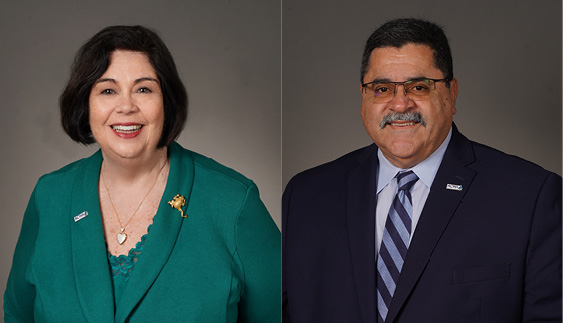 Dear ACWA Members:
It is with great pleasure that we announce our 13th annual Membership Appreciation Month. Your continued support and active participation are the foundation of ACWA and help us maintain our status as California’s leading voice on water issues. We express our gratitude for your sustained commitment and invaluable contributions to our community.
With your support and hard work, ACWA is a powerful force for real change at the Capitol. Your dedication of time and effort has been instrumental in shaping impactful state and federal legislation and regulatory initiatives. We deeply appreciate your valuable contributions through ACWA committees, regional boards, and other leadership roles within the organization. Thank you for your continued passion and engagement.
As an ACWA member, you have exclusive access to a suite of benefits, including timely resources such as legislative and regulatory alerts and advisories, customizable toolkits that help you communicate to the communities you serve, and discounts on events.
Membership also offers opportunities for professional development and networking platforms, including our biannual statewide conferences, the annual Washington, D.C. conference, the Legislative Symposium, regional events, webinars and more. Leadership roles through volunteer service on regional boards, ACWA committees, task forces and workgroups enable you to influence association direction and enhance your professional expertise.
Throughout the month of August, we invite you to participate in virtual activities and initiatives in recognition of your contributions. Stay connected via our social media channels for opportunities to win prizes and to stay updated on how to maximize your membership.
Thank you! We deeply value your partnership and continued membership!
ACWA Member Projects Awarded Additional Prop 1 Funds
SACRAMENTO – The California Water Commission has increased the available funding set aside for three projects in the Water Storage Investment Program (WSIP): the Chino Basin Program, the Kern Fan Groundwater Storage Project and the Sites Project.
The decision, made at the Commission’s Aug. 20 meeting, offsets some of the inflation that has occurred since the projects originally applied for WSIP funds. The funds were made available by the withdrawal of the Los Vaqueros Reservoir Expansion Project from WSIP.
WSIP was originally funded by Proposition 1, also known as the Water Quality, Supply, and Infrastructure Act of 2014.
- The Sites Project will receive an additional $218.9 million. That project’s progress was also highlighted in an Aug. 21 news release from Gov. Gavin Newsom.
- The Groundwater Banking Joint Powers Authority, the applicant for the Kern Fan Groundwater Storage Project, is a partnership between Rosedale-Rio Bravo Water Storage District and the Irvine Ranch Water District. That project is receiving $22.2 million in additional funding.
- The Inland Empire Utilities Agency is the applicant for the Chino Basin Program, which is receiving $53.9 million in additional funding.
More information on the projects and latest funding is also available in a news release from the Commission.
Contact Legislators to Approve Prop. 4 Spending Plan
SACRAMENTO — ACWA has submitted a coalition letter to legislative leadership urging them to implement a spending plan this year for Proposition 4, the $10 billion climate resilience bond approved by voters last year. If a spending plan isn’t approved by Sept. 12, it will be delayed until the 2026 Legislative Session.
Proposition 4 includes $2.91 billion in funding for water-related categories and there are shovel-ready projects ready to move forward in nearly every category. By delaying implementation of this funding, these vital projects will also be further delayed.
ACWA encourages member agencies to contact local legislators and make sure they know how delayed implementation could affect critical projects.
By law, the Legislature must approve a spending plan in order for state agencies to begin the grant solicitation process.