Zone 7 Increases Water Conservation Rebate Limits to Help Customers be Water Efficient
LIVERMORE – Zone 7 is making it easier than ever before for customers to make their landscapes more water-efficient by significantly increasing the amount available for two of its popular rebate offerings. Effective October 1, 2025, the Water-Efficient Lawn Conversion Rebate and the Smart Irrigation Controller Rebate will have increased limits.
The new Lawn Conversion rebate was doubled to $2.00 per square foot. The maximum rebate was increased to $3,000 for single-family and multi-family properties, and $20,000 for commercial properties. For Smart Irrigation Controllers, the new rebate is up to 50% of the cost, with a maximum rebate of $125 for both single-family and multi-family residential properties.
Zone 7 encourages community members and businesses to replace grass lawns, which require significant amounts of water and fertilizer, with drought-resistant native or low-water use plants through its Water-Efficient Landscape Conversion Program. All lawn conversion projects must be approved in advance to be eligible for the rebate.
Conventional irrigation controllers often apply more water than landscapes really need. Smart controllers self-adjust based on local weather data or soil moisture readings, so the landscape is watered only when needed. They are easy to install, simple to program, and automatically adjust to meet current conditions. Smart controllers help ensure plants are healthy by allowing you to tailor watering to your landscape’s specific needs.
“In inland suburban communities like ours, lawns account for 50% or more of annual residential water consumption statewide. We want to help our customers save water and enhance their yards with a landscape that is not only drought tolerant, but also beautiful and beneficial to our local ecosystem,” stated General Manager Valerie Pryor.
Zone 7 will continue to offer its smart controller rebate to commercial properties at 50% of the cost, up to a maximum of $3,000. The agency will also continue offering its pool cover rebate at
50% of the cost, up to $100, and high-efficiency washer rebates of up to $200.
The agency works with local water retailers, the City of Livermore, City of Pleasanton, and Dublin San Ramon Services District to provide these rebate programs to support community conservation of water. Residents and businesses should check the Zone 7 website for specific eligibility requirements for each rebate program, based on their area and water retailer.
For more information, fun and shareable videos, lists of native plants, and more resources, visit www.zone7water.com/rebates.
###
About Zone 7 Water
Zone 7 Water Agency is one of the 10 active zones of the Alameda County Flood Control and Water Conservation District. The District was established by the State Legislature in October 1949 to solve problems of flooding, drainage, channel erosion and water supply and conservation in Alameda County. In 1957, by popular vote, Zone 7 became a special district governed by a seven-member board of directors. Along with flood protection, Zone 7 supplies water to all of eastern Alameda County and a population of over a quarter million residents. Treated water is sold wholesale to local retailers, including the cities of Livermore and Pleasanton, the Dublin San Ramon Services District, and the California Water Service Company. Zone 7 also distributes untreated water to local agriculture operations and golf courses.
Special Districts Association of North L.A. County Receives Chapter of the Year Award
MONTEREY – At the annual California Special Districts Association (CSDA) conference in Monterey, the Special Districts Association of North Los Angeles County (SDANLAC) was presented with the 2025 Chapter of the Year Award.
Several of the chapter’s executive board members accepted the award that recognizes outstanding work by one of the 27 affiliated chapters in the state. SDANLAC is comprised of about a dozen special districts and affiliate members in the Antelope and Santa Clarita valleys.
“This award is a testament to how fast the Special Districts Association of North L.A. County has gone from being CSDA’s newest affiliated chapters in 2021 to becoming its most celebrated in 2025,” stated CSDA CEO Neil McCormick. “The local leaders of the north L.A. chapter have gone above and beyond to elevate their special districts in service to their communities; I congratulate and commend them.”
One of the first people to congratulate the chapter was Los Angeles County Supervisor Kathryn Barger, who served as the chapter’s keynote speaker during its initial chapter formation meeting in 2021. The Supervisor voiced her support for the local chapter and applauded the collaboration between the Antelope Valley and Santa Clarita Valley.
I cannot think of a more deserving honoree than the Special Districts Association of North Los Angeles County,” Supervisor Barger said. “In just a few short years, the association has become a trusted voice and advocate for the unique needs of our North County communities. I’m proud of all they’ve accomplished so far and look forward to continuing our work together to push their mission forward in service to our residents.”
At the conference, SDANLAC Board Directors Kathye Armitage, Drew Mercy and Elvie Ancheta accepted the award from CSDA Senior Public Affairs Field Coordinator Chris Palmer. The award is chosen by CSDA staff.
“I am extremely proud of our chapter for receiving this special recognition,” Armitage said. “I know our fellow chapters are also doing exceptional work to further the mission of special districts, so being selected for this award highlights the support our members have given to the chapter from day one. We thank CSDA for validating our work.”
The Chapter of the Year Award comes at a bittersweet time for the chapter. Founding Board President Vincent Dino, who had planned to attend the conference to accept the award, unexpectedly passed away one month ago. President Dino, who also was a Palmdale Water District Board Director, was a strong and proud supporter of the chapter that he led from day one.
Formed in late 2021, the SDANLAC chapter was the first CSDA affiliated chapter in Los Angeles County. It was created to give special districts in the Antelope Valley and Santa Clarita Valley a stronger voice on the state level of the CSDA, which is a not-for-profit association formed in 1969 to promote good governance and improve core local services.
The active member districts are Antelope Valley-East Kern Water Agency, Antelope Valley Cemetery District, Antelope Valley Mosquito Abatement & Vector Control, Antelope Valley Resource Conservation District, Antelope Valley Air Quality Management District, Los Angeles County Sanitation District, Palmdale Water District, Quartz Hill Water District and Santa Clarita Valley Water Agency.
The chapter holds general membership lunch meetings several times a year to bring districts together for networking, collaboration, legislative updates and educational talks. For more information about SDANLAC, visit www.sdanlac.org.
###
United Water’s Commitment to Ethical Leadership Recognized Again
OXNARD — United Water Conservation District (UWCD) has once more been commended for its unwavering dedication to transparency and public trust, earning the prestigious District Transparency Certificate of Excellence from the Special District Leadership Foundation (SDLF).
This marks the second consecutive time UWCD has received the honor, previously awarded in 2020, solidifying its reputation as a leader in open governance and responsible stewardship of local water resources.
“This award belongs to our entire team,” said General Manager Mauricio Guardado. “Transparency is a value we live. Our customers deserve to know how decisions are made, how resources are managed, and how we’re working every day to protect their water.”
The award, presented every three years, is given to California special districts that meet rigorous standards in transparency and accountability.
UWCD earned the certificate by conducting ethics training for all board members, holding open and accessible public meetings, and filing financial reports with the State Controller’s Office. These efforts reflect a deep-rooted culture of integrity and public engagement across the organization.
The recognition from SDLF, a nonprofit organization dedicated to promoting best practices among California’s special districts, underscores UWCD’s commitment to serving its communities with clarity, responsibility, and trust.
Through the coordinated efforts of staff across departments, UWCD continues to exceed expectations and reinforce its role as a trusted steward of the region’s water future.
For customers, this award is a clear signal that their water district operates with their best interests at heart, and that transparency is the standard United Water Conservation District lives by.
Yuba Water Approves up to $80 Million Loan for South Yuba County Wastewater Project
Yuba Water Agency’s board of directors has approved a loan of up to $80 million for the City of Wheatland and Olivehurst Public Utility District’s joint Regional Wastewater Transmission and Treatment Facilities Project, a transformative effort to modernize and regionalize wastewater service in South Yuba County.
“This project is critical to protecting our groundwater and surface water while ensuring safe, affordable wastewater treatment for communities in the south part of the county,” said Gary Bradford, Yuba Water board director and county supervisor for Wheatland, Plumas Lake and the surrounding areas. “It’s an incredible opportunity to be able to support a project that I think will be truly transformational and support the region’s future economic growth.”
The first phase of the project, estimated at $155 million, will enable wastewater from the City of Wheatland to be treated by OPUD’s existing treatment plant and fund some modernization of OPUD’s facilities. A future, second phase, estimated to cost approximately $40 million, will extend wastewater and water lines along 40 Mile Road.
Without this project, Wheatland’s existing wastewater treatment plant, built in the 1960s and nearing the end of its working life, is expected to fail within three years. Wheatland estimates that constructing a new, stand-alone treatment facility would cost more than $250 million, an unaffordable burden on Wheatland’s approximately 1,300 ratepayers. The regional approach keeps costs manageable, with Wheatland rates only expected to increase by a few dollars per month, instead. Meanwhile, OPUD will be making better use of the capacity at their facility, and they do not expect to have rates for their customers increase as a result.
“Wheatland residents have faced the very real prospect of catastrophic rate increases if we were forced to replace our treatment plant on our own,” said Wheatland City Manager Bill Zenoni. “This regional project and our partnership with OPUD, Yuba County and Yuba Water provide a sustainable and affordable path forward and reliable service for years to come.”
Combined with a recently approved $75 million grant from the State Water Resources Control Board, $13.5 million in direct contributions from Wheatland and OPUD and other anticipated funding, the Yuba Water loan approval allows the project to move forward to the construction bidding phase, with a goal to break ground on construction later this year or in early 2026. Final loan terms will be developed and finalized later this year, once all other funding opportunities have been realized.
In addition to protecting water quality and reducing long-term costs for residents, the regional system will ensure regulatory compliance and provide the infrastructure necessary to support an estimated 9,000 jobs and development expected in South Yuba County. The project also creates the potential for Beale Air Force Base to connect to the regional system in the future.
Although Yuba Water is not a municipal water or wastewater provider, the agency is Yuba County’s Groundwater Sustainability Agency and has the expertise and resources to support this complex project, which will protect groundwater and surface water by eliminating discharges into the Bear River during high flows.
During today’s meeting, Yuba Water’s board also authorized staff to research the potential for Wheatland, OPUD and Yuba County to form a new regional wastewater authority in the future, which could be formed through a joint powers agreement.
Learn more about this project at
engage.yubawater.org/south-county-regional-wastewater.
EDWA Joins Wildfire Solutions Coalition to Secure Long-Term Fire Prevention Funding
EL DORADO HILLS – El Dorado Water Agency (EDWA) is pleased to announce that it has joined the Wildfire Solutions Coalition, an alliance of cross-sector leaders and organizations collaborating throughout the state to secure long-term, sustained funding for wildfire mitigation and resilience and fully implement California’s Wildfire and Forest Resilience Action Plan.
For decades, California has invested heavily in firefighting and underinvested in wildfire prevention and mitigation. Compared with the costs of catastrophic wildfire, investments to reduce wildfire risk are extremely cost-effective. Wildfires cost California $117 billion every year in economic losses on average. In contrast, investments to avoid wildfire disasters can save $6 for every $1 invested.
In addition, EDWA’s research quantified the monetary impact recent wildfires had on the upper American River watershed (UARW). Our research found that the Caldor and Mosquito fires in El Dorado County created $14.7 billion in damages to the ecosystem goods and services in the UARW. Natural capital damages occurred due to the loss and degradation of ecosystems from the wildfires and the economic impacts from the associated increase in carbon emissions. These devastating consequences reach far beyond the watershed because the UARW is a critical headwater for statewide water supply that fuels the fifth largest economy in the world.
“Securing funding and resources for wildfire prevention is critically important, especially in rural areas like El Dorado County that have experienced recent wildfire devastation,” said Rebecca Guo, General Manager of EDWA. “We are looking forward to working with the coalition partners to increase understanding that wildfire is a statewide crisis that demands a long-term solution.”
Wildfires are a natural part of many California landscapes. But due to several factors, including fire suppression, land management practices, and climate change, the intensity and frequency of wildfires have reached dangerous levels. With better preparation and management, landscapes and communities can once again experience fire as a natural and beneficial process.
The Wildfire Solutions Coalition is calling for a dedicated, long-term funding mechanism to support proven fire prevention strategies at scale, including:
- Forest and vegetation management
- Community hardening and defensible space
- Workforce development and job creation
- Tribal-led cultural burning and stewardship
- Science-based planning and monitoring
Locally, EDWA is advocating for funding to support forest management projects in the upper American River watershed including fuels management (e.g., tree thinning), post-wildland fire restoration (e.g., clearing dead fuels and replanting), meadow restoration, and prescribed burning.
More information can be found at El Dorado Water Agency and the Wildfire Solutions Coalition.
EMWD Looks to Create the Next Generation of Water Professionals
PERRIS – Water is a precious resource. So, as it turns out, are workers in the water industry.
Across the nation, the water business is facing a major workforce shortage, with nearly half of current employees eligible to retire in the next five years.
Eastern Municipal Water District (EMWD) is working to address the crisis by creating a career pipeline through schools and temporary employment programs.
EMWD’s Youth Ecology Corps (YEC) provides young adults with short-term opportunities to work part-time at the water district. In partnership with the Riverside County Workforce Investment Board, EMWD has hosted the program for more than a decade, instructing hundreds of 18-to-24-year-olds.
Gracie Valencia is one of them. More accurately, she was one of them, as she’s now a full-time EMWD employee.
This summer, Valencia’s experience in the program landed her full-time employment with EMWD, giving her something she has long searched for in a job: a future. She was assigned to the Public Affairs team and assisted on educational field trips and other events, eagerly embracing every assignment.
When a position as a Customer Service Advisor became available, she went after it.
“I knew EMWD was an organization I wanted to be at, and that this could be my long-term home,” she said. “I would not have had this life-changing opportunity if it wasn’t for the Youth Ecology Corps program and the skills and experience it provided me. The trajectory of my life is different because of this program and the commitment I made to it.”
The YEC program is only one of EMWD’s growing stable of initiatives to promote water industry careers. EMWD offers college internships, apprenticeships, and an award-winning high school Career Technical Education program that promotes careers in the water and wastewater sectors.
“These programs provide opportunities for young adults they would not otherwise have,” EMWD Board President Stephen Corona said. “It is so rewarding when we can help them achieve their dreams.”
In 2017, Eric Morales came to EMWD’s offices after graduating with a degree in biochemistry He saw a flier about the YEC program in EMWD’s lobby and applied, then began working in EMWD’s state-certified laboratory.
Morales was invited back for a second YEC term. When a permanent position in the lab became available, his real-world experience obtained through the YEC program made him the ideal candidate.
He is now a senior scientist in the lab, helping EMWD perform more than 48,000 water quality tests every year as part of its commitment to safe drinking water.
“I think I can honestly say if it wasn’t for the YEC program, I wouldn’t be here at EMWD,” Morales said. “I knew I wanted to work in a lab that made a difference, and the YEC program allowed me to see what the lab scientists do at a major place like EMWD.
“Programs like this work. EMWD has taken the initiative to take a chance on interns and allow them these kinds of opportunities.”
# # #
Eastern Municipal Water District is the water, wastewater service and recycled water provider to nearly one million people living and working within a 682-square mile service area in western Riverside County and northern San Diego County. It is California’s sixth-largest retail water agency, and its mission is “To deliver value to our diverse customers and the communities we serve by providing safe, reliable, economical and environmentally sustainable water, wastewater and recycled water services.” More information can be found at www.emwd.org.
September 2025 Priority Issues Update Now Available
The September 2025 Priority Issues Update is now available online to members.
The update is a summary of the latest developments on issues of interest to ACWA members. This issue contains information on water theft legislation, the Healthy Rivers and Landscapes Program, Advanced Clean Fleets, PFAS and more.
The new and previous Priority Issues Updates can be found here.
French Meadows Partnership Embarks on Seventh Season of Fire Resilience Operations
FRENCH MEADOWS – With California’s fire seasons growing hotter and drier, crews are returning to the high country for the seventh season of work on the French Meadows Forest Restoration Project (Project)—a pioneering public-private effort to reduce the risk of catastrophic wildfire in the American River watershed, a critical water supply for the region.
The groundbreaking Project Partnership (Partnership) rose from the ashes of the devastating 2014 King Fire in Placer and El Dorado counties. A coalition of diverse resource stewards united almost immediately to prevent more such devastation in the Middle Fork American River watershed. The American River Conservancy (ARC), The Nature Conservancy (TNC), Placer County, Placer County Water Agency (PCWA), Sierra Nevada Conservancy (SNC), and University of California Sierra Nevada Resource Institute (SNRI) joined together with United States Forest Service – Tahoe National Forest (USFS) to reduce severe wildfire risk across 28,000 acres and design a treatment plan to reduce risk to important watershed resources surrounding the public water supply reservoir at French Meadows.
To date, about 8,700 acres of public and private land in the French Meadows basin have been treated to restore safer conditions using ecological forestry concepts, which combine
strategic thinning and prescribed fire to improve the forest’s resiliency to wildfire and drought.
“2024 was one of our most successful years to date,” said Kerri Timmer, Regional Forest Health Coordinator with Placer County, who coordinates the public lands stewardship agreement with Tahoe National Forest. “The Partnership is grateful to the US Forest Service for its continued support of this project and the Sierra Nevada Conservancy, CAL FIRE, and all our funding partners for supplying the leadership and resources needed to conduct this important work.”
Using techniques such as hand-thinning, mastication, and mechanical thinning, the Partnership is perhaps a season away from accomplishing its total planned mechanical operations of approximately 10,600 treated acres. Completion will depend on field conditions and fire risk this summer. Prescribed fire is being employed as conditions and resources allow. Project goals for 2025 on federal lands also include continued efforts to restore and study healthy meadows and further development of procedures and tools that both assist in maximizing effectiveness for French Meadows as well as serving as resources and templates for subsequent forest health projects.
The American River Conservancy has essentially completed its last season of mechanical treatments on approximately 2,000 acres of privately owned lands within the French Meadows Project area. “We are proud to have been able to achieve major fire-resiliency goals as well as reduce risks to water quality and restore over 170 acres of mountain meadows,” said Elena DeLacy, Executive Director of the conservancy.
The success of the French Meadows Project Partnership is a ground-breaking example of what can be accomplished by diverse, committed interests working together to protect critical watershed resources. Investments and work to date need to be sustained by continued dedicated management.
“The likelihood of an extreme fire in our watersheds is growing, and these risks are not going to go away on their own,” explains Darin Reintjes, Director of Resource Management for PCWA. “Reducing the risk of catastrophic wildfires to the region’s critical water supplies requires an ongoing commitment now and into the future.”
Explore an interactive story map at
https://arcg.is/0Knj5q to learn more about the project.
WVWD Earns GFOA’s Award of Financial Reporting Achievement
RIALTO — West Valley Water District (WVWD) is proud to announce that it is a recipient of the Award of Financial Reporting Achievement by the Government Finance Officers Association (GFOA) for its annual comprehensive financial report for the fiscal year ended June 30, 2024.
This marks the 13th consecutive year WVWD has received this prestigious acknowledgment, highlighting the District’s unwavering commitment to transparency and accountability.
“We’re honored to once again be recognized by the GFOA,” said WVWD Board Vice President Dan Jenkins. “This award is a testament to the diligence and expertise of our finance team in ensuring clarity, accuracy, and disclosure in our financial reporting, thus also reaffirming our commitment to safeguard our customer relationships.”
Since 2012, WVWD has continuously earned the GFOA’s Certificate of Achievement for Excellence in Financial Reporting, demonstrating a long-standing standard of financial distinction.
“Receiving this award for the thirteenth straight year sheds light on the consistency of our financial transparency,” stated WVWD General Manager John Thiel. “Our team remains committed to delivering reliable financial information that meets the high standards expected by the GFOA and our community.”
For more information about WVWD and its commitment to financial transparency, please visit www.wvwd.org/transparency
Join ACWA in Supporting SB 72 at Sept 8 Press Event
As we approach the home stretch of the legislative session, State Sen. Anna Caballero (D-Merced) and CA Water for All will be holding a press conference to promote SB 72. ACWA leadership plans to attend to represent our membership, and member agencies are also invited to attend to demonstrate the water community’s widespread support for the bill.
SB 72, aimed at securing a long-term and reliable water supply for California, would transform California water management using water supply targets to ensure we have enough water for communities, agriculture, and the environment. ACWA is a supporter of SB 72.
Press Event Details
When: Monday, Sept. 8, 10-11 a.m.
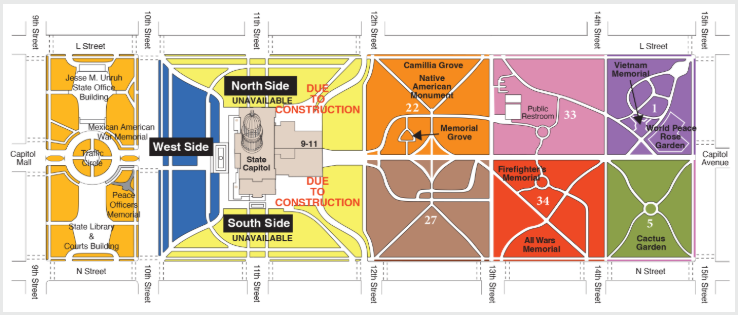
Where: Capitol, Cactus Garden (see map)
Speakers: Senator Caballero and bill co-sponsors California Municipal Utilities Association, California State Association of Counties, and California Council for Environmental and Economic Balance
Please contact Jenny Dudikoff (jdudikoff@ka-pow.com) if you or someone from your agency will be able to attend the event to help urge the Legislature and the governor to pass and sign SB 72 into law.