
Soquel Creek Water District Named Medium Agency of the Year
Soquel Creek Water District has been named the Medium Agency of the Year by WateReuse California as part of the prestigious 2025 WateReuse California Awards for Excellence. This honor was presented on September 22 during the Awards Luncheon at the 2025 WateReuse California Annual Conference in San Diego, recognizing the District’s leadership and innovation in advancing sustainable water reuse solutions.
The WateReuse California Awards for Excellence celebrate individuals, projects, and agencies making meaningful and measurable contributions toward greater adoption of water reuse throughout the state. The District stood out among many other medium-sized agencies for its transformative initiative, Pure Water Soquel—an advanced water purification project to replenish the overdrafted Santa Cruz Mid-Country Groundwater basin, prevent further seawater intrusion of the water supply, and provide a new, drought-resistant source of drinking water for the community.
“We are honored to receive this recognition from WateReuse California,” said General Manager Melanie Mow Schumacher. “This award reflects the collective commitment of our Board of Directors, staff, and our community to protecting groundwater, advancing reuse, and securing a resilient water future for our region.”
This distinctive award recognizes the District’s comprehensive approach to water reuse, community outreach, and water efficiency, and its position as a model for sustainable water management. From innovative capital investments to fresh and exciting public engagement campaigns, Soquel Creek Water District continues to demonstrate leadership in addressing California’s complex water challenges.
To learn more about the District’s projects and achievements, visit www.soquelcreekwater.org.
Pictured (right to left) Melanie Mow Shumacher, General Manager; Carla Christensen, Director; Dr. Tom LaHue (Vice President), Jennifer Balboni, Director; Rachél Lather, President; Dr Bruce Jaffe, Director; Rebecca Gold Rubin, Public Outreach Coordinator; Cameron Kostigen Mumper, Water Resources Associate Manager
About Soquel Creek Water District:
The Soquel Creek Water District is a not-for-profit local government agency that provides water resource management within its service area to deliver a safe and reliable supply of high-quality water to meet present and future needs in an environmentally sensitive and economically responsible way.
Sacramento Water Forum Releases DRAFT 2050 Agreement
SACRAMENTO —The Water Forum has announced the release of the DRAFT Water Forum 2050 Agreement, a landmark update to the regional accord that has guided efforts to balance the Sacramento region’s water supply reliability with the protection of the lower American River for the past 25 years.
First signed in 2000, the Water Forum Agreement brought together water providers, local governments, business leaders, citizen groups, and environmental advocates to address growing water demands while preserving the environmental and recreational values of the lower American River. The new agreement builds on that legacy with updated strategies that reflect the growing challenges of climate change, increasing regulatory demands, and economic pressures.
As with the original agreement, Water Forum 2050 maintains the two coequal objectives as the guiding lights of the Water Forum: Providing a reliable and safe water supply for the region’s economic health and planned development through 2050; and preserving the fishery, wildlife, recreational, and aesthetic values of the lower American River.
“Water Forum 2050 is both a continuation and an evolution,” said Ashlee Casey, Executive Director of the Water Forum. “It draws on decades of collaboration and adapts to the realities we face today—especially the urgent need to protect the Lower American River in the face of intensifying climate extremes.”
ARCAP: A Bold New Initiative
A key feature of the new agreement is the introduction of the American River Climate Adaptation Program (ARCAP)—a forward-looking initiative that aims to connect water agencies, infrastructure, and policies to help the region better respond to increasingly extreme climate conditions.
ARCAP offers a better way for the region to manage water as climate conditions become more extreme. It enhances the five Program Areas by voluntarily linking agencies, infrastructure, and policies—creating a truly regional water system where water is managed by agencies to be available when and where it’s needed, and cold water is preserved in the American River for fish and future supply is protected.
The program centers on identifying, evaluating, and directing additional volumes of regionally developed water—called ARCAP water—through conservation, groundwater recharge, upstream reservoir operations, and shifts in supply sources. The goal of ARCAP will be for the water to be stored and managed for use during critically dry periods, providing benefits when they’re needed most: reducing river temperatures, supporting fish and wildlife, and helping avoid shortages for communities across the region.
Water Forum 2050 Program Areas
Water Forum 2050 also reorganizes and focuses the seven elements from the first agreement into five Program Areas. For each, the agreement outlines specific programs, actions, and activities designed to support the coequal objectives:
- American River Flows and Operations. Targeted and creative solutions will be needed to maintain the lower American River’s health while ensuring a sustainable regional water supply. The Water Forum’s Flow Management Standard, which includes minimum flows, temperature management protocols, and provisions for a reservoir storage planning minimum, will remain a cornerstone.
- American River Corridor Health. Building on the habitat enhancement projects we have already implemented, the Water Forum will work with partners to lead multi-benefit habitat projects and research and monitoring on the lower American River. Adaptive management will allow us to nimbly respond to new scientific information and changing conditions.
- Regional Water Supply Sustainability. This Program Area guides surface water management to protect both the American River and groundwater supplies. It emphasizes practices like conjunctive use—alternating the use of surface and groundwater supplies based on their availability—that were implemented under the previous agreement.
- Science, Monitoring, and Decision Support. Through a comprehensive program of scientific research and monitoring, the Water Forum will continue producing rigorous and reliable scientific data on corridor health and watershed conditions, which will serve as the foundation for ongoing adaptive management. We commit to sharing information by making that data accessible to Water Forum members, other stakeholders, and the general public.
- Governance, Funding, and Administration. This Program Area promotes the “Water Forum Way” with an organizational structure and mechanisms that will allow us to implement and sustain Water Forum 2050 over the next 25 years.
Looking Ahead
Final negotiations are still taking place, but it is expected that the final agreement is close at hand. In the coming months, Water Forum members will present the DRAFT Water Forum 2050 Agreement to their boards and elected officials, with the goal of finalizing and signing the agreement in early 2026. Supporting materials—including an executive summary and a fact sheet—are available on the Water Forum website at https://waterforum.org/water-forum-2-0-process/ to help explain the agreement’s key elements and what it means for the region’s future.
Perspectives from Water Forum Members on the 2050 DRAFT Agreement
Mike Grinstead, Water Caucus member, Sacramento County Water Agency: “Water Forum 2050 is critical for water supply reliability as we move into an uncertain future. It provides the long-range foundation that is needed to adapt to changing conditions and manage our surface and groundwater resources in a sustainable way.”Ted Rauh, Environmental Caucus member, Environmental Council of Sacramento: “The Lower American River is an ecological treasure that supports wildlife, recreation, and our region’s identity. The Water Forum 2050 Agreement, with the innovative ARCAP, provides the framework we need to protect this vital resource and provide for the region’s needed water supply as climate pressures grow.”
Tim Murphy, Business Caucus member, North State Building Industry Association: “A reliable water supply is foundational to our region’s economic development and long-term prosperity. As someone who helped negotiate the original Water Forum Agreement, I’m proud to see that same collaborative spirit carry forward. Water Forum 2050 strikes a balance between environmental stewardship and meeting the needs of a growing region.”
Gary Bardini, Public Caucus member, Sacramento Area Flood Control Agency (SAFCA): “Water Forum 2050 shows what’s possible when public agencies collaborate with a broad range of partners to achieve common goals. This agreement strengthens the region’s ability to prepare for climate extremes—from floods to droughts—while safeguarding the health of the Lower American River.”
Rancho Water Board Director Carol Lee Gonzales-Brady Elected as ACWA’s Vice President
TEMECULA – Rancho California Water District (Rancho Water/District) proudly announces that its Board Member, Carol Lee Gonzales-Brady, has been elected Vice President of the Association of California Water Agencies (ACWA), the nation’s largest statewide coalition of public water agencies. Gonzales-Brady will begin her two-year term on January 1, 2026.
Gonzales-Brady, who has served on the Rancho Water Board of Directors since 2017 and completed two terms as Board President, brings a wealth of experience to her new statewide leadership role. In addition to her service with Rancho Water, she has held leadership positions within ACWA as the Region 9 Vice Chair, Executive Committee member, and Board of Directors member, as well as serving on multiple task forces and committees including the Southern California Water Coalition (SCWC), the Urban Water Institute (UWI), ACWA/JPIA, and the Riverside County Resource Conservation District.
“I am deeply honored to serve as Vice President of ACWA,” said Gonzales-Brady. “California faces complex water challenges, but by working together, we can build sustainable, innovative solutions that protect our most precious resource. I look forward to serving our members statewide and advancing policies that benefit communities, businesses, and agriculture throughout California.”
Rancho Water’s General Manager, Jason Martin, praised Gonzales-Brady’s election, saying, “Director Gonzales-Brady is a proven leader who has dedicated her career to ensuring reliable and sustainable water supplies for our region and beyond. Her election as ACWA Vice President is a reflection of her vision, experience, and commitment to California’s water future. Rancho Water is proud to have her representing not only our community but the entire state.”
With approximately 470 public agency members, ACWA represents about 90% of the water delivered in California, advocating for sound water policy and supporting agencies statewide.
For more information about Director Gonzales-Brady’s qualifications, visit RanchoWater.com/ACWAVP.
California Air Resources Board Adopts Advanced Clean Fleets Resolution
The California Air Resources Board (CARB) on Sept. 25 adopted a resolution that includes changes to the Advanced Clean Fleets (ACF) regulation that do the following:- Extend the current 50% Zero Emission Vehicles (ZEV) purchase requirements to 2030 and allow small fleets and those located in designated counties to continue to wait until 2030 before purchasing any ZEVs.
- Direct CARB staff to continue improving exemption pathways available to public fleets including mutual aid, ZEV purchases and daily usage exemptions.
ACWA Board Officers’ Election, Region Election Results Announced for the 2026-’27 Term
ACWA members have elected Ernesto “Ernie” Avila as President and Carol Lee Gonzales-Brady for the 2026-’27 term. The results of ACWA’s 10 region board elections have also been announced with their names available online.
Avila, who currently serves as ACWA’s Vice President, has served on the Contra Costa Water District Board of Directors since 2016 and has been the Board President since 2022. He has also served two terms on the ACWA Region 5 Board and chaired ACWA’s Local Government Committee.
Avila is a nationally recognized engineer, honored by the American Society of Civil Engineers (ASCE) and the Multi-State Salinity Coalition for his leadership and contributions to the water profession. He brings more than 42 years of professional experience in planning, environmental compliance, regulation, design, and construction of water, wastewater, and recycled water works and municipal facilities. He has previously served as Director of Engineering at Contra Costa Water District and as General Manager of the Monterey Peninsula Water Management District.
Replacing Avila as Vice President, Gonzales-Brady has served on the Rancho California Water District Board of Directors since 2017, including two terms as Board President. Her professional experience spans federally regulated industries such as water and electric utilities. She currently is ACWA Vice Chair for Region 9 and was elected by the ACWA Board to serve on the Executive Committee. She is also on the Southern California Water Coalition Board of Trustees and the Urban Water Institute Board of Directors.
All the newly elected members will begin their term of service on Jan. 1, 2026, and serve until Dec. 31, 2027.
For more information about the election results, visit www.acwa.com/elections.
Contest Winners Create a Low-Maintenance Garden for Retirement
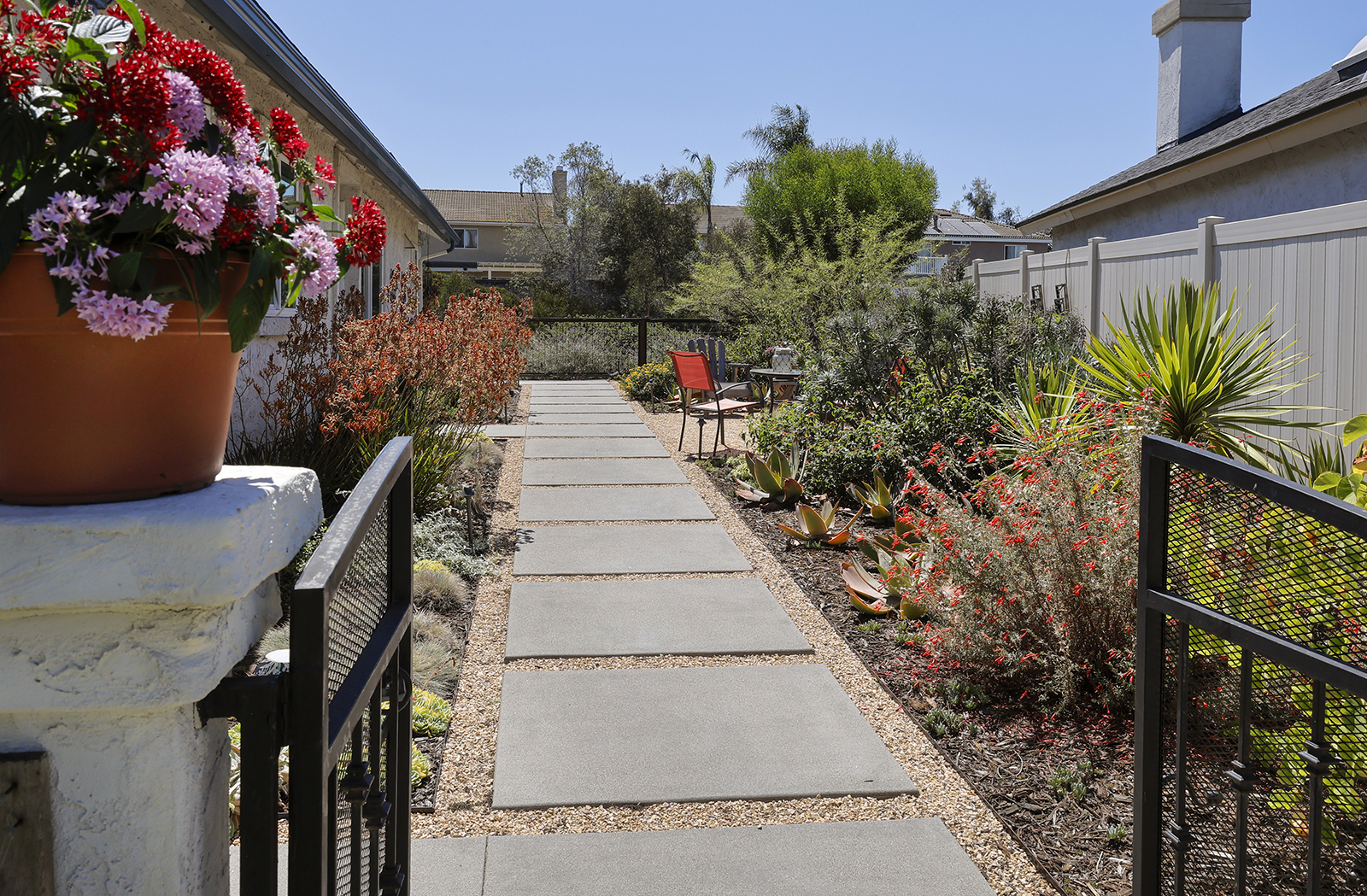
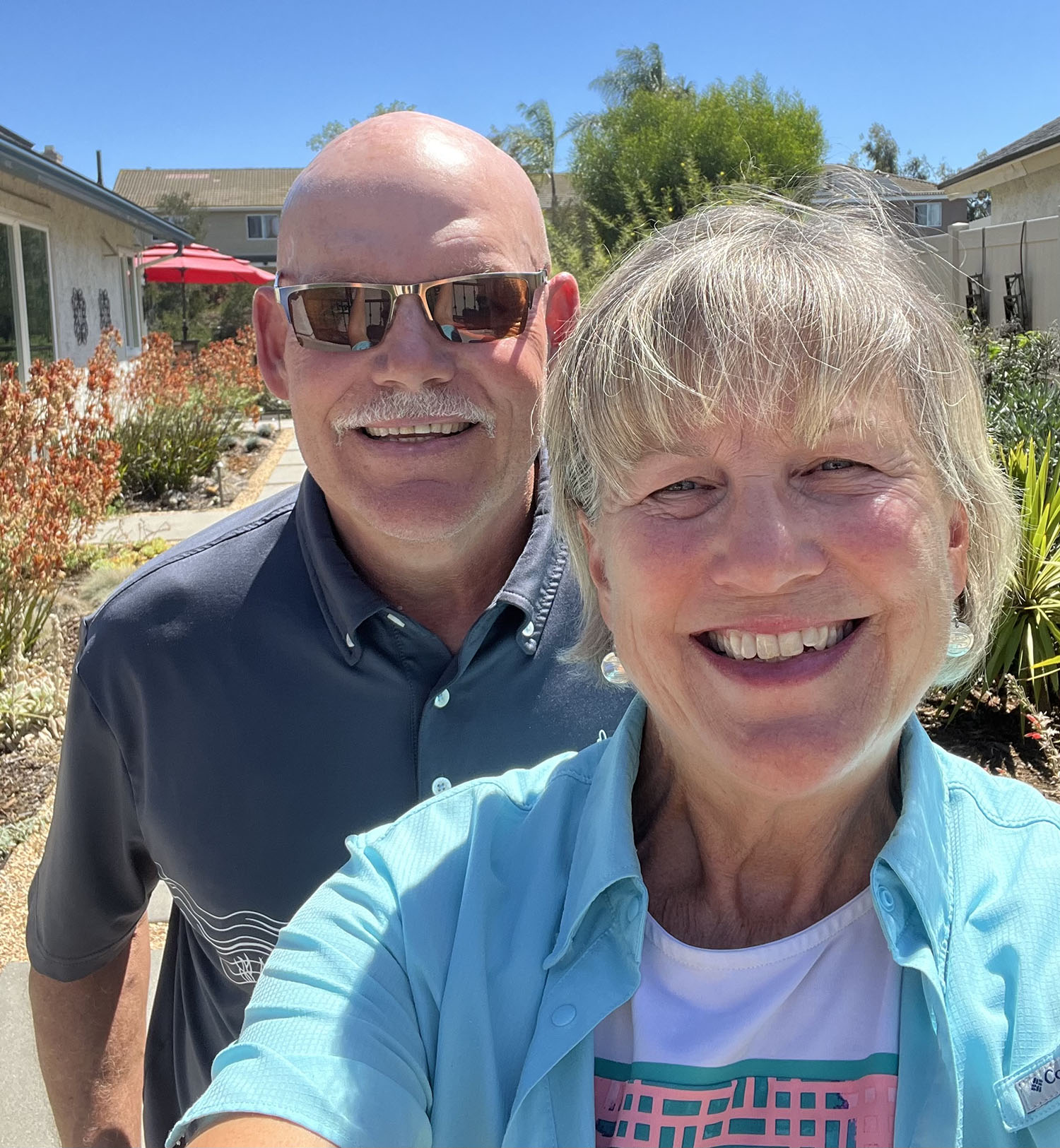 SPRING VALLEY – Catherine and David Spence, a couple from Chula Vista have been awarded the “Best in District” title in the Otay Water District’s annual WaterSmart Landscape Contest for upgrading their grassy side yard. They opted for a low-maintenance, drought-tolerant garden that suits their busy and active lifestyle after retirement, resulting in an overall reduction in water use of approximately 39%.
The Spences purchased their home in 1998, located in the developing community of Sunbow. After years of living elsewhere and working for the U.S. Department of Defense, they settled back into their home in 2018 to create a comfortable space f
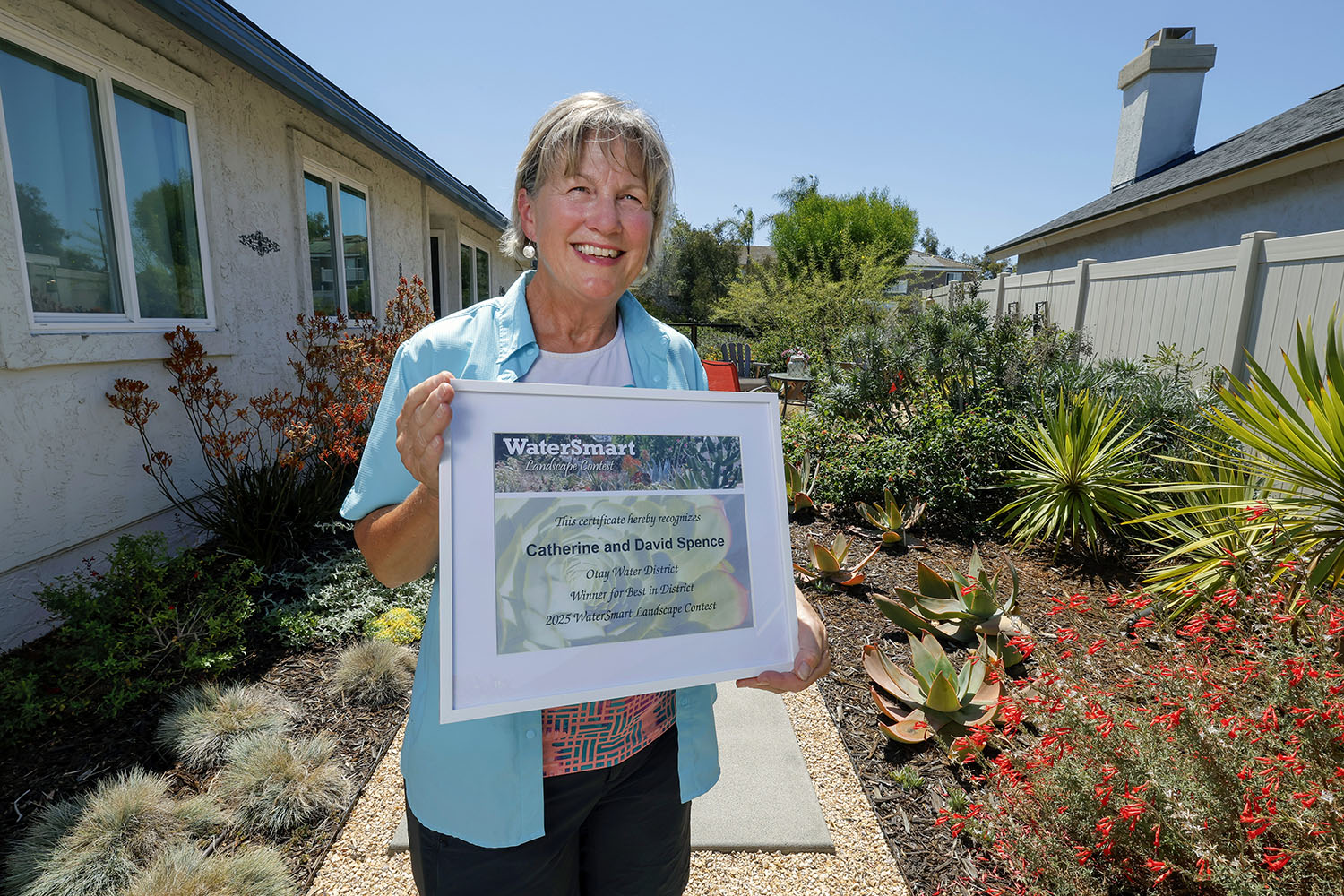 or their retirement, prioritizing a yard that required less water and less upkeep.
To design their ideal yard, they found inspiration from model homes that demonstrated the beauty and simplicity of drought-tolerant landscaping. In 2020, they enrolled in the WaterSmart Landscape Makeover classes provided by the San Diego County Water Authority and its member agencies.
In 2023, the Spences received a $2,376 rebate from the SoCal Water$mart Turf Replacement Program for replacing 792 square feet of turf in their side yard and adding water-efficient features.
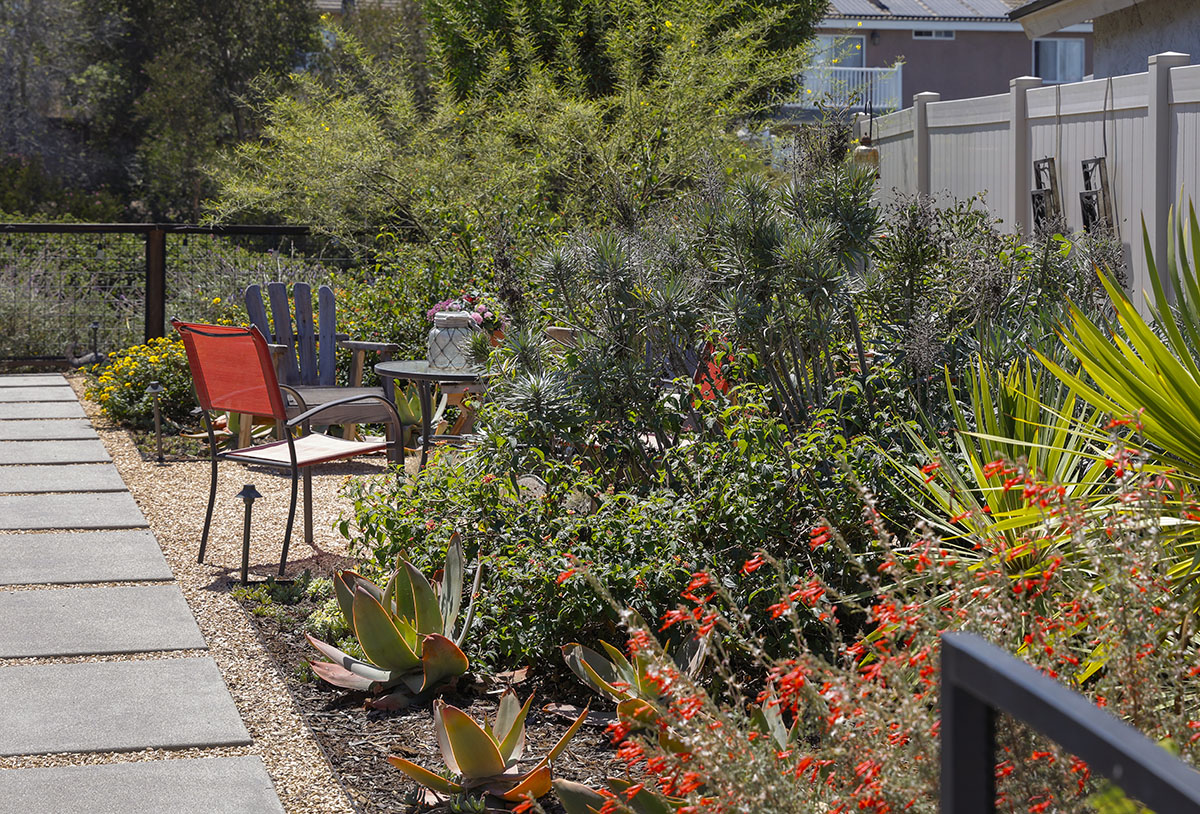 The project included installing a wide variety of low-water-use plants, a Hunter Wi-Fi irrigation controller, replacing traditional sprinklers with a drip system, and applying gorilla hair shredded redwood mulch. They also installed two rain barrels to collect water for potted plants, a decorative fountain, and birdbaths, which attract a variety of local wildlife.
One rain barrel captures water for the side yard, while the second barrel is located down in their sloped backyard and connected to the home’s rain gutter by an extended downspout.
The Spences’ landscape is in the
 District’s division 2, represented by board member Delfina Gonzalez.
“Their garden enhances the beauty of our community with native, water-wise plants while also supporting local wildlife and helping our ecosystem thrive, all with minimal water use,” said Gonzalez. “We look forward to seeing their garden continue to flourish and inspire future conservation initiatives.”
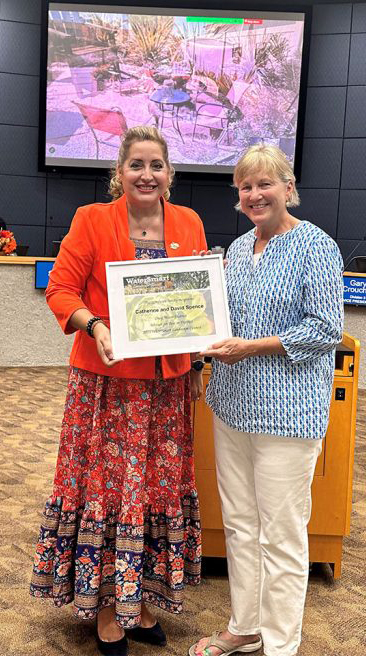
The District recognized the winners at its
 September board meeting, presenting them with a gift certificate to a local nursery, among other prizes.
For more information about the contest winner, visit otaywater.gov/landscape-contest-winner-2025.
The Otay Water District is a public agency providing water, recycled water, and sewer service to approximately 242,155 customers within approximately 125 square miles of southeastern San Diego County, including the communities of eastern Chula Vista, Bonita, Jamul, Spring Valley, Rancho San Diego, unincorporated areas of El Cajon and La Mesa, and east Otay Mesa along the international border with Mexico. For more information about the Otay Water District, visit otaywater.gov.
###
www.twitter.com/OtayWater www.instagram.com/OtayWater www.facebook.com/OtayWaterDistrict www.youtube.com/OtayWaterDistrict www.linkedin.com/company/otay-water-district www.nextdoor.com/pages/otay-water-district
Jenny Scheer Joins Western Canal Water District as General Manager
NELSON – Western Canal Water District has announced the appointment of Jenny Scheer as its new General Manager, with Scheer’s expertise in sustainable water use and strong background representing agricultural landowners positioning her well to lead the 41-year-old special district.
Most recently Scheer served as an Ag Water Specialist with Water and Land Solutions, LLC, partnering with farmers to respond to the Sustainable Groundwater Management Act and other water challenges. In this role, Scheer charted a path to sustainable water use through groundwater recharge projects, policy development, water district management, and infrastructure projects.
Prior to her role with Water and Land Solutions, Scheer worked in consulting roles advancing both international and domestic agriculture projects. Scheer also led the Santa Clara Farm Bureau as its Executive Director for several years, guiding the work of the nonprofit membership organization dedicated to promoting and preserving farming and ranching in the Santa Clara Valley.
Scheer graduated from California State University, Chico in 2008 with a bachelor’s degree in Agricultural Business and a minor in Religious Studies. She earned her master’s degree from the University of California, Davis in Agricultural and Resource Economics in 2016. The Board of Directors selected Scheer for the General Manager role, following a comprehensive executive search supported by Morrison, a business consulting firm serving clients nationwide, with a strong focus in food and agriculture.
“Jenny’s commitment to collaborative leadership; her depth and breadth of experience in water-related challenges and solutions; and her vision for the role Western Canal Water District will continue in play as a leader in water policy and infrastructure on a local, regional, and state level made her the ideal choice to lead this organization,” said Corrie Nichols-Davis, Western Canal Water District Board President.
Scheer will begin her role December 2025 and is eager to take the helm of the organization that she has a strong connection to, having grown up in the rice farming community of Richvale.
“Being raised in a farming family that benefitted from the vision and tenacity of the founders of Western Canal Water District, I am deeply honored not only to join, but to lead this organization,” said Scheer. “Western Canal is instrumental in protecting the livelihoods of our North State farmers and plays a critical role in stewarding habitat for waterfowl and wildlife in some of the most productive watersheds in California. I look forward to sharing my experience and talents to continue to advance the incredible work of Western Canal.”
Current General Manager Ted Trimble will retire from his post in December. He will continue to serve Western Canal Water District, contributing to key projects in a part-time capacity.
ABOUT WESTERN CANAL WATER DISTRICT
Established in 1984, the Western Canal Water District incorporates a total of 67,000 acres in Butte and Glenn Counties, of which 59,000 acres are irrigable acres. Located within the Butte Creek and Cherokee Watersheds, Western Canal Water District is comprised primarily of agricultural lands, 90 percent of which are farmed in rice. The District has 258 canal turnouts supplying water to 150 customers for agricultural irrigation, rice straw decomposition, waterfowl and wildlife, and other agricultural uses within its boundaries.
# # #
Desert Water Agency Welcomes International Delegates for Discussion on Water
Desert Water Agency hosted 12 delegates of the U.S. Department of State’s International Visitor Leadership Program at its headquarters Monday, Sept. 22, to discuss water delivery in the desert. The meeting was arranged by the International Citizen Diplomacy of Los Angeles.
The professional and cultural exchange program aims to promote global awareness and build international relationships. The delegates were from Egypt, Bahrain, Iraq, Jordan, Israel and the United Arab Emirates. They were comprised of researchers and experts in the fields of civil, mechanical and technical engineering, as well as chief executives of companies that focus on clean and renewable energy, safe water solutions, and solar power.
The visit between DWA management and the global leaders provided a beneficial exchange of ideas and perspective. Discussion focused on water delivery management best practices and sustainability priorities, including the importance of imported water and groundwater recharge, water sources, infrastructure, and water quality.
“Desert Water Agency takes pride in maintaining its vast distribution system, delivering safe and reliable water to our customers, and ensuring a secure long-term supply for the region,” said DWA General Manager Esther M. Saenz. “We appreciated the opportunity to share with our esteemed guests the Agency’s rich history in water management as a State Water Project contractor, and to showcase water delivery in the desert as it travels from the ground to the tap.”
For more information on Desert Water Agency, please visit www.dwa.org.
Linking International Communities Through Water
From Mexico to the Philippines, California water agencies are forging international partnerships that are improving water quality, strengthening operations, and building lasting relationships rooted in shared expertise.
In November 2024, the City of Santa Ana’s Water Resources Division traveled to its sister city, Sahuayo, Mexico, advancing a collaboration that began with a Sister City Agreement in 2022.
The trip began with a joint press conference at Sahuayo’s municipal presidency, where officials outlined a water quality and treatment project as a step toward long-term sustainability. Over several days, Santa Ana’s team worked closely with Sahuayo’s public works and drinking water staff on leak control, treatment plant efficiency, and system reliability.
“This visit brought together the skilled expertise of both cities, demonstrating how collaboration across borders can deliver real solutions for utility services,” said Cesar E. Barrera, Santa Ana Acting City Engineer. “By combining strengths, we identified practical strategies that will enhance operations in Sahuayo while strengthening our own commitment to service excellence in Santa Ana.”
Santa Ana City Manager Alvaro Nuñez emphasized the importance of leadership in building momentum for the future. “With new leadership, Santa Ana is bringing fresh vision and strong partnerships that open doors to innovation. Our collaboration with Sahuayo is not only improving water service today but also shaping a brighter future for both communities.”
While Santa Ana was working in Mexico, Rowland Water District (RWD) in Los Angeles County launched its own exchange with Norzagaray Water District (NorWD) in the Philippines. Supported by the Asian Development Bank’s Water Organizations Partnership for Resilience (WOP4R), RWD staff worked on operational and financial strategies to strengthen service in an area where safe drinking water is scarce. A reciprocal visit to California in early 2025 cemented that partnership with a formal Memorandum of Understanding.
For RWD General Manager Tom Coleman, the trip was just as valuable for his own staff as for NorWD. “When our team saw firsthand the dedication and resourcefulness of our colleagues in the Philippines, it deepened our commitment to public service,” Coleman said. “It’s a reminder that water connects us all, no matter where we live, and that by helping each other we all grow stronger.”
Though half a world apart, these efforts share the same goals: improving infrastructure, boosting efficiency, and ensuring reliable access to safe water. They reflect a growing trend in the water sector, with international collaboration emerging as a powerful way to elevate local service.
As Santa Ana and its partners continue to engage globally, the benefits flow both ways. From Sahuayo to Santa Ana, and from Norzagaray to Rowland Heights, water professionals are proving that collaboration across borders creates solutions that ripple outward, strengthening communities worldwide.
Western Water completes Well 7 Project
Western Municipal Water District (Western Water) is proud to announce the successful completion of the Well 7 Project, a key investment in the region’s sustainable water future.
Located on Magnolia Avenue in Riverside, the project installed a new well and pipeline to deliver locally produced non-potable water—water that can be used for critical regional reserve and irrigation needs. By completing the Well 7 project, Western Water reduces reliance on imported drinking water supplies, ensuring that high-quality drinking water remains available for essential household and community purposes.
“The completion of the Well 7 Project reflects Western Water’s commitment to building a more reliable and sustainable water future for our region,” said Board President Laura Roughton. “By investing in local water supplies, we are reducing our reliance on imported drinking water, saving money for our customers, and ensuring that future generations have access to safe and dependable water resources.”
Every day, the project will deliver 1 to 2 million gallons of water for irrigation and other nondrinking uses. This effort is projected to save the agency approximately $1 million annually and improve reliability, keeping more resources in the community and helping customers by lowering overall costs.
The Well 7 Project was originally budgeted at $8.5 million but was completed ahead of schedule and under budget, finishing at $7.5 million. These savings directly benefit customers while highlighting Western Water’s commitment to efficient project delivery.
By maximizing the use of local non-drinking water, Western Water continues to strengthen water reliability, resiliency, and stewardship of water resources, investments that benefit the community today and for generations to come.
To learn more about Western Water, visit WesternWaterCA.gov.