
MSWD Board Member Selected as Chairman of Oversight Board
Mission Springs Water District is proud to announce that Board Member Russ Martin has been selected to Chair the Riverside Countywide Oversight Board.
Martin, who has served on the MSWD Board of Directors since 2010, was elected to serve on the oversight board in 2023 as the Independent Special District Representative. Prior to this, he served as an alternate on the Oversight Board since 2018.
“Throughout my tenure as a public servant, I have remained dedicated to upholding transparency, accountability, and community trust,” said Martin. “I am honored to serve as the chair of the board and remain committed to positively impacting our community’s governance.”
As part of the dissolution of redevelopment agencies (RDAs), oversight boards were established for each of the redevelopment successor agencies charged with winding down the affairs of the former RDAs. In September 2015, Governor Brown signed SB 107, a bill that required the consolidation of RDA oversight boards. SB 107 mandated the consolidation of these boards by July 1, 2018, with a single new countywide board in each county. In Riverside County, 25 oversight boards were consolidated into one Countywide Oversight Board.
Martin is no stranger to public service. In 1968, he started a career in law enforcement with the Santa Monica Police Department. For the next three decades, Martin worked on a wide range of assignments, including Narcotics, Robbery-Homicide, Communications, Crime Prevention, Community Relations, and Special Enforcement. His last assignment was to command the police sub-station in the busy downtown Third Street Promenade. He retired from the Santa Monica PD in 2000 and was recognized for his service by the Governor of California and the President of the United States.
Martin has previously served on the board of directors or advisory boards of more than 11 organizations, including the United Way, Westside Shelter Coalition, Claire Foundation for Substance Abuse, National Conference of Christians and Jews, the Bay Area Hotel Security Association, and the City of Desert Hot Springs Public Safety Commission.
Besides serving on the Oversight Board and the MSWD Board of Directors, he is also a member of the Agua Caliente Tribal Water Authority Board, the Region 9 Board of the Association of California Water Agencies, Urban Water Institute Board, and a Member of the Priority One Coachella Valley Advisory Committee, whose efforts are focused on bringing a 4-year College Campus to the Coachella Valley.
MWDOC Honors Director for More Than Two Decades of Service at Metropolitan
FOUNTAIN VALLEY — The Municipal Water District of Orange County (MWDOC) announced that Director Larry D. Dick, MWDOC’s longest-tenured Metropolitan representative and the Dean of the District’s Delegation, will retire from the Metropolitan Water District of Southern California (Metropolitan). Director Dick has served on the Metropolitan Board for 22 years, helping guide the region through an era marked by historic challenges, major policy decisions, and evolving water-resource needs.
Since his appointment in 2003, Director Dick has represented Orange County with steadfast commitment and a deep understanding of Metropolitan’s unique regional responsibility. Throughout his tenure, Director Dick has served as chair of several committees at Metropolitan and as Vice Chairman of the Board. He has also played a key role in several major initiatives, including the addition of the tunnel to the Diamond Valley Lake reservoir and significant upgrades to the Weymouth Water Treatment Plant.
“Larry’s service to Metropolitan and to Orange County has been nothing short of extraordinary,” said MWDOC Board President Bob McVicker. “His contributions have helped shape a more resilient water future for millions of Southern Californians. We are profoundly grateful for his 22 years of leadership at Metropolitan and look forward to his continued service on the MWDOC Board.”
Director Dick has consistently emphasized that every decision made at Metropolitan affects a vast and diverse region, and he has demonstrated unwavering dedication to ensuring Orange County and the greater Southern California community receive a safe, clean, and reliable water supply. This commitment also extended to support long-term water reliability for the region’s businesses and agricultural communities, sectors that depend on sustainable water management to thrive.
Director Dick has also been a vocal advocate for Metropolitan’s core mission: acquiring, treating, and delivering water to Southern California. He encouraged regional collaboration and thoughtful, long-term decision-making, frequently noting that the agency’s scale and complexity require Directors to think far beyond local boundaries.
Reflecting on his service, Director Dick stated, “It has been an honor to serve the people of Orange County and work alongside dedicated colleagues from across Southern California. I am proud of what we have accomplished together, and I leave Metropolitan confident in the leadership of our new General Manager, Shivaji Deshmukh and the agency’s ability to continue securing a reliable and sustainable water future for our homes, businesses, and agriculture. If Met is strong, the region will be fine. Period.”
Director Dick will continue his service on the MWDOC Board of Directors, where he has represented Division 2 since 2000. Learn more about Director Dick at mwdoc.com/leadership/larry-d-dick/.
November 21, 2025 ACWA News Available
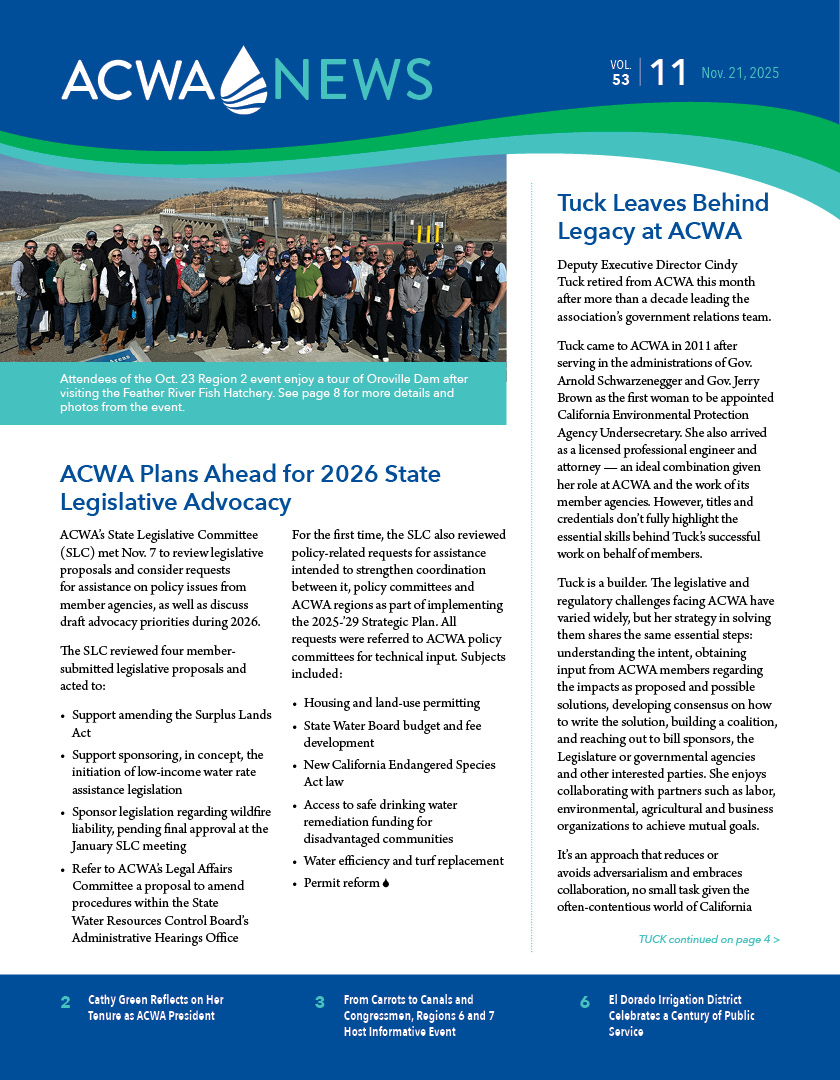 Read the November 21 edition of ACWA News for informative articles about the association and water industry.
Articles include:
- President Cathy Green Reflects on Term Leading ACWA
- ACWA Plans Ahead for 2026 State Legislative Advocacy
- El Dorado Irrigation District Celebrates Century of Public Service
- Deputy Executive Director Cindy Tuck Retires from ACWA
Spotlight Nov. 2025: El Dorado Irrigation District Celebrates a Century of Public Service
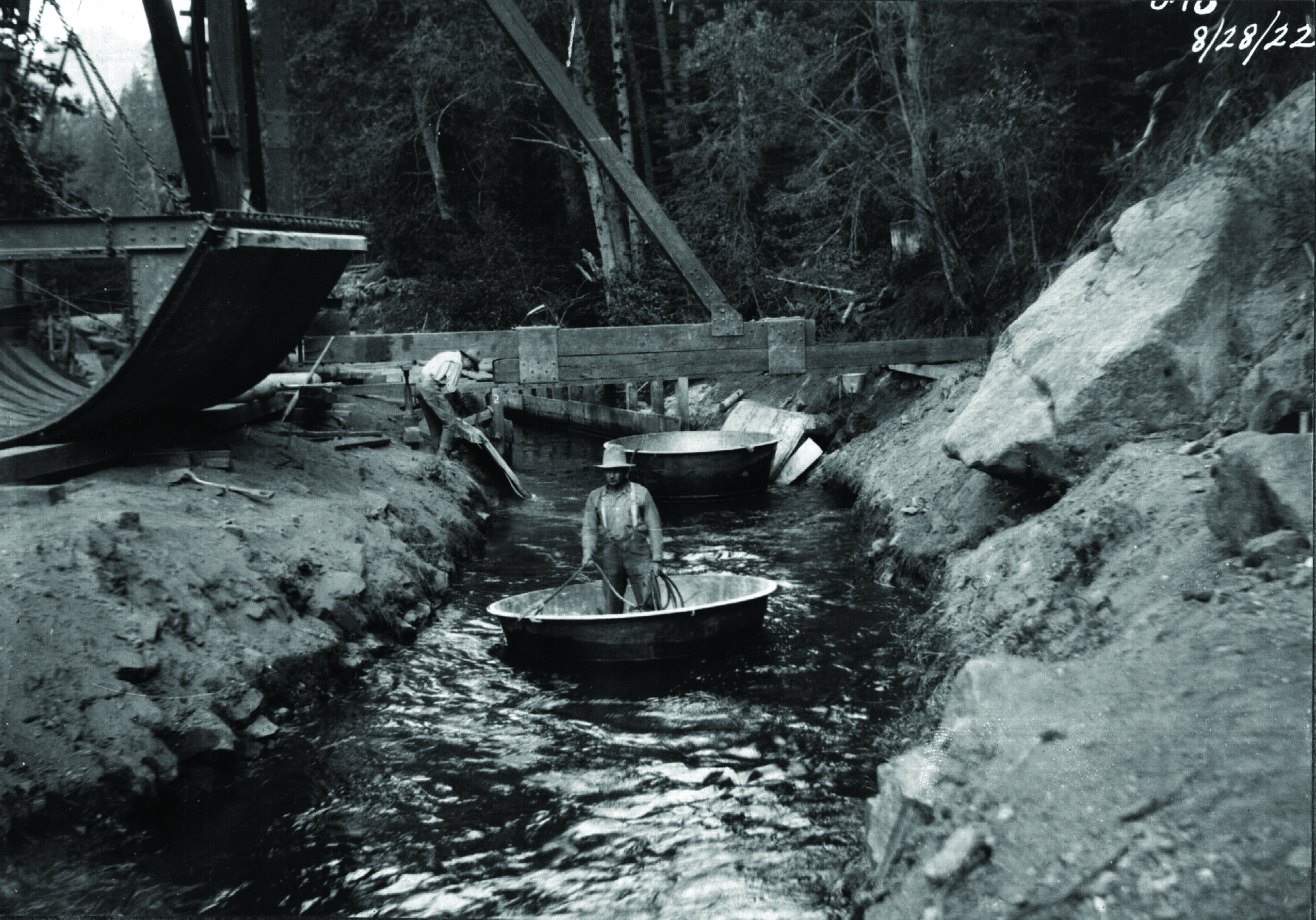
Workers float down a canal in this 1922 photograph from EID’s historical archives. EID built upon Gold Rush era mining infrastructure to become a thriving water supplier serving domestic and agricultural customers. Photo courtesy of EID
In 2025, the El Dorado Irrigation District (EID) celebrates its centennial, marking 100 years of public service rooted in Gold Rush history and growing into serving farmers and thriving communities in the Sierra Nevada foothills.
Formed on Oct. 5, 1925, by county residents, the district’s mission was clear from the start — deliver water to sustain local agriculture and a growing population. Yet the story of EID is intertwined with the deeper history of El Dorado County, where water was once valued more than gold.
Water and the Gold Rush
The Gold Rush of the mid-1800s brought tens of thousands to the Sierra Nevada in search of fortune. But the miners quickly discovered that water was the real currency. Hydraulic mining, introduced in the 1850s, used high-powered water cannons to wash away entire hillsides and expose buried deposits of gold. This technique demanded vast amounts of water, prompting the construction of intricate networks of canals, reservoirs, and wooden flumes that redirected Sierra snowmelt into mining camps.
In El Dorado County, engineers like John Kirk and Francis Bishop were at the forefront. Kirk staked a claim on the South Fork of the American River in 1856 and partnered with Bishop to construct the South Fork Canal, a gravity-fed system that wound across rugged terrain. Their engineering feats not only sustained mining but also laid the foundation for modern water delivery in the region.
From Gold to Agriculture
Hydraulic mining came at a cost. The massive amounts of sediment washed downstream and clogged rivers, buried farmland, and threatened communities. In 1884, the landmark Sawyer Decision effectively banned hydraulic mining, declaring it a public nuisance. With mining diminished, El Dorado County shifted toward farming, relying on the same canals and reservoirs once built for gold mining to irrigate orchards, vineyards, and fields.
As agriculture flourished, so too did the need for a reliable, organized water system. By the early 20th century, competition with hydropower producers and inconsistent access to water left farmers vulnerable to unreliable water supplies. Seeking water security, in 1925, residents voted to form the El Dorado Irrigation district, cementing local control over the county’s most vital resource – water.
Building a System for Public Services
Just two years later, EID purchased the assets of the El Dorado Water Corporation, which had struggled financially despite constructing Weber Reservoir in 1924. The acquisition included 70 miles of canals and laterals, giving the district the infrastructure backbone it needed to stabilize water delivery. The Great Depression brought financial strain, but EID pressed forward, expanding its system to serve both farms and a growing population.
Over time, the district’s mission evolved beyond serving irrigation water. Today, EID operates and maintains drinking water, wastewater treatment, recycled water, hydropower generation, and recreation facilities while staying true to its founding commitment: delivering safe, reliable service in a fiscally responsible way.
Challenges of the Modern Era
The district’s century of service has been defined by resilience in the face of challenges. Fires, floods, droughts, and winter storms are part of EID’s history and will remain part of its future. For example, in 2021, the Caldor Fire tore through El Dorado County, destroying four of the district’s raw water conveyance flumes and causing approximately $30 million in damages, and threatening critical supplies. Thanks to the rapid response and dedication of EID staff and local contractors, service to customers continued uninterrupted, and the damaged infrastructure was quickly rebuilt. The experience reinforced the district’s wildfire preparedness strategies, which remain central to operations today.
Another looming threat is ecological, and happening right now. The golden mussel, an invasive species capable of devastating California’s water systems, is now closer than ever. To protect Jenkinson Lake at Sly Park, one of EID’s most important reservoirs that serves all district customers throughout the year, in collaboration with its regional partners, the district has imposed strict boat-launching restrictions in an effort to prevent the introduction of this destructive species. These measures are critical to ensuring safe, reliable water treatment and conveyance, now and into the future.
Looking Ahead
The story of EID is one of adaptation. To meet the growing needs of families, farms, and businesses, the district has evolved alongside the community it serves.
As EID marks its centennial, it honors the early regional visionaries who built the foundation for local services and the generations of employees, leaders, and residents who carried it forward. The challenges of the future loom large, but the district’s century-long track record of providing reliable public services demonstrates it is well-equipped to persevere during its second century.

Leading with Gratitude: Reflections on My Tenure as ACWA President
Celebrating the collaboration, compassion and shared commitment that make ACWA a powerful force for California’s water future.
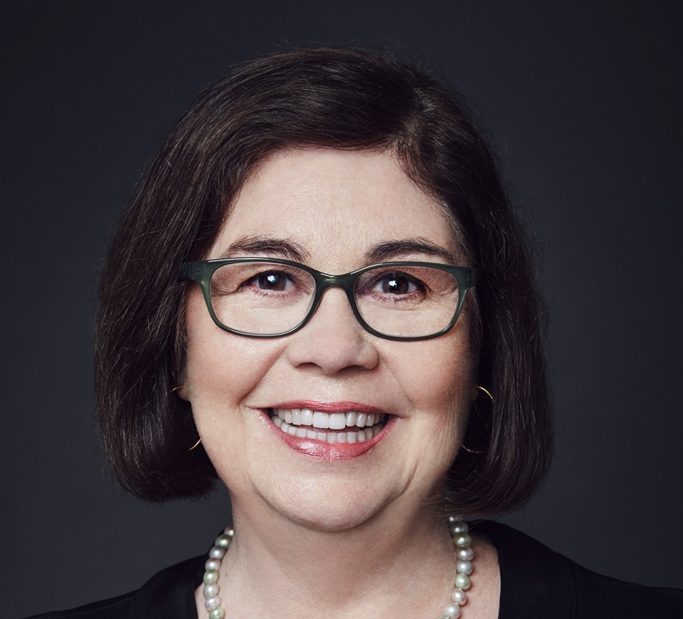 Leading ACWA as Vice President and then President over the past four years has brought countless memories I will always cherish. Chairing Board meetings, engaging in policy discussions and helping strengthen this incredible association have been deeply rewarding experiences.
But what stands out most is the privilege of meeting hundreds of dedicated water professionals who make ACWA such a dynamic force for good in California. Time and again, our members demonstrate a remarkable willingness to support one another and to turn challenges into opportunities for collaboration and progress.
One experience that captures this spirit occurred last January, when devastating wildfires swept through the Los Angeles region, impacting several member agencies. ACWA acted quickly, offering support and helping ensure accurate information reached the public and policymakers. We engaged with news media and legislators to correct misinformation about urban water systems — explaining that these systems were never designed to combat the weather-driven ferocity of modern wildfires. Working with our Headwaters Workgroup, we also fast-tracked production of the “F.I.R.E. Fix” video series and other educational tools to help members raise awareness among the public and lawmakers about the urgent need to protect California’s headwaters from unnaturally extreme wildfires.
Just as inspiring were the member agency leaders who had endured previous wildfire disasters and immediately stepped up to assist their colleagues in Southern California. They offered guidance, shared resources, and helped navigate the thickets of red tape that often accompany recovery efforts. That kind of compassion and collaboration truly embodies the spirit of ACWA.
There have been joyful surprises, too — like the day the Governor walked into our 2024 Spring Conference & Expo and took the time to address our members. Regardless of one’s political perspective, it was a powerful reminder of ACWA’s influence and the respect this organization has earned through decades of steady, principled leadership.
As my term as President draws to a close next month, I am filled with gratitude. I will continue to serve on the Board as Immediate Past President and remain deeply committed to ACWA’s mission and community.
Ours is an extraordinary organization, and anyone in the ACWA family can experience that firsthand. Volunteer for committees, run for region boards, get involved, and attend events and tours beyond your own region. The people you meet and the insights you gain into water management across this great state will inspire you — no matter how long you’ve been in the water industry.
Serving as ACWA President has been one of the greatest honors of my career. Thank you for your trust, your friendship, and your shared dedication to California’s water future. I look forward to seeing you in San Diego for our Fall Conference & Expo — and at many more ACWA gatherings in the years ahead.
OCWD Captures More Than 5.6 Billion Gallons of Stormwater from Recent Storms
FOUNTAIN VALLEY – The recent storms that brought approximately 3.5 inches of rain to the region allowed the Orange County Water District (OCWD; the District) to capture more than 5.6 billion gallons of Santa Ana River stormwater that will be recharged into the Orange County Groundwater Basin. The groundwater basin, managed by OCWD, provides approximately 85% of the drinking water supply for 2.5 million people in north and central Orange County. A large portion of these stormwater flows is currently held behind Prado Dam in Riverside County. This stormwater capture is possible because of OCWD’s long-standing partnership with the U.S. Army Corps of Engineers (USACE). USACE operates Prado Dam and allows stormwater to be held longer and released at controlled rates so OCWD can safely move it down the Santa Ana River and store the water underground. “Our planning and investments are turning rain into reliable drinking water for local communities,” said OCWD President Denis R. Bilodeau, P.E. “OCWD staff maintain and improve our recharge systems all year, so they are ready when storms arrive. That work is paying off by capturing every drop we can and directly adding to Orange County’s water supplies.” Santa Ana River stormwater capture is a key part of OCWD’s strategy to increase the use of local water. By using more stormwater, OCWD reduces the need to buy water that must be imported from far away, which can be more expensive and less reliable. OCWD’s and USACE’s ability to capture stormwater has been further improved by the use of Forecast Informed Reservoir Operations (FIRO) at Prado Dam. FIRO uses advanced weather forecasts and data to better understand the size, timing, and path of storms and atmospheric rivers. This allows dam operators to safely hold more water when conditions allow and release it in a way that maximizes how much can be sent to OCWD to be stored underground. “We are capturing more stormwater than ever before, and FIRO positions us to capture even more in the years ahead,” added Bilodeau. To view photos and videos, visit our online album. For more information, visit www.ocwd.com.###
BCVWD Earns Great Place to Work® Certification for the Fifth Consecutive Year
BEAUMONT — Beaumont-Cherry Valley Water District (BCVWD) is proud to announce that it has been recognized as a Great Place to Work® Certified™ organization for the fifth year in a row, reflecting its continued commitment to fostering a positive, inclusive, and mission-driven work environment.
Based on anonymous employee feedback, the certification highlights the District’s strong workplace culture, trust in leadership, and dedication to employee well-being and engagement. This year’s employee engagement score reached 88%, an increase of six points from 2024, while the Great Place to Work statement score climbed to 95%, underscoring employees’ pride in their work and confidence in the organization’s direction.
“Being certified for the fifth consecutive year is a remarkable achievement and a reflection of our employees’ commitment to each other and to the community we serve,” said Daniel Slawson, Board President. “The Board is proud of the culture our staff continues to build, one based on collaboration, respect, and shared purpose.”
Survey results showed particularly high ratings in organizational pride, trust in leadership, work-life balance, and job stability, all of which speak to BCVWD’s ongoing efforts to invest in its people.
Added BCVWD Board Member David Hoffman, “This certification reinforces what we see every day, a dedicated team that believes in our mission and supports one another. Their professionalism and teamwork are what make BCVWD an employer of choice and a trusted public agency.”
While celebrating these achievements, BCVWD also continues to look forward, identifying opportunities for growth in areas such as employee recognition, internal communication, and transparency. “Our success as an organization is rooted in the people behind it,” said Dan Jaggers, General Manager. “We’re committed to maintaining an environment where employees feel valued, supported, and empowered to make a difference. This recognition is truly a reflection of their dedication and service to our customers and community.”
As BCVWD continues its journey as a certified Great Place to Work, the District remains dedicated to enhancing the employee experience and upholding its values of service, quality, and stewardship.
For more information on Beaumont-Cherry Valley Water District, visit bcvwd.gov.
CARB-Led Partnership Launches Survey on ZEV Workforce Challenges
The Foundation for California Community Colleges on behalf of the California Air Resources Board (CARB) and in partnership with the Los Angeles Cleantech Incubator and the Centers of Excellence for Labor Market Research, is conducting a survey to better understand the needs of organizations that operate and maintain vehicle fleets as they transition to zero-emission vehicles (ZEVs).
Fleet managers, maintenance leads and operations of HR staff are invited to participate in this short survey about current and future staffing, skill requirements, training needs and ZEV-related workforce challenges.
Responses will help inform California’s policymakers, educational institutions, and the ZEV marketplace about job growth trends, workforce development solutions, and how to best support the expansion of ZEV-related jobs across the state.
The survey is administered by BW Research, an independent research organization. It takes approximately 10-15 minutes to complete. You can take the survey at https://bwresearch.com/p/ZEVWorkforce.
PWD’S Landmark Wind Turbine Decommissioned, Dismantling Underway
PALMDALE – Palmdale’s skyline is looking a little different as Palmdale Water District (PWD) starts to dismantle the 237-foot-tall wind turbine that has been on its water treatment plant property on East Avenue S for two decades.
Today, crews from contractor Terra-Gen began removing the three 85-foot blades from the 950 kW Micon 900 wind turbine, a now-defunct model. The remaining tower is scheduled to be taken down next week.
“The District took several steps for energy independence in the early 2000s,” said PWD General Manager Dennis D. LaMoreaux. “The most visible and progressive was the wind turbine. It became part of the AV’s skyline and appears in hundreds of pictures of the area.
“However, the wind turbine is no longer functional,” he added. “It definitely did its job for the District. Many of us will miss seeing its prominence in our valley, but it is time to retire it.”
Since 2004, the turbine has been a highly noticeable visual for people driving on the Antelope Valley Freeway (14) and through the streets of Palmdale. It was erected to provide electricity for the operations of the Leslie O. Carter Water Treatment Plant, where PWD treats water before distributing it to customers. When operational, the wind turbine saved up to 100% on power costs. Some years, the savings were $100,000.
The turbine had been non-operational for several years due to unavailable parts, high costs, and difficulty in finding qualified technicians to make repairs, said PWD Assistant General Manager Scott Rogers.
After the Board of Directors voted in September to declare the wind turbine as surplus property, San Diego-based renewable energy power producer Terra-Gen agreed to remove the reusable parts from the turbine and salvage the remaining parts at no cost to PWD.
Letting the non-working wind turbine remain on the property is not an option. Because it is more than 100 feet tall, it must be registered with the Federal Aviation Administration, and the red light on top of it must be kept on as a warning to pilots.
“Our future energy plans are centered on solar power,” Rogers said. “One of our two upcoming solar projects will replace the turbine.”
Of the two projects, one will supply up to 100% of the energy needed by the treatment plant and boosters at a nearby tank. The second project will power the main office on Avenue Q and six nearby well sites.
Since 1918, the Palmdale Water District has provided high-quality water at a reasonable cost. We pride ourselves on providing great customer care; advocating for local water issues that help our residents; educating the community on water-use efficiency; and leading our region in researching and implementing emerging technologies that increase operational efficiency. For more information about PWD, visit www.palmdalewater.org
Mojave Water Agency Annual Essay Contest Scholarship Winners Announced
APPLE VALLEY — In an age when teens strive to go viral, one local student is choosing a different kind of impact—one that lasts far longer than likes or views. University Preparatory School freshman Ariaella Randolph has earned the top spot in the Mojave Water Agency’s (MWA) 2025 high school essay contest by demonstrating how young people can use their voices to influence something truly enduring: the future of water conservation in the High Desert.
This year’s theme, “Influencing the Future of Water,” challenged students to explore how they can use their voices, creativity, and technology to spread awareness about conservation.
Out of a record-setting 74 entries, three finalists were selected for their insightful and solution-oriented essays. Each finalist worked with a community mentor to refine their written submission into a compelling public presentation delivered before a live audience of family, friends, and a panel of independent judges.
As the first-place winner, Ariaella earned a $3,000 scholarship and will reprise her presentation at the Agency’s Innovators High Desert Water Summit on Feb. 6 in Victorville. This signature event is free and open to junior high and high school students in the MWA service area.
Jeannine Jauregui, a senior at University Preparatory, earned a $1,000 scholarship for her second-place contribution; and a third-place scholarship of $1,000 went to Cobalt Institute for Math & Science senior Kierra Gesulga.
“Through this contest, we’re seeing students use the same tools and platforms as social media influencers—but they’re applying them to something much bigger: the long-term sustainability of our region’s water supply,” said Mojave Water Agency Board President Rick Roelle. “Ariaella, Jeannine, and Kierra showed that young people are ready to lead, innovate, and inspire their peers to care about water.”
The finalists were judged by a panel of the region’s top professional communicators, educators and marketers including Shannon Dunkle, Senior Public Relations Specialist for the Town of Apple Valley; Katherine Lococq, a retired school teacher and coordinator of the Hesperia Elks Lodge’s annual Americanism Essay Contest; and Paola Baker, Graphics and Marketing Coordinator with the Greater High Desert Chamber of Commerce. The judges agreed that what gave Ariaella the competitive edge was her audience interaction and the concrete examples of social media strategies she provided during her presentation.
Each finalist benefited from mentorship to polish their ideas and hone their public speaking skills, culminating in impactful presentations on finals night held in the MWA boardroom on Nov. 13. This year’s mentors included Cari Thomas of Exquadrum, Inc., and Ginger Ontiveros and Mariann Johnson, both with Tomorrow’s Talent.
“Our goal is to help students see themselves as future problem solvers and water professionals,” said Adnan Anabtawi, General Manager of Mojave Water Agency. “Whether they pursue engineering, communications, or public policy, we want them to know there is a place for their talents in the water world, and that their voices can influence how our region uses and protects water for generations to come.”
For more information about the Mojave Water Agency and its educational initiatives, visit www.mojavewater.org or call (760) 946-7000.
To register a student, class or school for the Innovators High Desert Water Summit, visit https://www.surveymonkey.com/r/78YGJ52.