
New ACWA Intiative Will Amplify Members’ Voice and Vision
 California voters will hear a lot from candidates vying to replace Gavin Newsom for governor between now and Nov. 3. So far, the candidates are focusing on housing, affordability, jobs and the economy, and ACWA is launching the Vision for Our Water Future initiative to ensure they also start talking about water.
To make sure we get that point across, ACWA is reaching out directly to the candidates to elevate water as a top policy priority and ensure the unified priorities of ACWA’s diverse membership are reflected in the next administration’s agenda. Through this work, ACWA is positioning itself as a trusted thought leader and essential partner to the future governor.
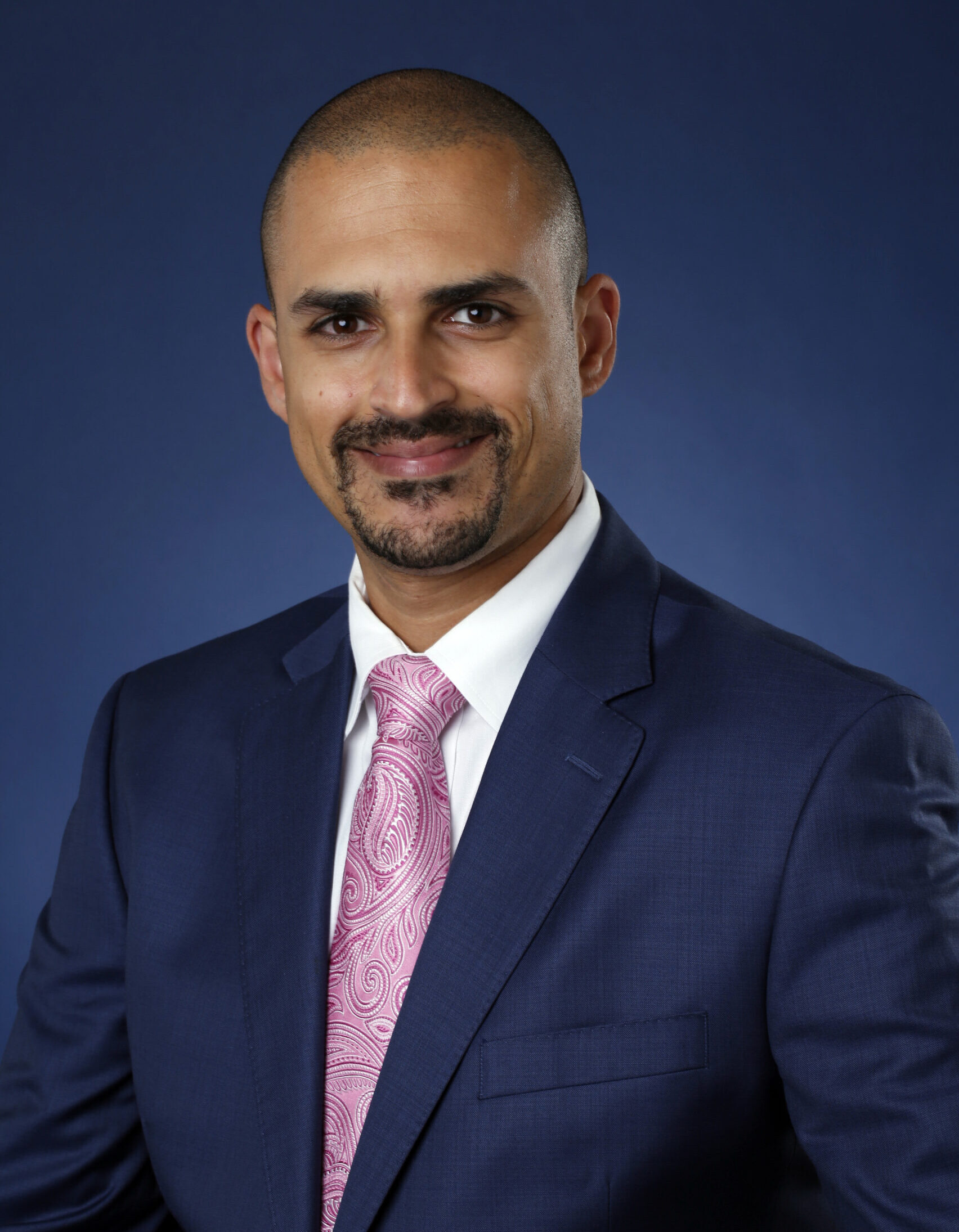
Having worked at the agency level and now within ACWA itself, seeing this potentially historic effort take shape counts as one of the most exciting periods in my career in California water. This is yet another example of ACWA manifesting itself as a world-class organization, capable of seizing an opportunity and guiding the state toward an inflection point in water policy. And it is another, among many examples, of our association’s ability to channel the energy of our members into outcomes that will benefit every Californian.
ACWA is implementing this initiative through a structured, member-driven process that brings together staff, member agencies and key partners. The initiative will culminate in a concise policy document outlining a focused set of strategic priorities and recommended actions to support a secure, reliable and resilient water future for California.
Demonstrating our expertise can reflect and strengthen the trust placed in us as stewards of our state’s most precious resource. This policy document will do that by building on a long history of ACWA leadership through policy documents such as “No Time to Waste: Blueprint for California Water” (2005) and our “Statewide Water Action Plan” (2013).
The input for building this initiative started coming together during several opportunities last year. This included a member survey that provided feedback on advocacy priorities and a roundtable discussion at fall conference
That development process continues through regional member briefing sessions, region board meetings and committee meetings. These virtual sessions provide another opportunity to refine this critical policy document.
As California enters this pivotal election cycle, ACWA’s role is clear: to ensure water is treated as a priority issue and recognized as the foundation for the state’s economic vitality, environmental stewardship and quality of life.
Spotlight Feb. 2026: Valley County Water District Celebrates 100 Years
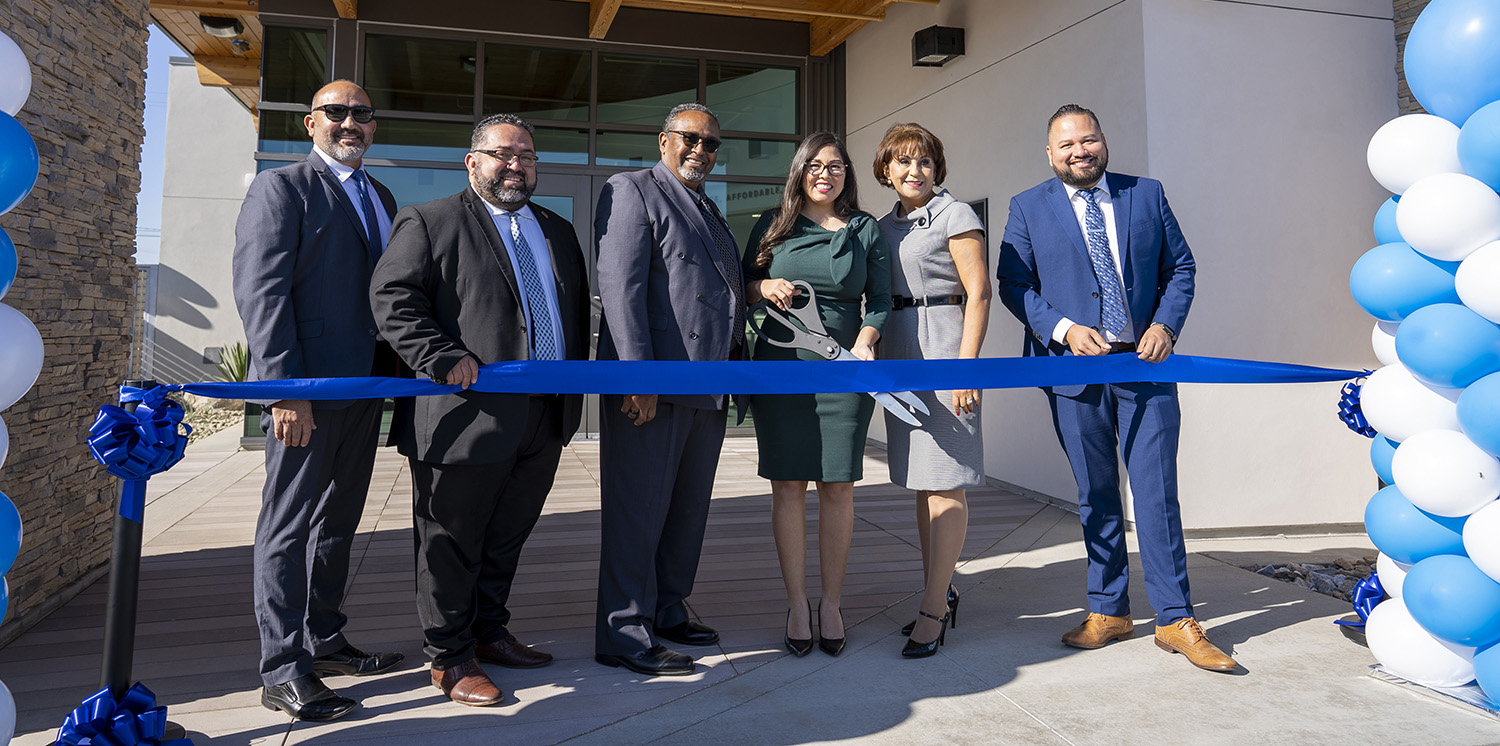
VCWD leadership celebrates the opening of its new headquarters during a 2023 ribbon cutting with (l-r) General Manager Jose Martinez and Board Directors Javier E. Vargas, President David L. Muse, Vice President Jazmin Leos, Lenet Pacheco and Ralph Galvan.
What began in 1926 as the Baldwin Park County Water District, originally formed to meet the growing needs of a small agricultural community, has evolved into Valley County Water District (VCWD) – a modern, full-service public water provider known for its innovation, transparency and commitment to stewardship.
From its original handful of wells and pipelines, the district’s water system has expanded to serve nearly 70,000 residents across a 10-square-mile service area that includes portions of Baldwin Park, Irwindale, West Covina and Azusa. VCWD continues to draw its primary water supply from the Main San Gabriel Groundwater Basin, which is an essential regional source that the district helps protect through responsible management and collaboration with neighboring agencies.
Building for the Future
“Every improvement we have made is an investment in a future, where the district continues to deliver safe and reliable water,” said General Manager Jose Martinez.
The district faced major challenges in the 1980s when industrial contamination affected local groundwater supplies. Multiple water treatment plants built as a result remain critical to regional remediation efforts.
VCWD’s connection to the community includes robust outreach and educational programs. They have been honored for exemplary workforce safety standards, and are frequent presenters at regional, national and international water conferences. The district has a deep appreciation for its history, dedicated leadership, management team and employees who uphold the values of innovation and stewardship.
“Our next century begins now with a strong foundation built on trust, expertise and a shared commitment to the community we serve,” said Board President David Muse.
ACWA Event Highlights Legislative, Gubernatorial Policy Updates
ACWA today hosted its annual Legislative Symposium, an informative and insightful event highlighting the state’s legislative and administrative water policy issues.
To kick off the event, ACWA Legislative Relations Director Julia Hall interviewed Politico Reporter Camille von Kaenel about California’s gubernatorial race. Von Kaenel shared her perspective on the key water and environmental issues shaping the campaign so far.
With the legislative session underway, an expert panel discussed key water-related issues shaping policy discussions this year, including potential changes to the state’s water quality standards, groundwater policy and the ongoing rollout of Proposition 4 funding.
In the final panel, ACWA Regulatory Relations Director Chelsea Haines shared information about the association’s Vision for Our Water Future policy initiative to actively elevate water-related priorities with California’s gubernatorial candidates, legislative leadership and administration officials in advance of a new governor taking office in 2027.
ACWA also presented Assemblymember Blanca E. Rubio (AD-48) with its Legislative Leadership Award for her leadership in the Legislature and for being a champion of the water community.
Approval Process Begins for Water Forum 2050 Agreement
Nearly 40 organizations across the Sacramento region are beginning the formal process of approving the Water Forum 2050 Agreement, a major milestone in advancing the next generation of regional water management.
Over the coming weeks and months, water providers, cities, counties, environmental groups, business organizations, and community interests will bring the draft agreement to their elected boards, councils, and governing bodies for consideration. Several organizations have already completed this review and formally approved the Water Forum 2050 Agreement, while others are now beginning their public approval processes. Together, these actions mark the final phase before signatories gather in spring to formally sign the Water Forum 2050 Agreement.
First signed in 2000, the Water Forum Agreement has guided regional efforts to protect the Lower American River while supporting reliable water supplies for the region’s communities and economy.
“Twenty-five years ago, the region made a bold decision to move past disagreement and commit to a shared approach for protecting the Lower American River and securing reliable water supplies,” said Water Forum Executive Director Ashlee Casey. “Water Forum 2050 strives for the same level of foresight. Our goal is that 25 years from now, people will view this agreement with the same confidence and appreciation we have for the original.”
Water Forum 2050 updates the long-standing accord by recognizing new challenges and incorporating new science and opportunities to respond to climate change.
Early approvals by Sacramento Suburban Water District, Sacramento Valley Conservancy, Sacramento Regional Builders Exchange, San Juan Water District, Sacramento Metro Chamber, Placer County Water Agency, Sacramento Association of Realtors, El Dorado Irrigation District, Fair Oaks Water District, and East Bay Municipal Utility District, reflect regional alignment around the updated framework and confidence in its ability to guide water reliability and American River protection through 2050.
“Beginning the public approval process marks the transition from negotiation to action,” Casey said. “Each board and council vote moves our region closer to a shared commitment for how we will protect the Lower American River, strengthen water reliability, and adapt to a changing climate over the next 25 years.”
A Modernized Framework for a Changing Future
Water Forum 2050 maintains the coequal objectives that have guided the Water Forum for more than two decades:
- Provide a reliable and safe water supply for the region’s economic health and planned development; and
- Preserve the fishery, wildlife, recreational, and aesthetic values of the Lower American River.
The updated agreement includes five program areas—Flows and Operations, Corridor Health, Regional Water Supply Sustainability, Science and Monitoring, and Governance—paired with a new, forward-looking initiative: the American River Climate Adaptation Program (ARCAP).
ARCAP aims to enhance regional water management by voluntarily linking agencies, infrastructure, and policies to create a truly regional system—one where water is available when and where it’s needed, with a focus on preserving cold water in the American River for fish and future supply. ARCAP draws from a variety of sources, including conservation, groundwater recharge, strategic reservoir operations, and shifts in supply sources according to hydrology, to create measurable volumes of “ARCAP water.” This water can be stored in wet periods and used during critically dry conditions to support both river health and community water reliability.
Lastly, the Water Forum 2050 Agreement includes Purveyor Specific Agreements (PSAs) that outline opportunities and commitments for the participating water providers to support the coequal objectives through their water management and operations. Together, the program level commitments for the continued regional work of the Water Forum, combined with the PSAs, form an integrated approach to regional water management. The draft agreement can be found at https://waterforum.org/water-forum-2-0-process/.
New Video Released: Water Forum Members Explain Water Forum 2050
To support the public process, the Water Forum has released a new video featuring Water Forum members describing the importance of the 2050 Agreement in their own words. The video explains why the agreement is needed, how it strengthens regional collaboration, and what it means for the future of the Lower American River and regional water supplies.
The video is available at https://waterforum.org/water-forum-2-0-process/.
Next Steps
Each participating organization will review the draft agreement through its own public approval process. Following these actions, Water Forum members aim to finalize and sign the Water Forum 2050 Agreement in early 2026. Supporting materials—including the draft agreement, executive summary, and fact sheets—are available at waterforum.org/water-forum-2-0-process
About the Water Forum
The Water Forum includes a diverse group of water providers, environmentalists, business groups, and local governments working to balance water supply needs with protection of the Lower American River. Learn more at waterforum.org.
SMWD’s Aggie Nesh Loves People, Teams & Clarity
Santa Margarita Water District is pleased to welcome Aggie Nesh as its new Director of Human Resources. As a member of the District’s leadership team, Aggie plays a key role in supporting the employees who deliver safe, reliable water and wastewater services to our community every day.
Aggie brings nearly 20 years of Human Resources experience across municipal and regional agencies in both the public and private sectors. Her background reflects a strong commitment to building effective organizations through thoughtful strategy, strong relationships, and continuous improvement.
“I was drawn to SMWD because it provides an essential service and is in a period of growth and innovation,” Aggie shared. “There is a real opportunity here to strengthen systems, culture, and how we support employees.”
In her role as Director of Human Resources, Aggie oversees workforce planning, recruitment, employee development, and organizational systems that help ensure SMWD remains a strong, forward-looking public agency. She is focused on positioning HR as a true strategic partner—supporting leaders, empowering employees, and helping teams perform at their best.
In addition to her professional experience, Aggie spent 10 years teaching at the University of Southern California, where she helped graduating students transition from academic study to professional careers. That experience reinforced her belief in building strong talent pipelines and investing in people early in their professional journeys—an approach she continues to bring to SMWD.
What excites Aggie most about her new role is the opportunity to help shape the District’s next chapter.
“I’m energized by working with a team that values collaboration and new ideas,” she said. “Supporting leadership development, helping talent grow, and putting the right tools and systems in place to make work more meaningful and effective are things I find incredibly rewarding.”
As the water industry prepares for a wave of retirements nationwide, Aggie sees significant opportunity for both emerging and experienced professionals.
“Water districts offer careers that combine technical challenge with community impact,” she explained. “It’s a field where long-term growth goes hand in hand with public service, public health, and quality of life.”
Outside of the office, Aggie enjoys staying active and spending time with her family. Much of her time is spent cheering on her two sons at baseball and basketball games, participating in Boy Scouts activities, and enjoying Southern California’s beaches with family and friends.
When asked, in fun, what “superpower” she would choose if she could have any superpower, Aggie points to something that reflects her leadership style: Eliminating miscommunication—clear, kind, no guessing games—“it makes a huge difference,” she said. “Either that, or teleportation. It depends on the day.”
Colleagues are often surprised to learn that Aggie’s first job was as a lifeguard at a local YMCA—an early experience that taught her the importance of responsibility, teamwork, and staying calm under pressure.
As both a seasoned HR leader and a working parent, Aggie brings a balanced perspective to her role. She values high performance, accountability, and results, while also recognizing the importance of building workplaces rooted in respect, support, and shared purpose.
With her deep experience, collaborative approach, and genuine commitment to people, Aggie strengthens SMWD’s ability to serve its customers with excellence. Her leadership reflects the District’s dedication to investing in its workforce—because when employees are supported, the entire community benefits.
Her passion for building strong teams and meaningful workplace connections aligns closely with SMWD’s mission and values—and with the District’s commitment to serving our customers with care, integrity, and professionalism.
Learn more about Santa Margarita Water District at SMWD.com/News.
Tahoe City Public Utility District Secures Federal Funding
TAHOE CITY – Tahoe City Public Utility District (TCPUD) announced today that it has secured $3.15 million in federal funding to complete the final phase of the Madden Creek Water System Reconstruction Project, a critical investment in water system reliability and community safety for the Homewood community. Through the leadership of Congressman Kevin Kiley and Senator Alex Padilla, TCPUD was awarded $1.25 million in Congressionally Directed Spending for Fiscal Year 2026. An additional $1.9 million grant was approved by the U.S. Forest Service through the recently re-authorized Lake Tahoe Restoration Act. Together, these funds will support long-planned upgrades to aging water infrastructure and strengthen the system’s ability to deliver reliable drinking water and support fire suppression. “Tahoe City Public Utility District is grateful for the dedicated support of Congressman Kevin Kiley and Senator Alex Padilla, and our federal partners, including the U.S. Forest Service, in securing federal funding for critical water infrastructure within the Lake Tahoe Basin,” said Gail Scoville, TCPUD Board President. “These investments allow us to modernize aging systems, strengthen fire suppression capabilities, and deliver reliable drinking water while minimizing financial impacts to our ratepayers.” These funding sources reflect TCPUD’s continued commitment to advancing essential infrastructure improvements in a fiscally responsible manner. Upon completion of the fourth and final construction phase, the project will have delivered:- 5 miles of new water mains, replacing undersized pipes from the 1960s
- 52 fire hydrants (32 new installations), bringing the neighborhood up to modern fire suppression standards
- Modern metering for all connections, supporting water conservation goals for both TCPUD and customers
February 2026 Priority Issues Update Now Available
The February 2026 Priority Issues Update is now available online to members.
The update is a summary of the latest developments on issues of interest to ACWA members. This issue contains information on ACWA’s new policy initiative, federal infrastructure funding, AB 35, the Healthy Rivers and Landscapes Program and more.
The new and previous Priority Issues Updates can be found here.
Yuba Water Approves Additional Funding for Wastewater Project
Yuba Water Agency today approved a more than $3 million grant to the Olivehurst Public Utility District to complete planning and design work for the City of Wheatland and OPUD’s joint Regional Wastewater Transmission and Treatment Facilities Project in South Yuba County. The agency also heard results from a large tree study that can help guide future forest resilience efforts in the North Yuba River watershed.
Investment to advance critical wastewater infrastructure work in South Yuba County
The grant to OPUD will be used to complete the design, permitting and land management work for a wastewater line project from Wheatland to OPUD’s wastewater treatment plant.
The regional project will bring an end to the use of Wheatland’s existing wastewater treatment plant and make use of OPUD’s available treatment capacity. Wheatland’s plant is nearing the end of its service life, while OPUD has sufficient capacity to accommodate the additional connection.
Yuba Water previously approved a loan of up to $80 million for the project. Additional information can be found at engage.yubawater.org/south-county-regional-wastewater.
Results from large-tree study to support forest health and watershed resilience
Yuba Water also received a presentation on a first-of-its-kind study examining the role of large trees in the North Yuba River watershed and their resilience to wildfire.
Using field data and advanced drone imagery, the study found that while large, fire-adapted trees are essential to forest resilience, an overabundance of some types of large, fire-intolerant species such as white fir can increase wildfire risk and threaten legacy pine trees.
The findings support ongoing work by the North Yuba Forest Partnership, a collaborative of nine organizations working to plan, fund and implement forest restoration projects across 275,000 acres of the North Yuba River watershed to reduce the risk of catastrophic wildfire.
The study was jointly funded by Yuba Water and The Nature Conservancy, both founding members of the partnership. Additional partners include the U.S. Forest Service – Tahoe National Forest, South Yuba River Citizens League, Camptonville Community Partnership, Nevada City Rancheria Nisenan Tribe, National Forest Foundation, Sierra County and Blue Forest.
Marin Water Secures $2 Million in Federal Funding for Water Supply Resilience Projects
CORTE MADERA — Marin Water has secured $2 million in federal funding to support future water supply and infrastructure projects through the Federal Energy and Water Development Appropriations Act, which was passed by Congress and signed into law late last month.
The funding represents the first federal appropriation from the $28 million authorized for Marin Water infrastructure projects through the 2022 Water Resources Development Act (WRDA). The funds will support projects identified in the District’s Water Supply Roadmap, Marin Water’s long-term, adaptive strategy to ensure a reliable and resilient water supply in the face of climate change and future droughts.
“Securing this federal funding is an important milestone for Marin Water and for the communities we serve,” said Jed Smith, President of the Marin Water Board of Directors. “It reflects years of planning following the 2021–22 drought and reinforces our commitment to responsibly preparing for future water supply challenges while continuing to pursue outside funding to help offset the cost of critical infrastructure investments.”
The Water Supply Roadmap outlines a portfolio of projects that combine demand reduction initiatives with new water supply strategies to address projected supply gaps under changing climate conditions. Many of these projects require significant upfront investment to advance planning, design and environmental review.
The $2 million appropriation will be coordinated through the U.S. Army Corps of Engineers (USACE). Marin Water will work with USACE to establish a project partnership agreement and identify an eligible project to be incorporated into the Corps’ 2026 Work Plan. That coordination process is expected to take several months and will help determine how the funding is ultimately used.
One example of a project that could potentially benefit from this funding is Marin Water’s Atmospheric River Capture (ARC) Project, which is currently in the early stages of preliminary design and environmental review. The ARC Project is one of several projects included in the District’s Water Supply Roadmap and is intended to capture high winter storm flows from the Russian River during select atmospheric river events and store that water for later use during dry periods.
“Water infrastructure projects are expensive, and the scale of investment needed to build long-term resilience is significant,” said President Smith. “Pursuing federal and state funding opportunities like WRDA is essential to helping manage costs for our customers while continuing to invest in a reliable water future.”
Marin Water has worked closely with Congressman Jared Huffman since 2022 to secure federal authorization and appropriations for District infrastructure needs.
“We are extremely grateful to Congressman Huffman for his leadership and continued support in helping advance federal funding for Marin Water,” added Smith. “His efforts have been instrumental in moving this funding forward and supporting long-term water reliability for Marin County.”
Looking ahead, Marin Water expects to continue working with the Army Corps on an annual basis to pursue additional appropriations through the federal budget cycle and to fully leverage the funding authorized under the 2022 WRDA.
Federal Funding Helps Strengthen Roseville’s Water Reliability
Reliable water supports daily life in Roseville, from homes and schools to businesses and emergency services. New federal funding is helping Roseville build a resilient water system that supports daily needs, a strong local economy, and long-term reliability.
With this funding, Roseville can move forward on a regional water reliability project that provides direct access to the Placer County Water Agency’s Middle Fork Project. The 14-mile pipeline will connect the Middle Fork water supply to the Barton Road Water Treatment Plant (WTP), improving flexibility during dry years and emergencies when Folsom Lake water is not available. Up to $5.3 million will support early planning, design, and environmental review.
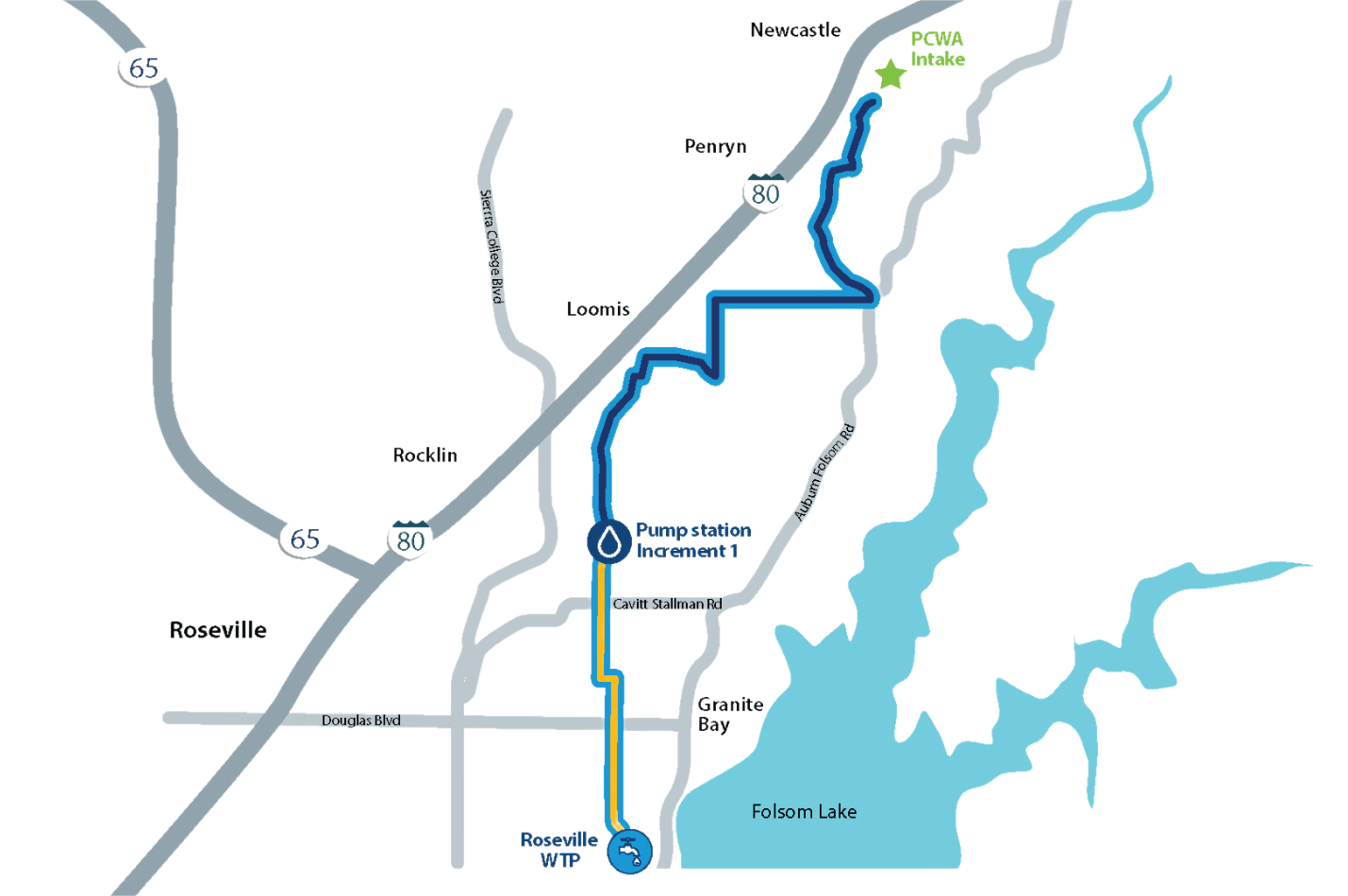 With more than 150,000 residents and continued growth, Roseville relies on a reliable water supply to support daily needs and the local economy. Planning ahead improves preparedness for drought, emergencies, and changing conditions.
When complete, the new pipeline will initially deliver up to 10 million gallons of water per day to Roseville, reducing reliance on a single intake and strengthening the overall system.
Folsom Lake will remain an important regional water resource, supporting water supply, flood protection, water quality, and the Delta. However, lake levels can change significantly from year to year.
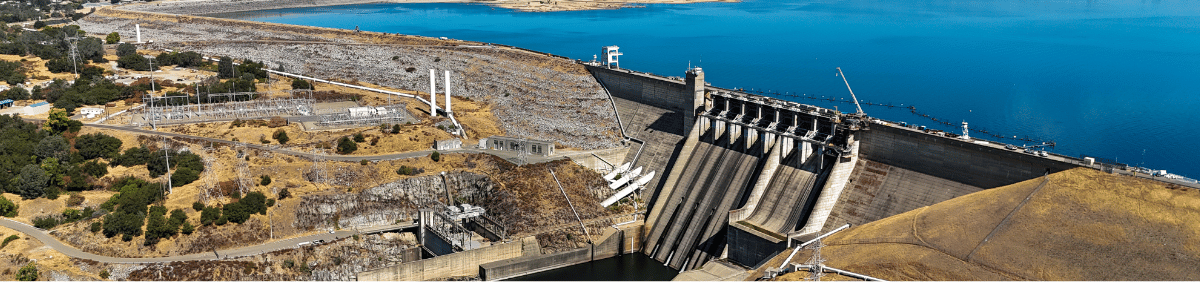
Today, Roseville relies on a single surface water intake at Folsom Lake, an aging piece of infrastructure with no redundancy. If that intake cannot be used, the city loses access to its surface water supply. In extremely low-water conditions, that intake could become less reliable. The new pipeline provides a critical upstream backup, improving system reliability during the most challenging conditions.
“This project is about planning ahead and making sure our community has reliable water no matter what,” said Sean Bigley, Environmental Utilities Director. “Reliable water supports everyday life, and a strong local economy, from homes and schools to businesses and healthcare, and this funding allows us to take the first steps to keep Roseville growing safely and responsibly.”

PCWA leaders emphasized the broader regional benefits of the partnership.
“Water reliability is a shared responsibility across Placer County,” said Andy Fecko, PCWA General Manager. “By working in partnership with Roseville to create direct access to our water supply, we’re strengthening regional water reliability and flexibility while supporting public health, economic stability, and resilience during dry years.”
The initial federal funding supports early project work to ensure the pipeline is planned carefully and responsibly before construction begins. Additional steps and future funding will follow as the project progresses.
Alongside local water reliability, the project benefits the region by decreasing pressure on a single water intake, helping maintain environmental flows, and ensuring water remains available for downstream uses, even in the driest of years.
By investing early and planning responsibly, Roseville and PCWA are building a water system that supports community health, economic stability, emergency readiness, and long-term regional growth.
For more information about Roseville’s water supply efforts, visit roseville.ca.us/waterpromise.