
Sacramento Suburban Water District Commissions New Groundwater Wells
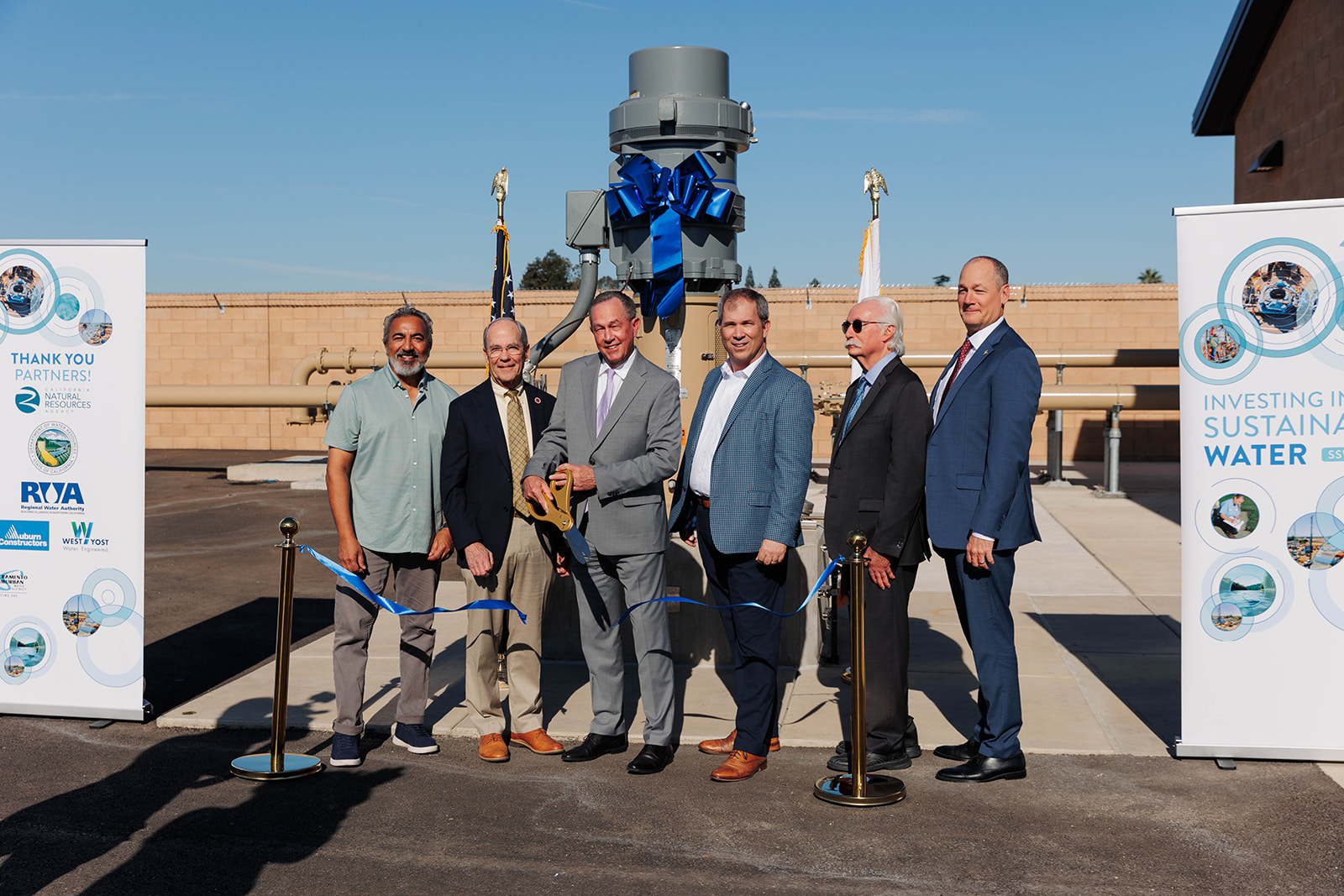 SACRAMENTO — Sacramento Suburban Water District (SSWD) has commissioned three new groundwater wells in its North Service Area—a major infrastructure investment that strengthens water reliability for local customers while supporting broader regional water resilience in a changing climate.
The three new groundwater wells, Wells 81, 82, and 83—known as the “Triplets”— and another nearby new well, Well 84, were made possible through support from SSWD ratepayers and an $18.84 million grant from the California Department of Water Resources. These wells will replace other wells that have reached the end of their service lives and will help increase capacity and reliability in SSWD’s North Service Area, which includes the communities of McClellan Business Park, Antelope, North Highlands, Foothill Farms, parts of Carmichael, and parts of Citrus Heights.
“The commissioning represents SSWD’s commitment to investing in and modernizing its infrastructure,” said Dan York, SSWD General Manager. “One of our ongoing, top priorities is improving and strengthening water reliability for our nearly 200,000 customers through thoughtful and careful planning. The grant funding we received from the California Department of Water Resources helped reduce costs for our ratepayers and move these projects forward.”
Speakers at the commissioning event included U.S. Representative Ami Bera, M.D., California State Senator Roger Niello, Sacramento County Supervisor Rich Desmond, SSWD Board Member Robert Wichert, SSWD General Manager York, and Regional Water Authority Executive Director Jim Peifer.
The new wells also support the Sacramento region’s broader strategy for managing water supplies through the Sacramento Regional Water Bank. By strengthening groundwater infrastructure, local agencies gain flexibility to rely more on groundwater during dry periods and more on surface water during wet periods. This coordinated approach improves regional water reliability while allowing more surface water to remain in the Lower American River during critically dry years, supporting fish and wildlife when they need it most.
Photo caption: Pictured from left: U.S. Representative Ami Bera, California State Senator Roger Niello, SSWD General Manager Dan York, Regional Water Authority Executive Director Jim Peifer, SSWD Director Robert Wichert, and Sacramento County Supervisor Rich Desmond.
Western Water Breaks Ground on Project Supporting March Air Reserve Base
Western Municipal Water District (Western Water) officially broke ground on the March Air Reserve Base Sewer Force Main Replacement Project on March 12, launching construction on a major infrastructure upgrade designed to strengthen wastewater reliability for March Air Reserve Base and surrounding communities.
The project will replace nearly four miles of aging sewer pipeline and is supported by a $13.1 million federal grant from the U.S. Department of War Office of Local Defense Community Cooperation (OLDCC), awarded through the Defense Community Infrastructure Pilot Program.
“This project reflects our commitment to protecting critical infrastructure that serves both our military partners and our community,” said Laura Roughton, Board President of Western Water. “Investing in reliable wastewater systems supports public health, environmental protection, and the long-term resiliency of the region.”
The existing sewer force main serving the base was installed decades ago. In 2015, the pipeline experienced a significant failure, forcing wastewater flows to be diverted to a smaller line that was never intended to support the base in the long term.
Recognizing the need for a permanent solution, Western Water pursued federal funding through the Department of War infrastructure program. After multiple application cycles and years of collaboration with federal partners, the agency secured funding to move the project forward. The new sewer force main is expected to be completed by 2027. It will improve system capacity, increase operational efficiency, reduce pumping demands, and strengthen overall system resiliency. Once completed, the upgraded system will support more than 10,000 military and civilian personnel assigned to March Air Reserve Base.
“Reliable infrastructure plays an important role in supporting military readiness and the communities that host these installations,” said Craig Miller, General Manager of Western Water. “This investment strengthens the systems that serve both the base and the surrounding region.”
Congressman Mark Takano, who represents California’s 39th Congressional District and grew up in the region, highlighted the importance of investing in the essential infrastructure that supports both the base and the surrounding community.
“Projects like this sewer force main replacement may not be flashy or glamorous, but they are essential,” Takano said. “I grew up in this region, and March Air Reserve Base has always been an important part of our community. The systems you never see are often the ones that matter most.”
Leaders connected to the installation emphasized the importance of modernizing the infrastructure that supports the base’s long-term mission.
“March Air Reserve Base is grateful for what Western Water has done here,” said Jamil Dada, Chair of the Military Affairs Council. “One of the biggest problems we face is aging utilities and infrastructure. That’s a challenge for us and for the base. March Air Reserve Base has a new life ahead of it, and we want to make sure the infrastructure supporting the base is updated and ready for the future.”
Regional business leaders also highlighted the installation’s economic impact across Inland Southern California.
“About 16 years ago, an economic impact report estimated that March Air Reserve Base generated roughly $600 million in economic activity for our region,” said Nicholas Adcock, President and CEO of the Greater Riverside Chambers of Commerce. “The people who work at March Air Reserve Base live here, they patronize our businesses, and they are a part of this community. Projects like this matter because the base is strategically important not just to our region but to our national security. To have the power turn on when it needs to, to have the water turn on when it needs to, all of those things are essential.”
The project represents an $18.7 million infrastructure investment, with the federal grant covering nearly 75% of the total project cost.
OLDCC’s Defense Community Infrastructure Pilot Program was launched in 2020 to support communities that host military installations by investing in infrastructure that supports military readiness and surrounding communities. Since the program began, more than 75 projects nationwide have received funding, representing nearly $400 million in federal investment supporting more than $650 million in total infrastructure improvements. In 2024, only 14 projects nationwide were selected for funding, including two in California.
March Air Reserve Base remains one of Riverside County’s most important military installations and a major economic driver for the region. Infrastructure investments, such as the March Air Reserve Base Sewer Force Main Replacement, help ensure the systems supporting the installation remain reliable for decades to come.
For more information about Western Water, visit WesternWaterCA.gov.
Bighorn-Desert View Water Agency Board Selects Jennifer Cusack as General Manager
LANDERS — Today, the Board of Directors of the Bighorn-Desert View Water Agency selected Jennifer Cusack as the agency’s next General Manager, bringing more than two decades of experience in public agency leadership, utility operations, government affairs, and community engagement to the Landers-based water supplier.
“Jennifer brings an outstanding combination of knowledge about water systems, leadership experience, policy expertise, and community connection,” said Board President Rod Miller-Boyer of the Bighorn-Desert View Water Agency. “Her track record of securing critical funding, navigating complex regulatory issues, understanding operations and working collaboratively with the public and partner agencies makes her exceptionally well suited to lead the agency forward.”
Cusack currently serves as Director of Public & Government Affairs at Hi-Desert Water District, where she leads legislative strategy, community engagement, and grant development initiatives. In that role, she helped secure nearly $104 million in grant funding for Phase 2 sewer expansion, along with additional funding for recycled water and drought resiliency programs focused on reclaiming treated water for beneficial use.
Cusack’s earlier career in the water industry includes leadership roles at both Hi-Desert Water District and Joshua Basin Water District, where she gained extensive experience in board governance, regulatory compliance, capital project communications, and public engagement.
The Board also expressed its deep appreciation for the leadership and service of Marina West, who is concluding a long and distinguished tenure as General Manager.
West’s public sector career spans nearly four decades, including many years dedicated to water system operations and management. During her tenure, she helped build a strong operational and governance foundation while elevating the Agency’s reputation statewide as a model for small rural water systems serving disadvantaged and income-limited communities.
“Marina West’s leadership has left a lasting legacy for Bighorn Desert View and the community it serves,” Miller-Boyer said. “She strengthened the Agency’s financial and operational stability – most recently securing $12 million in grant funding – and elevated the Agency’s voice in statewide water policy discussions. Under her leadership, Bighorn-Desert View Water Agency became an model for small rural water systems throughout California.”
West welcomed the leadership transition and expressed confidence in the Agency’s future. She will remain at the Agency as its Chief Engineer responsible for managing the Agency’s grant projects to completion.
“It has been an honor to serve this community and work alongside a dedicated Board and exceptional staff,” West said. “Jennifer understands both the technical and community responsibilities of water agencies in the Morongo Basin, and I am confident the Agency will continue to thrive under her leadership.”
Cusack said she is honored to serve the community she has long called home.
“Bighorn-Desert View Water Agency plays a vital role in protecting public health, supporting economic stability, and stewarding one of our region’s most precious resources,” Cusack said. “I am grateful for the foundation Marina West has built and look forward to working with the Board, staff, and community to continue delivering reliable, transparent, and forward-looking water service.”
Cusack holds a Bachelor of Science in Business & Management from the University of Redlands and an Associate Degree in Liberal Arts from Copper Mountain College. She also completed graduate coursework in economics at West Texas A&M University and holds certifications in environmental leadership and project management from California State University San Marcos.
A lifelong resident of the Morongo Basin, Cusack grew up in the region and is now raising her family in Yucca Valley.
###
DWR Publishes New Groundwater Report
SACRAMENTO – The Department of Water Resources (DWR) has released the final version of California’s Groundwater: Bulletin 118 – Update 2025, the State’s official and most comprehensive report of groundwater monitoring, conditions, and management across California. The report builds upon the previous update in 2020 and contains critical information about the state’s groundwater supplies from 2020 to 2024, a period marked by record-setting dry and wet weather events and increasing ambient temperatures. It shows considerable progress made by California and local agencies towards reaching the goals of groundwater sustainability outlined in the Sustainable Groundwater Management Act (SGMA). Among the successes noted in the report, California has seen improvements in groundwater recharge efforts, drinking well protection, and increased funding for Tribal projects.
This release coincides with Groundwater Awareness Week, a time to recognize the vital role groundwater plays in California’s water supply.
“Groundwater plays a critical role in our state’s water supply and today’s report shows what we’ve already known: our changing climate and warmer temperatures will continue to increase demand on groundwater supplies as our hydrology changes and tests our water systems,” said Paul Gosselin, DWR Deputy Director of Sustainable Water Management. “It’s more important than ever that state and local agencies continue to work together to achieve the goals we set for California in order to protect this precious resource and the people who rely on it.”
The publication also presents findings and recommendations that support the future management and protection of groundwater in alignment with the state’s key water initiatives including the California Water Plan, the Water Resilience Portfolio, and Water Supply Strategy.
Key findings from the report:
- California’s groundwater basins are the state’s largest and lowest cost water storage and a critical natural infrastructure asset, with storage capacity exceeding 1 billion acre feet, about 25 times all surface reservoirs combined. Sustainable yield in high and medium priority basins is about 12 million acre feet annually.
- Groundwater is central to California’s water resilience, supplying about 40 percent of statewide demand in average years and nearly 60 percent in dry years. The driest 22-year stretch in at least 1,200 years, including four major droughts (2001 to 2002, 2007 to 2009, 2012 to 2016, and 2020 to 2022), has increased both reliance on and stress to groundwater.
- From 2020 to 2022, California experienced its three driest consecutive years on record leading to reduced surface water supplies and increased reliance and stress on groundwater basins. As a result, hundreds of wells went dry across the state, and many groundwater basins are still recovering.
- More than 32 million Californians (about 82 percent) rely on groundwater for some portion of their water supply, including over 7 million people in non-basin areas where it is often the only source. Groundwater use is about 79 percent agriculture, 19 percent urban, and 2 percent managed wetlands.
- Management and data improvements are accelerating in the state’s highest use basins. The 94 high and medium priority basins account for about 95 percent of groundwater pumping. Groundwater Sustainability Plan (GSP) annual reports compiled by groundwater sustainability agencies (GSAs) now serve as the most comprehensive statewide groundwater data source.
- Groundwater levels show early signs of improvement, but significant challenges remain. From 2014 to 2024, 41 percent of monitored wells rose five feet or more, while about 20 percent declined by five feet or more. Despite these gains, land subsidence continues to be widespread and impactful, with about 4,000 square miles experiencing more than 0.5 feet of subsidence in the past five years.
- SGMA has spurred more than 1,500 local projects and management actions. Their estimated cost is in the billions, underscoring the scale of effort ahead and the importance of continued collaboration, improved measurement, and coordinated management across local, state, and federal partners to support long term sustainability.
Significant actions since 2020:
- The Newsom Administration released the Water Resilience Portfolio (2020) and California’s Water Supply Strategy (2022), which set goals to continue implementing SGMA and to increase annual groundwater recharge by 500,000 acre-feet. Since setting these goals, local GSAs have advanced GSP implementation and assembled more than 1,500 projects and management actions, and achieved an annual average reported managed recharge of approximately 2.5 million acre-feet across Water Year (WY) 2022 (Critical), WY 2023 (Wet), and WY 2024 (Above Normal), resulting in a cumulative three-year total of 7.4 million acre-feet of reported recharge.
- DWR has allocated over $500 million in sustainable groundwater management planning and implementation grants across the state. Additional funding for Department technical assistance programs, such as the Basin Characterization Program and Statewide Groundwater Monitoring Program, provides the latest data and fills data gaps that lead to an increase in information about California’s groundwater basins, which help local communities better understand their aquifer
- The LandFlex Grant Program provided approximately $25 million in grants for immediate drought relief by compensating growers who voluntarily reduce pumping to protect nearby drinking water wells. As a result, the program helped save over 100,000 acre-feet of groundwater, protected 16,500 drinking water wells, and reduced over-pumping of groundwater on Central Valley farms.
- Efforts have included the $15 million funding agreement for Tribal water supply projects and the establishment of the Underrepresented Communities Groundwater Technical Assistance Program.
Staying Informed on California’s Groundwater
Across the state, over 80 percent of Californians rely on groundwater for some portion of their water needs. On average, groundwater accounts for about 40 percent of California’s total annual water supply and serves as a critical buffer during dry periods, supplying up to 60 percent of the state’s water in drought years. With climate change likely to cause likely prolonged periods of drought and less snowpack into the future, the State is continuing to invest in efforts and data collection to be better prepared for future droughts and increase resiliency.
Previously, Bulletin 118 was updated every five years. Under new legislation, California’s Groundwater: Bulletin 118 Updates will be published every 10 years to provide a comprehensive summary of the state of the State’s Groundwater. Between these larger and infrequent updates, Californians can stay informed through DWR’s California’s Groundwater Semi-Annual Groundwater Updates, released every spring and fall, and by visiting California Groundwater Live for near real-time information. Together, these resources paired with DWR’s financial and technical assistance services help local groundwater sustainability agencies monitor conditions in their region and adjust custom-tailored solutions to meet sustainability objectives.
For more information:
- California’s Groundwater (Bulletin 118)
- California’s Groundwater Live
- DWR California’s Groundwater Semi-Annual Groundwater Updates
Why TCPUD Consolidates Water Systems — And What It Means for Customers
For decades, the Tahoe City Public Utility District (TCPUD) has worked quietly behind the scenes to do something most people never think about until something goes wrong: make sure clean, reliable water comes out of the tap every day.
TCPUD formed in 1938 when local residents came together to take ownership and responsibility for a private water system in Tahoe City, a true example of “by the people, for the people”. What began as a small, community-driven water utility steadily grew alongside the developing region it served. Today, TCPUD provides drinking water, wastewater collection and parks and recreation services across a 31 square mile area on the north and west shore of Lake Tahoe. These services support a diverse year-round population and millions of annual visitors. Central to this evolution has been the District’s role as a locally governed public utility to acquire neighboring privately owned water systems and consolidate them into one locally controlled public water system.
Long before California elevated water system consolidation as a statewide priority, TCPUD was already addressing the fragmented nature of water service around Lake Tahoe. For much of the 20th century, the region was served by dozens of small, independently operated systems built to supply seasonal cabin communities. Designed primarily for summer use, many systems lacked robust infrastructure and adequate water for fire protection. These systems were not built with an expectation that they would one day need to meet modern drinking water standards or operate year-round. Early on, TCPUD identified consolidation as a practical and forward-looking response, and allowed TCPUD to transform this patchwork of systems into a safer, more resilient, and locally accountable water supply.
Between 1939 and 1979, TCPUD consolidated 19 separate water systems, laying the groundwork for a unified regional water supply. Additional acquisitions followed in later decades, as aging infrastructure and regulatory demands outpaced the capacity of small, private system owners.
Since 2018, TCPUD has consolidated five water systems serving the communities of Homewood, Tahoma, Timberland, Tahoe Pines, Swiss Village, and Glenridge, which now account for roughly one-third of the District’s total water customers. Guided by the Board of Directors’ dedication to a “One Water System” approach to regional water supply, these consolidations were driven by a commitment to ensure reliable service across the entire service area. Many of the acquired systems were actively failing, with aging pipelines, limited storage, outdated or nonexistent meters, and infrastructure patched together over decades. Addressing this legacy of deferred investment has made these consolidations the largest and most complex water infrastructure investment in TCPUD’s history.
This is not unique to Tahoe. Across California, small water systems are far more likely to experience drinking water violations and are less able to withstand drought, wildfire, and other climate-related stresses than larger, integrated systems. When these systems fail, the impacts fall directly on customers, often with little warning and few affordable options.
Water system consolidation allows TCPUD to address these risks before they become emergencies. By integrating small systems into a regional network, customers gain access to modern treatment, increased storage, improved fire protection, and multiple water sources that ultimately strengthen reliability across the service area.
These benefits, however, come at a cost and that cost is reflected in water rates.
Upgrading small water systems to meet modern standards can require tens of millions of dollars, even when they serve only a few dozen or a few hundred customers—costs that would quickly make water service unaffordable if shouldered solely by those ratepayers. The acquisition of the Tahoe Cedars and Madden Creek Water Systems in Tahoma and Homewood illustrates this challenge. Serving just over 1,300 customers, these two systems represent TCPUD’s largest consolidation effort and, because both require complete replacement, its most expensive. The full reconstruction of both systems is expected to exceed $95 million, reflecting the extensive work needed to replace failing pipelines, improve fire protection, expand storage, and bring the systems up to modern standards.
However, under the TCPUD Board of Directors’ “One Water System” philosophy, water rates are uniform across the service area. Additionally, the Board has committed to using property tax revenue to help fund large water capital projects. This allows investments to be made where they are most needed, not where they are easiest or least expensive, while helping keep water rates as low as possible. With uniform water rates, customers collectively support improvements that address decades of deferred maintenance, reduce systemwide risk, and improve reliability, even in areas they may never directly use. The result is fewer system failures, fewer emergency repairs, and a stronger, more resilient water system for the entire community.
As a public agency, TCPUD brings transparency, elected oversight, and long-term planning not typically found with small private systems. The District also continuously pursues available grant funding and low-interest loans to help offset costs and limit water rate increases.
While rising water rates are never welcome, they reflect a deliberate choice to invest steadily in safe, reliable water service now, rather than face greater costs from emergency failures, health risks, or loss of local control.
TCPUD’s history shows that consolidation is not a short-term solution. It is a long-term commitment to providing clean, dependable water for every customer in a region where the challenges of aging infrastructure, wildfire, and climate change are only growing.
March 2026 Priority Issues Update Now Available
The March 2026 Priority Issues Update is now available online to members.
The update is a summary of the latest developments on issues of interest to ACWA members. This issue contains information on ACWA’s sponsored bills, AB 35, the Farm Bill and more.
The new and previous Priority Issues Updates can be found here.
Zone 7 Highlights PFAS Treatment During Groundwater Awareness Week
LIVERMORE – Zone 7 Water Agency (Zone 7) continues to invest in groundwater treatment infrastructure to ensure the Tri-Valley’s drinking water remains safe from per- and polyfluoroalkyl substances (PFAS), commonly known as “forever chemicals.” Zone 7 has two Ion Exchange (IX) PFAS treatment plants in operation and is currently planning a third treatment plant at the Mocho Wellfield in Pleasanton. The Livermore Valley Groundwater Basin plays a critical role in providing reliable water for the area, especially during droughts. Investments in PFAS treatment infrastructure will ensure the basin remains a safe and sustainable water source while supporting long-term reliability for the Tri-Valley.
“The groundwater basin is one of our most important water resources and provides us local control,” said Zone 7 Water Agency General Manager Valerie Pryor. “We store wet year State Water Project water in our local basin for use during dry years. Our investments in state-of-the-art Ion Exchange treatment at two existing and one future PFAS treatment plant allow us to continue sustainably managing the groundwater basin and delivering safe, high-quality water.”
Advancing PFAS Treatment to Protect Water Quality
PFAS are synthetic chemicals found in everyday products such as non-stick cookware, food packaging, and firefighting foams. These substances have been detected in air, soil, and water worldwide. Although water agencies do not produce PFAS, they are responsible for removing PFAS from contaminated water sources to ensure safe drinking water.
In 2018, Zone 7 initiated proactive monitoring for PFAS and, as a precaution, reduced production in wells where PFAS was detected while regulatory agencies worked to develop new standards for these contaminants of emerging concern. Since that time, Zone 7 has committed to meeting regulatory standards ahead of required compliance deadlines. Zone 7 was an early adopter of PFAS treatment:
● Stoneridge IX PFAS Treatment Plant – Opened in September 2023, this was the first plant of its kind in Northern California. Funded in part by a $16 million grant from the California Department of Water Resources, the plant set a new standard for PFAS removal.
● Chain of Lakes IX PFAS Treatment Plant – A larger-scale version of the Stoneridge plant, the Chain of Lakes treatment plant opened in March 2025.
● Upcoming Mocho Wellfield Treatment Plant – The third treatment plant is currently under design. This plant will further expand PFAS treatment locally, improve water quality, and restore groundwater pumping capacity when needed.
During Groundwater Awareness Week, March 8–14, Zone 7 is highlighting these efforts through an updated video explaining the Ion Exchange PFAS treatment process. Watch the video: Zone 7 Water Agency PFAS Ion Exchange Treatment.
Learn more about Zone 7’s efforts to address PFAS and explore Ion Exchange technology at zone7water.com/pfas.
Decades of Commitment to Groundwater Sustainability
The Livermore Valley Groundwater Basin serves as the Tri-Valley’s local “water savings account,” a vital resource that Zone 7 has managed sustainably since the 1960s. While the California State Legislature’s 2014 Sustainable Groundwater Management Act (SGMA) mandated statewide protections against overdraft, Zone 7 was already decades ahead of the curve in protecting this critical supply.
As the region’s designated Groundwater Sustainability Agency, Zone 7’s long-standing management plan was one of only nine accepted statewide by the Department of Water Resources as an Alternative Groundwater Sustainability Plan (AGSP)—a testament to the agency’s proactive stewardship. Today, groundwater provides approximately 10% of the Tri-Valley’s annual supply and acts as a critical lifeline during droughts. Zone 7 continues its leadership by actively replenishing the basin with imported water to ensure long-term reliability for the region.
Learn more at zone7water.com/groundwater.
###
IID Approves $7.5 Million to Advance Public Water and Ag Projects
The Imperial Irrigation District (IID) Board of Directors today approved the creation of a new matching grant program, dedicating $7.5 million to advance water and agricultural-related community projects across the District’s water service area.
IID’s new Funding Local Opportunities for Water (FLOW) grant program proposes establishing a 50-50 cost-share partnership with local governmental entities, such as cities, special districts, schools, and Imperial County agencies within IID’s water service area. The FLOW grant program would prioritize capital and infrastructure projects with longer-term public benefits, but could also be used to implement programs with more localized community benefits.
The new FLOW grant program is being launched in honor of the 125th anniversary of water flowing to Imperial Valley, a milestone that marked the beginning of agricultural development and long-term economic growth in the region.
“Today we pay tribute to Imperial Valley’s vast water history by investing in the next generation of infrastructure and community partnerships, reflecting on our commitment to protecting this vital resource while planning responsibly for the future,” said Karin Eugenio, IID Board Chairwoman.
The FLOW grant program will be funded through a one-time $7.5 million Water Department budget amendment from non-rate revenues.
A FLOW grant creates an opportunity for local governmental agencies to partner with IID to implement projects that demonstrate a clear water nexus, including, but not limited to, water conservation initiatives, water safety, water infrastructure (such as bridges and pipelines), or other public projects that support the agricultural industry.
IID will prioritize funding for infrastructure projects that are shovel-ready or have near-term implementation potential; projects or programs with a cost-share greater than 50%; projects with broader community benefits; and proposals that demonstrate less potential for delay.
Project funding will be at IID’s discretion and available as early as 2026 for shovel-ready projects or programs. The District intends to develop application materials and initiate a public solicitation and award period during the second and third quarters of 2026.
Additional details regarding the application process and eligibility criteria will be announced in the coming months.
Toolkit Provides Materials for National Groundwater Awareness Week
An ACWA toolkit distributed March 4 packages links and communications materials for association members to participate in National Groundwater Awareness Week March 8-14. Established in 1999 by the National Ground Water Association, the annual event offers an opportunity to raise public awareness of groundwater as a vital resource.
The toolkit outlines suggested outreach tactics, links to resources and sample social media posts.
The toolkit is available on ACWA’s website and member login is required to access materials.
Regional Partnership Launches Turf Transformation Program
MONROVIA – The Upper San Gabriel Valley Municipal Water District (Upper Water) has initiated construction on its Turnkey Turf Transformation (T3) Program, a regional effort to replace nonfunctional turf at public facilities with sustainable, climate-appropriate landscapes.
The initiative supports California’s long-term water conservation goals by converting nonfunctional turf—grass that does not serve a recreational or community purpose—into attractive, water efficient landscapes designed to thrive in Southern California’s climate. The T3 Program provides participating sites with comprehensive project support, including site evaluation, professional landscape design, construction, and installation of high-efficiency irrigation systems tailored to each location.
The program is funded by an $8.4 million grant from the California Department of Water Resources through the 2022 Urban Community Drought Relief Grant Program. Upper Water partnered with Inland Empire Utilities Agency (IEUA), which led a regional grant application that included Upper Water and other water agencies. Several schools within the Baldwin Park Unified School District were selected to participate in the program. Some projects have already been completed, with additional sites currently under construction.
“This project came together through strong regional collaboration, and we are especially grateful to the California Department of Water Resources for the grant,” said Board Director Jennifer Santana. “Together, we transformed a water-intensive, grassy area into a sustainable, climate-appropriate landscape that will continue to mature over time. This is a win for the entire community.”
T3 projects feature climate-appropriate plant palettes, high-efficiency irrigation systems with smart controls, and guidance for long-term landscape care. All installations use living plant materials and do not include artificial turf. Designs may reflect Mediterranean, Southwestern, or California-friendly styles, emphasizing drought tolerance, long-term performance, and reduced maintenance. Features may include flowering shrubs and groundcovers, succulents, architectural plants, decorative rock for aesthetics and erosion control, and strategic plant groupings to further minimize upkeep.
Before-and-after photos will be shared through Upper Water’s communication channels. For more information, visit www.upperwater.org.