
Local Control Remains Key to SGMA’s Success as Act Notches 10th Year
 Signed into law during a severe drought, the Sustainable Groundwater Management Act turns 10 this year during a much wetter period. In a way, that perfectly illustrates why SGMA was necessary and what it will take to achieve its goals.
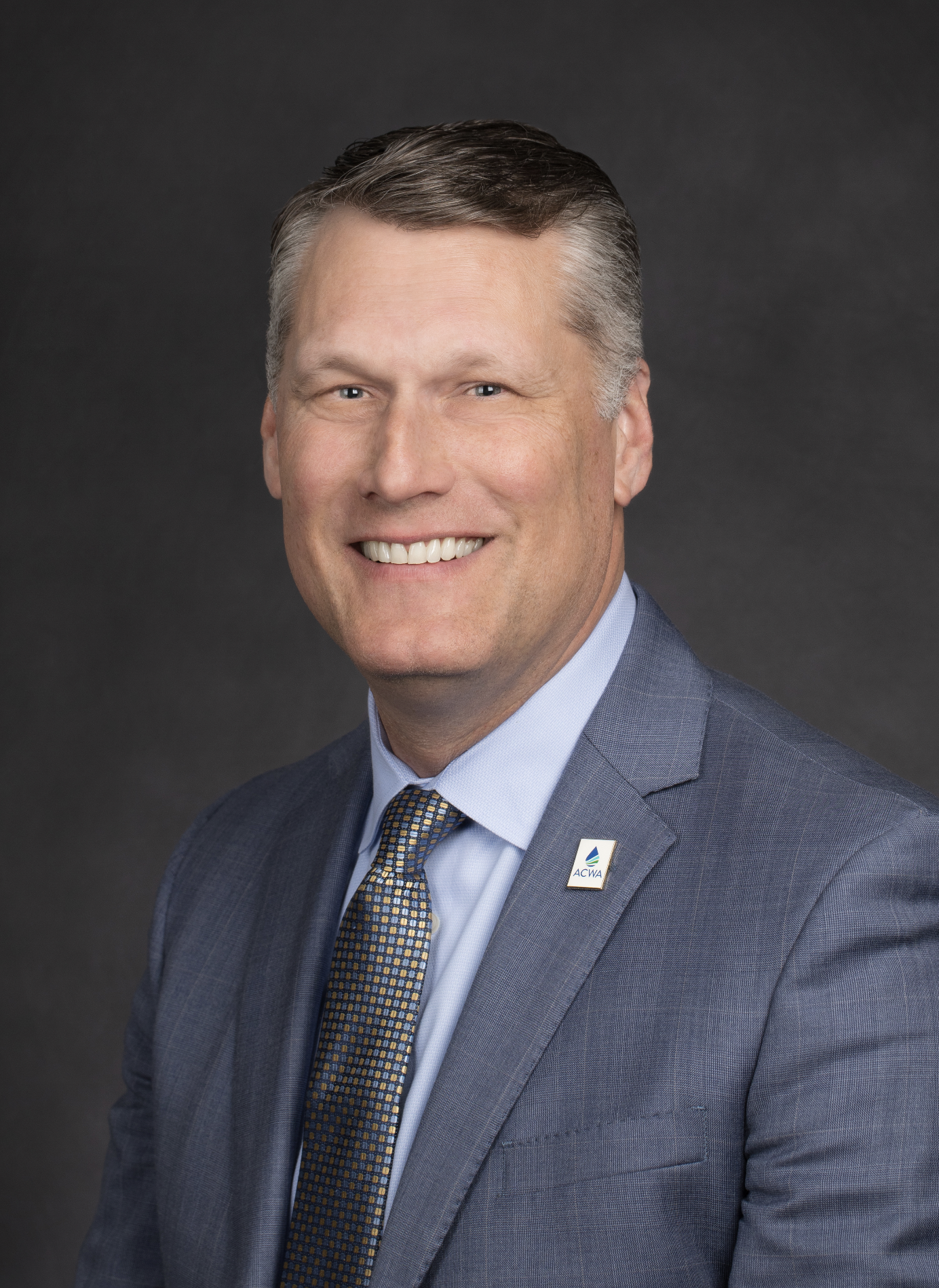
Since 2014, I’ve seen SGMA as a water agency General Manager and now as this association’s Executive Director, leading a team of highly skilled advocates working on your behalf in Sacramento. SGMA and groundwater sustainability counts among our top priorities.
ACWA supported SGMA’s creation contingent on making local control its central tenet. And we’re continuing to emphasize the need to empower local agencies. We need to ensure they have the time and resources to implement effective and realistic plans that achieve sustainability, but not at the cost of wiping out local economies. That’s easier said than done; however, seeing the incredible investments made by Groundwater Sustainability Agencies, GSAs, over the past few years offer cause for hope.
Our colleagues in state government, in the Department of Water Resources, have invested a tremendous amount of energy on both a financial and personal scale into building relationships with GSAs. Through collaboration, so much has been accomplished and continues to be accomplished, with innovative on-farm recharge projects, plans to store more water above-and- below ground, as well restore conveyance capacity. All of this depends heavily on momentum, a force dependent on mutual trust, shared interests and aligned perspectives.
Given the immensity of SGMA’s task, problems along the way are a given. It took us more than 100 years to get to a point where dry wells, overdrafted basins and canal-cracking land subsidence demanded action.
In the meantime, ACWA’s advocacy continues its focus on empowering agencies at the local level. It is why we submitted a comment letter late last year articulating why the State Water Resources Control Board must take a more logical approach to using probationary control of agencies as a backstop.
For example, the letter calls for developing a process by which a basin could submit a revised GSP that addresses deficiencies before a probationary hearing. Even more importantly, the letter called for a focus on implementing SGMA as written without expanding its scope to include other Board priorities. Most years also see a few bills introduced in the Legislature that seek to tinker with SGMA in various ways. In other words, give SGMA an opportunity to work as originally intended.
The growing wet and dry extremes of climate change serve as a warning that we must act now to empower our local water managers in implementing SGMA. We must move forward in aligning our investments and regulatory environment to realize projects that capture more water from high-flow events for the benefit of communities currently relying on overdrafted groundwater basins.
As SGMA closes out its first decade, ACWA is committed to helping empower our member agencies to act, and succeed, locally.
Spotlight April 2024: Members Share Thoughts on SGMA at 10-Year Milestone

Workers prepare rebar lattice work before a cement pour at Pajaro Valley Water Management Agency’s College Lake Water Supply project. The project is an example of ACWA member agencies’ work to diversify water supplies to help take pressure off local groundwater basins. Photo courtesy of Pajaro Valley Water Management Agency
Central Valley
TID operates within the Mid Kaweah Groundwater Sub Basin GSA along with the cities of Visalia and Tulare. Its area has experienced some success with rising groundwater levels during wet years paired with an expected slowing of subsidence, according to Fukuda, who sees surface water storage and conveyance as key to answering SGMA’s challenge. To that end, TID is pursuing its 200-acre McKay Point Reservoir and 250-acre Seaborn Reservoir projects to optimize surface water storage for groundwater recharge and flood control. But even more essential is building momentum through collaboration with communities and growers, with the latter greatly increasing their participation in the ongoing allocation program and on-farm recharge during wet years. However, casting a shadow over this progress is the SGMA process itself. TID’s subbasin faces a probationary hearing before the State Water Board in November, which could result in the state’s assuming direct control over SGMA implementation. This came after DWR found the district’s GSPs inadequate, and TID is now on the third redraft of its GSP, an expensive and time-consuming process that Fukuda said threatens to sap the momentum behind his ongoing work to implement SGMA. “If you’re going into SGMA to achieve perfection, you’re going to fail. SGMA is about momentum and moving the needle forward in the right direction,” Fukuda said. “We shall see if the State Water Board will allow for our continued momentum or halt our momentum,” Fukuda noted in response to the potential probationary process playing out in front of the Board. The uncertainty has manifested itself in many ways, including a decline in property values, which along with the prospect of paying penalty fees could translate into economic hardship for the district’s communities. And that has Fukuda worried about what that could mean for smaller-scale growers, such as generational family farmers struggling to make ends meet — the people driving the pickups past Fukuda’s office. “I’ve got to get my community through this, there’s so much at stake,” Fukuda said. Tri-County Water Authority Executive Director Deanna Jackson shared similar concerns. Her district was scheduled for a probationary hearing this month. In the bigger picture, no one disagrees with the need for SGMA, but it’s the process that is driving uncertainty. “Growers want farming to be sustainable, they don’t want to deplete groundwater aquifers. But SGMA has set up a situation where you have ‘haves and have nots’,” Jackson said, also noting the heavy potential impacts on family farms and growers’ ability to pass their operations onto the next generation. “That is where the goodwill ends, and I think you’re going to see a lot more pushback, probably in the next year or two,” Jackson said. “I don’t have a crystal ball, but let’s just say it’s becoming very real in our area, very quick.”SGMA as Validation
At the other end of the spectrum, but also serving an agricultural community, The Pajaro Valley Water Management Agency (PVWMA) operates through a DWR-approved alternative plan, the only one in the state for a critically overdrafted basin. Facing seawater intrusion and overdraft, the agency has invested decades of work into bringing its groundwater into sustainability by 2040. But the journey hasn’t been easy. The agency was among the first to require metering on agricultural wells in the 1990s. Back then, growers were less than enthusiastic about fees, especially ones operating in other areas of the state without them, said PVWMA General Manager Brian Lockwood. “We had a lot of obstacles in front of us,” Lockwood said. “We didn’t have a great deal of support from the community prior to SGMA, and now we do.” Part of the work behind earning community support involved an early start, including the formation of a committee to evaluate the state of their basin in 2010. The agency is also working on its College Lake Water Supply project, which will diversify its supply and take pressure off its aquifer. “SGMA really helped us. It was sort of validation of all our previous work,” Lockwood said. “We could go out to the community and say, ‘This work we’ve done together has really paid off.’.”Looking Ahead
For all its unprecedented challenges, SGMA is on schedule. DWR marked a major milestone in January when it completed the review process for GSPs covering high and medium priority groundwater basins. But the consensus remains that the hardest part may lie ahead. Paul Gosselin, Deputy Director of DWR’s Sustainable Groundwater Management Office, noted that California is the last U.S. state to regulate groundwater. “I suspect the next three to five years are going to be rocky as these implementation steps start to take hold,” Gosselin said. “However, I remain absolutely confident in the commitment of our local agencies and partners. I think what we’ll find is that California will be the one with the best approach out of all.”
MWDOC Hosts Earth Day Event at Coronet Park
Since 1970, Americans have celebrated Earth Day, and over the past five decades, we’ve increased what we know about preserving and protecting our natural resources.
On Saturday, April 20, The Municipal Water District of Orange County (MWDOC), in partnership with the City of Westminster, the Wyland Foundation, Ten Strands, and Inside the Outdoors, will present an Earth Day Event at the beautiful Coronet WaterSmart Conservation Garden. This unique educational event will allow attendees to discover the transformational power of sustainable water use through interactive displays and engaging hands-on activities throughout the garden, where the art of water-smart living meets the science of conservation and water-efficient technologies. Designed by Saddleback College students, the Coronet WaterSmart Conservation Garden showcases low water-use features that Orange County residents can easily adopt at home. These include water-efficient trees and native plants, smart irrigation systems, permeable landscaping materials, and natural features that conserve water and minimize runoff.
The Earth Day event will focus on cultivating environmental champions, offering engaging activities like tree planting, wildlife interaction, nature journaling, and a community mural to inspire proactive ecological stewardship. The event will also showcase the artistic talents of a fourth-grade class from Meairs Elementary School, who submitted work to the 2024 MWDOC Water Awareness Poster Contest, a creative platform for students to express the importance of water conservation.
Additionally, educators can discover a collection of teacher resources designed to bring environmental education into the classroom. Attendees may even run into MWDOC’s lovable water-smart mascot, Ricky RaindropSM!
Everyone is welcome on Saturday, April 20, from 9:00 a.m. – 12:00 p.m. at Coronet Park (15251 Oakcliff Dr., Westminster) for this family-friendly event that promises an enriching, educational experience for all ages!
www.ocwatersmartparks.com/westminster
QuenchCA Releases New Resources for Spring
ACWA’s statewide public education campaign, Quench California, recently released new social media graphics and customizable posts — including some connecting infrastructure to commemorate popular social media days — to encourage member agencies to take advantage of the campaign branding and website while amplifying the importance of investing in water infrastructure in their communities.
ACWA is encouraging member agencies to utilize these resources to take advantage of ACWA’s QuenchCA campaign branding and provide broader context and support to local infrastructure projects.
The new social posts with links to the corresponding graphics, newsletters and website button can all be found in an easily-downloadable zip file. You can also access individual toolkit items from the ACWA website.
State Water Board Adopts Rulemaking for Chromium-6 MCL
The State Water Resources Control Board today adopted a new Maximum Contaminant Level (MCL) of 10 parts per billion (ppb) for Hexavalent Chromium (Chromium-6) in drinking water. The regulation applies to all water suppliers, including small public water systems (PWS). Prior to taking effect, the regulation must first be approved by the Office of Administrative Law. Once approved, it is expected that the regulation will take effect by October. Water suppliers will be required to comply with the regulation in accordance with the following specified timelines:- PWS with 10,000 or more connections will be required to comply within two years after the MCL takes effect;
- PWS with 1,000-9,999 connections will be required to comply within three years after the MCL takes effect; and
- PWS with less than 1,000 connections will be required to comply within four years after the MCL takes effect.
Groups Release Video Supporting Voluntary Agreements
Today, the State Water Contractors and Northern California Water Association released a short, informative video about the Agreements to Support Healthy Rivers and Landscapes, also known as the Voluntary Agreements (Agreements).
These Agreements are a transformational approach to managing California’s water and help the state adapt to our new climate reality, characterized by prolonged dry periods followed by intensely wet and increasingly unpredictable storms.
The Agreements are also the subject of a three-day workshop hosted April 24-26 by the State Water Resources Control Board in Sacramento. ACWA is urging members to attend the workshop and support the Agreements.
The Agreements offer:
- Substantial water dedicated to the environment and significantly reduced environmental effects compared to the traditional regulatory flows-only approach.
- A comprehensive portfolio of actions in rivers to reactivate habitat conditions that support robust, resilient populations of salmon (and other fish, birds and wildlife).
- Actions throughout California to restore ecosystem function while helping secure water supplies for communities, farms, fish and wildlife, recreation and hydropower.
- A collaborative science program that relies on the latest, best available knowledge and an inclusive governance structure that will address changing climate conditions, support research to improve management actions for native fish, and welcomes the participation of Tribes and environmental organizations.
- A commitment of over $2.9 billion to fund a vigorous science program, construction of new habitat, water purchases, crop idling, and other actions.
- A program that brings people from different backgrounds and disciplines together to make California a better place.
California’s ever-changing hydrology and increasingly extreme climate shifts underscore how crucial it is to update our water management strategies. The Agreements are California’s best opportunity to move beyond the status quo and toward flexible, collaborative, real-time water management rooted in the best available science. By embracing innovative approaches and forging partnerships, we can work together to navigate the complexities of our shifting water landscape and safeguard the future of our state’s natural resources.
Learn more about the Agreements at www.acwa.com. View the short video on YouTube.
JCSD Crowned as California’s Wastewater Collection System of the Year
The Jurupa Community Services District (JCSD) is proud to announce its award as the Wastewater Collection System of the Year for the entire state of California in its class by the California Water Environment Association (CWEA). This honor follows on the heels of its regional victory in the Santa Ana River Basin (SARBS) region and further elevates JCSD’s reputation as one of the premier public agencies in California. This statewide award highlights JCSD’s exceptional commitment to maintaining and operating its wastewater collection system. JCSD’s approach, characterized by proactive maintenance, regular inspections, and the implementation of industry-leading strategies, has set new standards for excellence in wastewater management. A key factor in this achievement is JCSD’s impressive track record of zero Sanitary Sewer Overflows (SSO) for over six years, reflecting the team’s dedication to reliability, safety, and environmental stewardship. “Winning the statewide award is a great accomplishment for our team at JCSD. It is a testament to the dedication and expertise of our staff and the innovative practices we’ve implemented across our system,” said JCSD Board President Bart Moreno. “This award from CWEA, an organization setting the benchmark for water quality practices in California, is a validation of our relentless commitment to excellence and our tradition of serving our community.” This CWEA award is the latest in a series of accolades that underscore JCSD’s commitment to excellence across its various services. Recently, JCSD’s Finance team received its fifth Distinguished Budget Presentation Award, a testament to their outstanding financial stewardship and transparency. Furthermore, the Parks and Recreation Department has been recognized with accreditation from the Commission for Accreditation of Park and Recreation Agencies, a notable achievement that places JCSD among the top four agencies in California recognized for exceptional parks and recreation services. These acknowledgments across different sectors of JCSD’s operations reaffirm its status as a leader within the industry. “I am immensely proud of the team for this monumental award,” said Chris Berch, JCSD’s General Manager. “This achievement is the culmination of years of dedicated effort, innovative strategies, and a deep-seated commitment to our community and the ratepayers we serve.” The California Water Environment Association has been a leader in water resource management for over 90 years, recognizing entities that demonstrate outstanding achievements and progressive practices in the water sector. JCSD’s victory on the statewide stage is a reflection of its alignment with CWEA’s high standards and its commitment to enhancing community well-being through superior wastewater management. For more information about this item, please contact Arman Tarzi, JCSD Manager of Government & Public Affairs at atarzi@jcsd.us.# # #
Founded in 1956, the Jurupa Community Services District is a public agency providing services and programs to Jurupa Valley and Eastvale. It is governed by a Board of Directors comprised of five elected representatives from both cities. Serving over 130,000 people in a 40-square-mile area, JCSD provides a variety of community services and programs, including water, sewer, streetlights, frontage landscape maintenance, graffiti abatement, and parks and recreation services.EBMUD Board Welcomes New Member
OAKLAND – The East Bay Municipal Utility District (EBMUD) welcomes a new board member to represent Lafayette, Alamo, Diablo, Danville, Blackhawk and portions of Walnut Creek, Pleasant Hill, and San Ramon.
On April 9 in open session, the board interviewed five candidates and voted unanimously to appoint Luz Gómez, a Latina, tipping the seven-member board to a majority female for the first time in EBMUD’s 100-year history. Gómez will serve until the November general election at which time Ward 2 voters will elect a permanent replacement for the term that ends on December 31, 2026.
Gómez is chair of the Contra Costa County Sustainability Commission with more than 20 years of experience in public health, air quality, lead poisoning prevention and community engagement. Gómez has managed programs for Contra Costa Public Health and the Bay Area Air Quality Management District and was Chief of Staff to Contra Costa County Supervisor John Gioia. Gómez also was a lecturer at University of California, Berkeley and co-founded the San Ramon Valley Climate Action Coalition. Gómez has been a member of the American Association of University Women San Ramon, San Ramon Library Advisory Committee, Dougherty Valley San Ramon Rotary Club, Lafayette Vision Zero Stakeholder Group, and the San Ramon Valley Unified School District Cultural Responsiveness Committee. Gómez has a Bachelor of Science degree in Community Nutrition from UC Davis, and a Master of Public Health degree from UC Berkeley. Gómez is currently a member of EBMUD’s Community Water Academy.
“EBMUD is an agency that I have admired since my family’s arrival in Ward 2 over 40 years ago. We fell in love with EBMUD’s water from the first sip. Serving my community has been my life’s work and I’m honored to join such an esteemed Board and organization,” Gómez said.
###
The East Bay Municipal Utility District has a proud history of providing high-quality drinking water for 1.4 million customers in Alameda and Contra Costa counties. EBMUD’s wastewater system serves 740,000 customers and helps protect the ecosystem of San Francisco Bay. EBMUD is a not-for-profit public agency established in 1923.
9th Circuit Upholds SCV Water Judgement for Remediation of Groundwater Contamination
On April 15, 2024, the U.S. Court of Appeals for the 9th Circuit affirmed a $68.5 million judgment for SCV Water for the cleanup of local groundwater contamination in its case against the Whittaker Corporation (“Whittaker”). The judgment was originally awarded on June 28, 2022, by the U.S. District Court for the Central District of California following a combined jury and bench trial.
“Today’s ruling by the 9th Circuit is an important step in a lengthy process to ensure SCV Water finally recovers funding to address groundwater contamination caused by the Whittaker Corporation,” said SCV Water General Manager Matt Stone. “Water quality remains our top priority, and this ruling ensures that SCV Water customers remain protected and will continue to receive drinking water that meets all standards set by Federal and State regulatory agencies.”
In addition to the affirmation of the jury award, SCV Water was successful in reversing the district court on two issues on cross-appeal. The Agency sought and was granted a finding of liability against Whittaker under the Comprehensive Environmental Response, Compensation, and Liability Act (CERCLA) for costs incurred to blend contaminated water with non-contaminated water so its containment well can continue to protect groundwater supplies from further contamination.
Additionally, SCV Water was granted declaratory relief under CERCLA, which means that the Agency will not need to establish liability for future costs related to remediation at the site. SCV Water’s appellate team was led by Jennifer L. Meeker, Patrick J. Richard, Federic A. Fudacz and Byron Gee of the Nossaman law firm.
Whittaker raised three issues on appeal, all of which were denied by the three-judge panel. Whittaker argued the district court abused its discretion by permitting SCV Water to assert restoration costs as a measure of damages, that SCV Water did not adequately establish that groundwater treatment facilities are an appropriate measure of damages, and that the jury award of costs was not reasonable.
A jury found in December 2021 that Whittaker, a wholly owned subsidiary of Parker Hannifin, was primarily responsible for the damages sought by SCV Water. The final judgment in June 2022 incorporated the jury award as well additional amounts that were subject to a bench trial.
About SCV Water:
The Santa Clarita Valley Water Agency (SCV Water) is a full-service regional water agency located in the Santa Clarita Valley. SCV Water provides water service to nearly 300,000 customers through approximately 75,000 business and residential connections. It was formed on January 1, 2018, when local water suppliers combined into one integrated, regional water provider. More information can be found at yourSCVwater.com.
Orange County Water District Swiftly Responds to EPA PFAS Ruling
FOUNTAIN VALLEY – The Orange County Water District (OCWD) and its 19 retail water providers are intensifying their collaborative efforts to combat PFAS contamination in Orange County following the U.S. Environmental Protection Agency’s (EPA) establishment of legally enforceable Maximum Contaminant Levels (MCLs) for six PFAS chemicals. Consistent with the requirements of the new MCLs, water providers will work expeditiously to design and construct more PFAS treatment plants to restore impacted groundwater wells within the five-year compliance period. Since early 2020, Orange County water agencies have been actively addressing PFAS following California’s adjustment of health advisory levels for PFOA and PFOS.
The EPA officially set the MCL for PFOA and PFOS at 4.0 parts per trillion (ppt), the MCL for PFNA, PFHxS and HFPO-DA at 10 ppt, and established a Hazard Index of 1 for any mixture of PFNA, PFHxS, PFBS, and HFPO-DA. With these new MCLs in place, approximately 40 more wells within the OCWD service area will be affected, bringing the total number of PFAS-impacted wells to approximately 100. Parts per trillion is an extremely minute measurement, detectable only recently with advanced lab equipment. To provide perspective, one ppt is equivalent to a drop of water in 20 Olympic-size pools or one second in 30,000 years.
“Despite bearing no responsibility for the release of PFAS into the environment, we are doing everything we can to remove them from groundwater supplies,” said District President Cathy Green. “We’ve already achieved significant milestones—from launching the nation’s largest PFAS Treatment Pilot Project to being the first public agency in California certified to detect PFOA and PFOS to investing millions in building PFAS treatment plants,” she added.
In fact, OCWD has already constructed enough PFAS treatment plants to bring more than 38 wells back online. This marks a substantial investment in addressing this issue.
PFAS contamination remains OCWD’s top priority—it’s a significant and costly challenge. The estimated cost of addressing PFAS in Orange County over the next 30 years is approximately $1.8 billion. OCWD has undertaken various measures to protect water quality and customers, including legal actions against polluters and advocating for legislation to fund PFAS cleanup while ensuring water agencies aren’t held liable.
“OCWD and its water retailers reliably provide drinking water every day to the 2.5 million people in its service area,” Green emphasized. “The District’s stringent water quality monitoring and testing ensure that tap water consistently meets all state and federal standards.”
For more information about OCWD’s efforts to address PFAS in Orange County, please visit the PFAS Education Center.
###